

Transocean Ltd (Switzerland) stocks have been trading up by 3.81 percent after bullish offshore drilling demand boosted investor confidence
Key Takeaways For RIG Traders
- Added about $1.1B of firm backlog in Norway, including a new ~$62M Transocean Norge contract with Shell and Equinor approvals on prior semisubmersible deals.
- Secured roughly $550M of new firm backlog for Deepwater Proteus and Deepwater Conqueror in the U.S. Gulf, with multi‑year work starting in 2027.
- Won unconditional Brazilian antitrust clearance for the Valaris–Transocean merger, clearing the way to close in Q4 2026.
- Extended and upsized a revolving credit facility to $750M out to 2031 and redeemed $165M of 8% notes, trimming interest costs by about $22M.
- RIG shares ticked higher pre‑market on both the Norway and Gulf contract news, even while broader energy benchmarks softened.
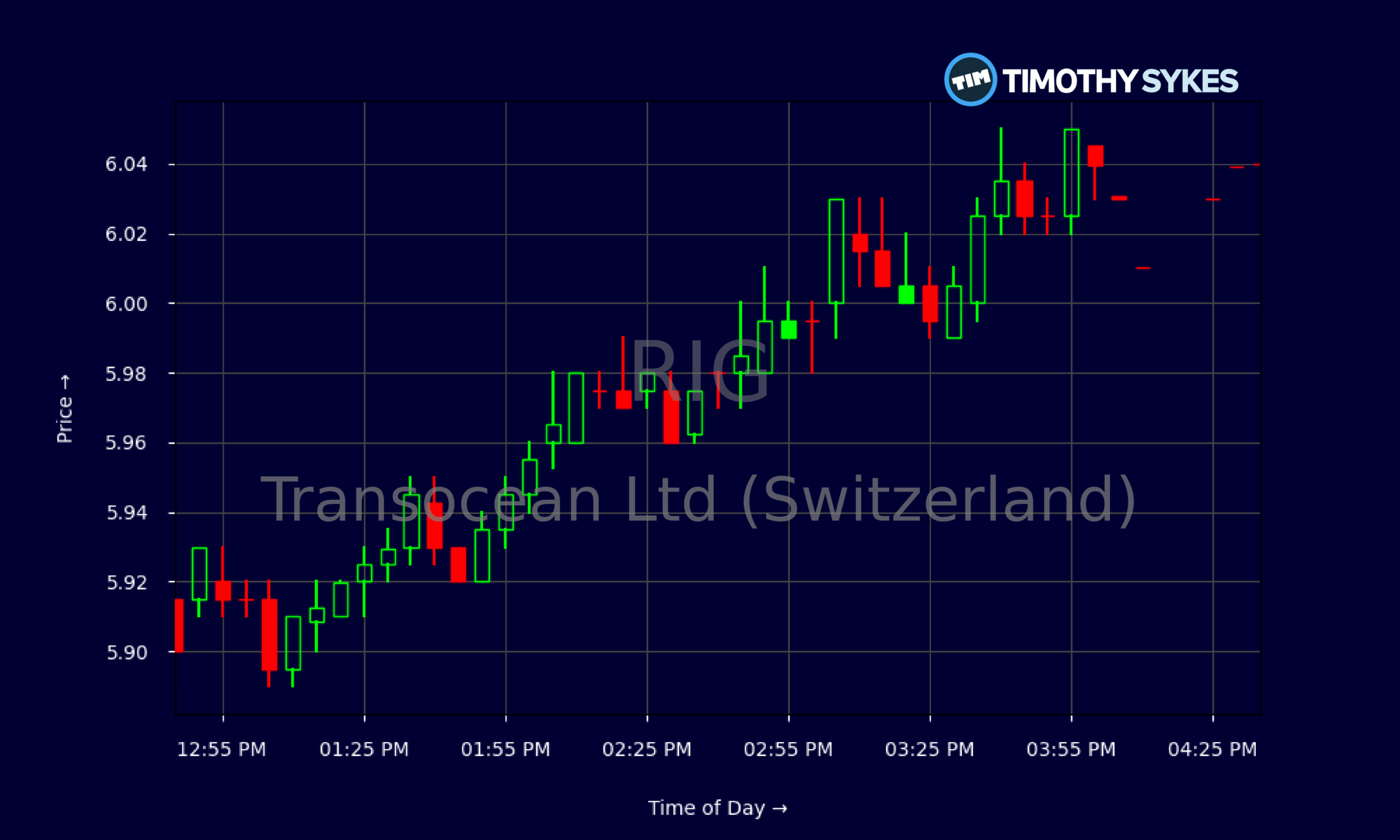
Live Update At 16:47:08 EDT: On Wednesday, October 21, 2026 Transocean Ltd (Switzerland) stock [NYSE: RIG] is trending up by 3.81%! Discover the key drivers behind this movement as well as our expert analysis in the detailed breakdown below.
Quick Financial Overview
RIG has been grinding higher on the chart. Over the last few weeks, Transocean Ltd (Switzerland) climbed from closes near $5.17 to about $6.04, a steady uptrend with higher lows around $5.40–$5.60. For short‑term traders, that rising base is key. It shows dip buyers are stepping in on every pullback.
Intraday, RIG spent most of the latest session tightly range‑bound between roughly $5.90 and $6.05, with a late‑day push to the highs. That kind of controlled grind, without wild wicks, often signals accumulation rather than a one‑off spike. Volume isn’t given here, but the price action alone suggests patient buying, not a blow‑off move.
Fundamentally, RIG is still a turnaround story. Full‑year margins are negative, yet the latest quarter flipped to a solid profit: about $966M in revenue, $312M in EBITDA, and $170M in net income. Free cash flow near $212M and operating cash flow of $236M show the rigs are throwing off real cash.
More Breaking News
Balance sheet metrics back that up. Total debt‑to‑equity near 0.61 and a current ratio of 1.6 give RIG room to breathe. With price‑to‑sales around 1.5 and price‑to‑book below 1, traders are paying less than stated asset value for a fleet that’s now locking in new work.
Why Traders Are Watching RIG Momentum
RIG is getting something traders love: clear, repeatable catalysts. Transocean just added about $1.1B in firm backlog in Norway alone. That package includes a new ~$62M, 120‑day, two‑well contract for Transocean Norge with A/S Norske Shell, plus final Equinor approval that converts roughly $1.0B of previously announced semisubmersible agreements into hard backlog. For RIG, that turns “maybe” revenue into “booked” revenue and slashes execution risk.
On top of that, Transocean locked in roughly $550M of new firm backlog for two ultra‑deepwater drillships, Deepwater Proteus and Deepwater Conqueror, in the U.S. Gulf of Mexico. These multi‑year campaigns start in 2027 and directly continue current work. For RIG traders, that matters because idle time kills margins. Direct continuation means those high‑spec assets stay working, and cash flow stays smoother through the next cycle.
The tape is responding. When the Norge deal hit, RIG traded about 0.7% higher pre‑market even as energy benchmarks sagged. The U.S. Gulf awards pushed shares more than 1% higher pre‑market on another soft oil tape. That tells traders the stock is trading on company‑specific news, not just crude prices.
There is also the Valaris angle. Brazil’s competition authority granted unconditional antitrust approval for the Valaris–Transocean combination, effectively clearing the last big regulatory hurdle and setting the stage for a Q4 2026 close. With that overhang lifted, RIG can shift the narrative from “will this close” to “how big do the combined backlog and synergies get.”
Meanwhile, Transocean amended and upsized its main revolver to $750M, out to 2031, and redeemed $165M of 8% Aquila notes, saving about $22M in interest. An oversubscribed facility says lenders believe the story. For equity traders watching RIG, that improved liquidity and lower interest bill can soften future drawdowns when the sector cools.
Conclusion
RIG is acting like a textbook momentum name backed by real fundamentals. Price is in an uptrend, intraday action is controlled, and news flow is stacked with hard numbers: roughly $1.1B of new firm backlog in Norway, another $550M locked in the U.S. Gulf, and a cleaner capital structure. For Transocean Ltd (Switzerland), that means more visibility on future cash flow and less dependence on spot day‑rate swings.
The pending Valaris merger adds another layer. With Brazilian regulators signing off and all approvals expected to be satisfied, RIG is lining up to become an even larger offshore player. Traders will be watching the upcoming Q3 2026 earnings and fleet status update for details on combined backlog, cost synergies, and how quickly management plans to deleverage further.
At the same time, RIG is not a widows‑and‑orphans name. Margins at the full‑year level are still negative, and offshore drilling remains a cyclical, high‑beta game. That’s why discipline matters. As Tim Sykes likes to hammer home, “The market doesn’t care about your opinion, only your plan.” As millionaire penny stock trader and teacher Tim Sykes, says, “Preparation plus patience leads to big profits.”. For RIG traders, that means using this contract and merger momentum as a roadmap, then backing it up with clear entries, tight risk, and the willingness to cut losses fast. This analysis is for educational and research purposes only and is not investment advice.
This is stock news, not investment advice. Timothy Sykes News delivers real-time stock market news focused on key catalysts driving short-term price movements. Our content is tailored for active traders and investors seeking to capitalize on rapid price fluctuations, particularly in volatile sectors like penny stocks. Readers come to us for detailed coverage on earnings reports, mergers, FDA approvals, new contracts, and unusual trading volumes that can trigger significant short-term price action. Some users utilize our news to explain sudden stock movements, while others rely on it for diligent research into potential investment opportunities.
Dive deeper into the world of trading with Timothy Sykes, renowned for his expertise in penny stocks. Explore his top picks and discover the strategies that have propelled him to success with these articles:
- Penny Stocks Trading Guide
- Best Penny Stocks Under $1 to Buy Today
- Top 8 Penny Stocks to Watch on Robinhood
Once you’ve got some stocks on watch, elevate your trading game with StocksToTrade the ultimate platform for traders. With specialized tools for swing and day trading, StocksToTrade will guide you through the market’s twists and turns.
Dig into StocksToTrade’s watchlists here:





Leave a reply