
CorMedix Inc. stocks have been trading down by -24.81 percent amid heightened concern over its latest regulatory and clinical developments.
Market Insights For Active CRMD Traders
- Weekly chart shows CorMedix Inc. dropping from the low $8s to the mid-$5s, signaling a fast momentum reversal.
- Intraday data highlights a wide range day with a hard flush from above $7.50 to the mid-$5s, showing aggressive selling pressure.
- Strong gross margin and double‑digit returns on capital suggest CRMD’s business remains solid despite the price slide.
- Balance sheet liquidity, with a healthy current ratio, gives traders some cushion against short‑term volatility.
- Compressed valuation multiples point to a name where sentiment has reset quickly, creating both opportunity and risk.
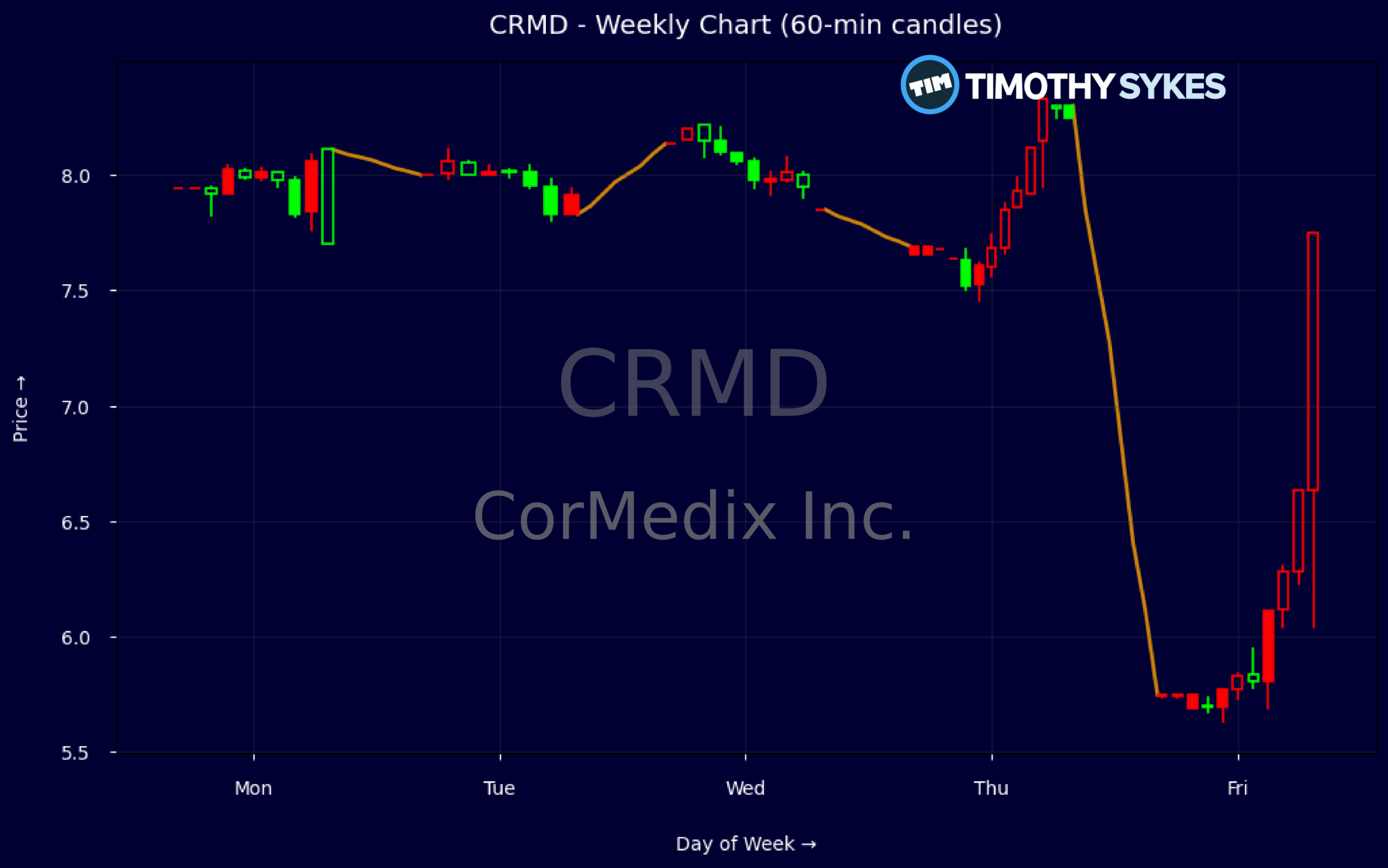
Weekly Update Oct 26 – Oct 30, 2026: On Sunday, November 01, 2026 CorMedix Inc. stock [NASDAQ: CRMD] is trending down by -24.81%! Discover the key drivers behind this movement as well as our expert analysis in the detailed breakdown below.
Healthcare industry expert:
Analyst sentiment – positive
CorMedix (CRMD) currently presents an unusually strong financial profile for a small-cap healthcare name, with revenue of ~$312M and explosive 3-year growth above 2,200%. Profitability is exceptional: gross margin 82.7%, EBIT margin 47.5%, and profit margin ~40%, while ROE above 50% and ROIC above 60% indicate a high-return franchise. The balance sheet is solid with current ratio 2.6, low leverage (total debt/equity 0.31), and ample liquidity (~$257M cash), supporting continued investment without equity dilution.
Valuation screens as deeply discounted versus fundamentals: P/E 3.39, price-to-sales 1.24, and price-to-free-cash-flow 1.7 are far below typical profitable specialty biotech peers that often trade at double-digit multiples. Free cash flow of ~$86M in the latest quarter and strong interest coverage of 90x underscore high cash-generation relative to enterprise value (~$332M). Execution risk remains around sustaining recent revenue acceleration, but current metrics imply the market is pricing in an overly bearish durability scenario relative to cash flow and returns on capital.
Technically, CRMD has shifted from stability near $8 to a sharp breakdown, with weekly closes sliding from 8.20 to 5.74, indicating an emerging bearish trend and likely forced or capitulation selling. The air pocket from 7.65 to 5.70 leaves minimal structural support until the mid‑5s, where short-term buyers have appeared. On five-minute candles, intraday volume has clustered near 5.70–5.80, defining this band as immediate pivot support; a reclaim and hold above 7.00 would signal a tradable reversal, while a decisive break below 5.50 opens downside toward 5.00.
With no new fundamental news disclosed, the disconnect between robust fundamentals and recent price breakdown appears technically driven rather than thesis-changing. Versus Healthcare and Biotechnology & Life Sciences benchmarks, CRMD is meaningfully cheaper on earnings, sales, and cash flow despite superior margins and balance sheet strength. I assign a constructive outlook with a 6–12 month fair value target of $10–11, anchored on a still-low 7–8x FCF. Key levels: support at 5.50, intermediate resistance at 7.00, major resistance at 8.00.
More Breaking News
Quick Financial Overview
CorMedix Inc. shows a mixed picture when you line up the chart with the fundamentals. On the weekly data, CRMD moved from about $7.94 to a peak near $8.20, then sold off sharply to close around $5.74. That is a sizable percentage drop in a short window, and it tells traders sentiment flipped fast from strength to weakness. The intraday 5‑minute bar backs this up, with price cracking from roughly $7.68 down into the mid‑$5s in a single wide‑range move.
Under the hood, the financials look far stronger than the chart suggests. Revenue sits around $311.7M with gross margin near 82.7%, which is very high for most sectors. Profit margins above 40% and an EBIT margin close to 47.5% show that CRMD is not just selling more, it is keeping a big share of every dollar in profit. Returns on equity over 50% and strong returns on assets signal efficient use of capital.
The balance sheet gives CorMedix Inc. room to breathe. A current ratio of 2.6 and quick ratio of 2.2 point to solid near‑term liquidity. Debt to equity near 0.31 and interest coverage around 90.2 suggest leverage is manageable and interest costs are not an immediate threat. On valuation, a P/E of about 3.39 and price‑to‑sales near 1.24 imply the market is pricing CRMD cheaply relative to its earnings and revenue base, which can attract traders hunting for mean‑reversion or value‑driven bounces.
Conclusion
This is stock news, not investment advice. Timothy Sykes News delivers real-time stock market news focused on key catalysts driving short-term price movements. Our content is tailored for active traders and investors seeking to capitalize on rapid price fluctuations, particularly in volatile sectors like penny stocks. Readers come to us for detailed coverage on earnings reports, mergers, FDA approvals, new contracts, and unusual trading volumes that can trigger significant short-term price action. Some users utilize our news to explain sudden stock movements, while others rely on it for diligent research into potential investment opportunities.
Dive deeper into the world of trading with Timothy Sykes, renowned for his expertise in penny stocks. Explore his top picks and discover the strategies that have propelled him to success with these articles:
- Penny Stocks Trading Guide
- Best Penny Stocks Under $1 to Buy Today
- Top 8 Penny Stocks to Watch on Robinhood
Once you’ve got some stocks on watch, elevate your trading game with StocksToTrade the ultimate platform for traders. With specialized tools for swing and day trading, StocksToTrade will guide you through the market’s twists and turns.
Dig into StocksToTrade’s watchlists here:




Leave a reply