

JetBlue Airways Corporation stocks have been trading up by 11.05 percent following upbeat demand outlook and operational improvement headlines.
Key Takeaways
- Q3 2026 showed strong RASM growth of 18.4% year over year and 21.1% system revenue growth, but JBLU still ran negative operating and pre-tax margins with heavy leverage on the balance sheet.
- Management’s JetForward plan targets operating profitability in 2027 and at least $1.00 EPS plus positive free cash flow in 2028, backed by $850M–$950M incremental EBIT in 2027 and $1.2B by 2028.
- Q4 guidance calls for 3%–4% capacity growth, 18%–22% RASM growth, flat to slightly lower CASM ex‑fuel, and 1–2 points of margin expansion despite an 85% jump in fuel costs and about $300M in capex.
- The CEO denied any creditor talks or debt restructuring, reversing media speculation and triggering roughly a 19% surge in JBLU’s share price.
- UBS upgraded JBLU from Sell to Neutral with a trimmed $3.50 target, citing enough liquidity to handle heavy cash burn through most of 2027 but likely negative free cash flow until at least 2028.
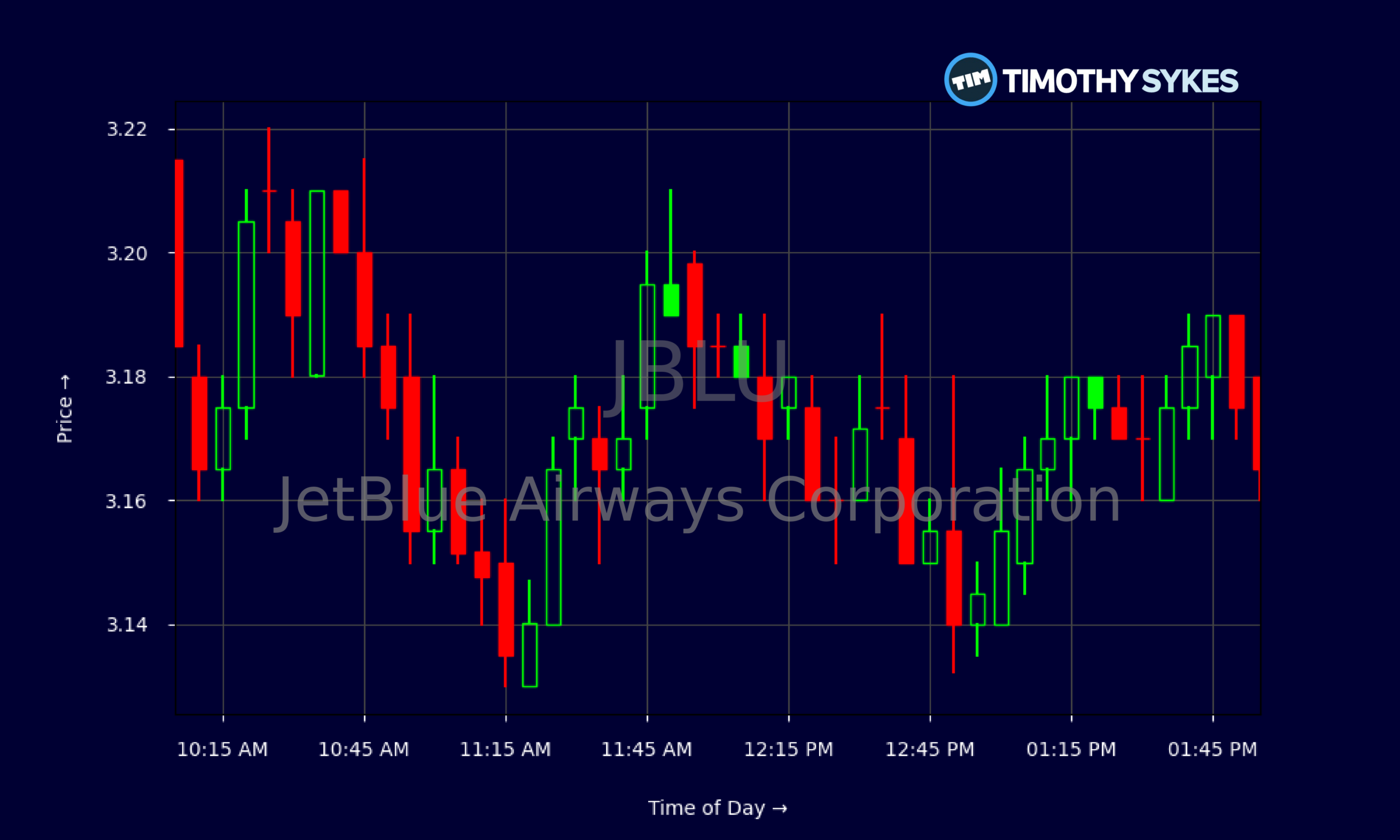
Live Update At 14:02:30 EST: On Monday, November 02, 2026 JetBlue Airways Corporation stock [NASDAQ: JBLU] is trending up by 11.05%! Discover the key drivers behind this movement as well as our expert analysis in the detailed breakdown below.
Quick Financial Overview
JBLU has been trading like a classic turnaround name. The recent daily chart shows the stock sliding from above $3.80 in early October 2026 to the mid‑$2 range, then bouncing back toward $3.16 on 2026/11/02. That’s a sharp drawdown followed by a relief move, exactly the kind of volatility active traders look for.
Intraday, JBLU’s 5‑minute chart shows a tight grind higher from around $3.08 at the open to the $3.16–$3.19 area by early afternoon. The price action is controlled, with higher lows and modest pullbacks. That tells traders dip buyers are active, not just one big spike and fade.
Fundamentally, JetBlue Airways Corporation is still in the red. Q2 2026 showed total revenue of about $2.70B, an operating loss of $141M, and net loss of $247M. Free cash flow was roughly -$389M, and leverage is heavy, with total debt to equity above 5.9 and a current ratio around 0.7. JBLU’s price‑to‑sales near 0.15 and price‑to‑book under 1.0 show the market pricing in real distress.
More Breaking News
For traders, that mix — low multiples, negative margins, and aggressive turnaround targets — sets up a battleground stock where headlines and guidance shifts can drive fast, tradable swings.
Why Traders Are Watching JBLU Right Now
JBLU is back on screens because the story finally has a clear roadmap instead of just pain. The core of that story is the JetForward plan. Management says it is on track to generate at least $310M in incremental EBIT in 2026, ramping to about $1.2B by 2028. For 2027 alone, JetBlue expects $850M–$950M of incremental EBIT. The goal: reach operating profitability in 2027 and at least $1 EPS with positive free cash flow in 2028.
At the same time, Q3 2026 numbers show why traders are even willing to listen. JBLU delivered RASM growth of 18.4% year over year and system revenue up 21.1%. Fort Lauderdale stood out with nearly 15% RASM growth on more than 65% capacity growth. That kind of pricing power, while recapturing about 87% of higher fuel costs, points to real demand strength.
Yet, JBLU is not out of the woods. The airline still booked negative operating and pre‑tax margins for 2026 and carries elevated leverage. UBS’ upgrade from Sell to Neutral, with a lower $3.50 target, captures the nuance: the stock is down roughly a third since early September and about 36% year to date, so a lot of bad news is already priced in, but free cash flow is likely negative until at least 2028 unless fuel breaks and demand stays strong.
Near term, guidance matters. For Q4, JetBlue is calling for 3%–4% ASM growth, a powerful 18%–22% RASM gain, flat to slightly lower CASM ex‑fuel, and 1–2 percentage points of additional margin expansion despite an 85% spike in fuel costs and about $300M of capex. If JBLU hits those numbers, traders may see more upside follow‑through in the stock.
Headline risk is still a key driver. When JetBlue’s CEO publicly stated the airline is not in talks with creditors and not considering any debt restructuring, that single comment helped spark a roughly 19% surge in JBLU shares. For short‑term trading, that’s the blueprint: monitor balance‑sheet chatter, earnings updates, and JetForward progress, then trade the reaction.
Conclusion
For active traders, JBLU now sits at the intersection of fear and a possible multi‑year turnaround. On one side, JetBlue Airways Corporation is still loss‑making, burning cash, and running with high leverage and weak coverage ratios. Free cash flow was about -$389M in the latest reported quarter, interest coverage is only about 0.5, and current liabilities exceed current assets. None of that screams “safe.”
On the other side, the operating trends are improving. JBLU is expanding adjusted operating margins year over year, guiding to more margin expansion in Q4 even with fuel up 85%. The JetForward plan and the separate Paisley initiative — expected to add nearly $100M in operating income this year and almost double that by 2028 — aim to shift the airline to sustained profitability by 2027 and at least $1 EPS plus positive free cash flow in 2028. The coming TrueBlue loyalty expansion in 2027, with BlueFirst upgrades and richer Mosaic rewards, is another lever to drive higher‑yield traffic and stickier customers.
The market is starting to recognize this balance. UBS moving JBLU from Sell to Neutral shows sentiment stabilizing, while the CEO’s denial of restructuring talks briefly ignited a 19% squeeze. For day traders and swing traders, that means JBLU is a news‑driven momentum vehicle wrapped around a complex balance sheet.
As Tim Sykes likes to say, “Patterns repeat because human nature doesn’t change — study the past charts, cut losses quickly, and let the best setups come to you.” As millionaire penny stock trader and teacher Tim Sykes, says, “Embrace the journey, the ups and downs; each mistake is a lesson to improve your strategy.”. JBLU fits that mindset right now. The key is to treat the stock as a trading vehicle, not a hope story — respect the volatility, map out your risk, and let the JetForward headlines guide your timing.
This is stock news, not investment advice. Timothy Sykes News delivers real-time stock market news focused on key catalysts driving short-term price movements. Our content is tailored for active traders and investors seeking to capitalize on rapid price fluctuations, particularly in volatile sectors like penny stocks. Readers come to us for detailed coverage on earnings reports, mergers, FDA approvals, new contracts, and unusual trading volumes that can trigger significant short-term price action. Some users utilize our news to explain sudden stock movements, while others rely on it for diligent research into potential investment opportunities.
Dive deeper into the world of trading with Timothy Sykes, renowned for his expertise in penny stocks. Explore his top picks and discover the strategies that have propelled him to success with these articles:
- Penny Stocks Trading Guide
- Best Penny Stocks Under $1 to Buy Today
- Top 8 Penny Stocks to Watch on Robinhood
Once you’ve got some stocks on watch, elevate your trading game with StocksToTrade the ultimate platform for traders. With specialized tools for swing and day trading, StocksToTrade will guide you through the market’s twists and turns.
Dig into StocksToTrade’s watchlists here:





Leave a reply