
Navitas Semiconductor Corporation stocks have been trading up by 13.88 percent amid strong investor optimism on its latest technology advances.
Key Takeaways
- Q3 revenue at Navitas Semiconductor climbed about 39% year over year to roughly $14.0M, topping estimates, while NVTS posted an adjusted loss of ($0.03) per share versus ($0.04) expected.
- The company guided Q4 revenue to $15.5M–$16.5M with gross margin near 40.5%, balancing improving fundamentals against higher spending tied to the Claros deal.
- Claros acquisition expands Navitas Semiconductor’s AI data center reach from grid-level to xPU-level power management and more than doubles its 2030 addressable market to above $8B.
- A 24 kW 800V-to-12V DC-DC board, co-developed with Nvidia for its MGX AI ecosystem, boosted NVTS and secured showcase placement at Nvidia’s AI Factory MGX Wall at OCP Global Summit 2026.
- A joint 800V DC-to-6V DC reference design with Microchip Technology targets Open Compute Project–standard AI racks, promising up to 96% efficiency and helping speed next‑gen AI infrastructure rollouts.
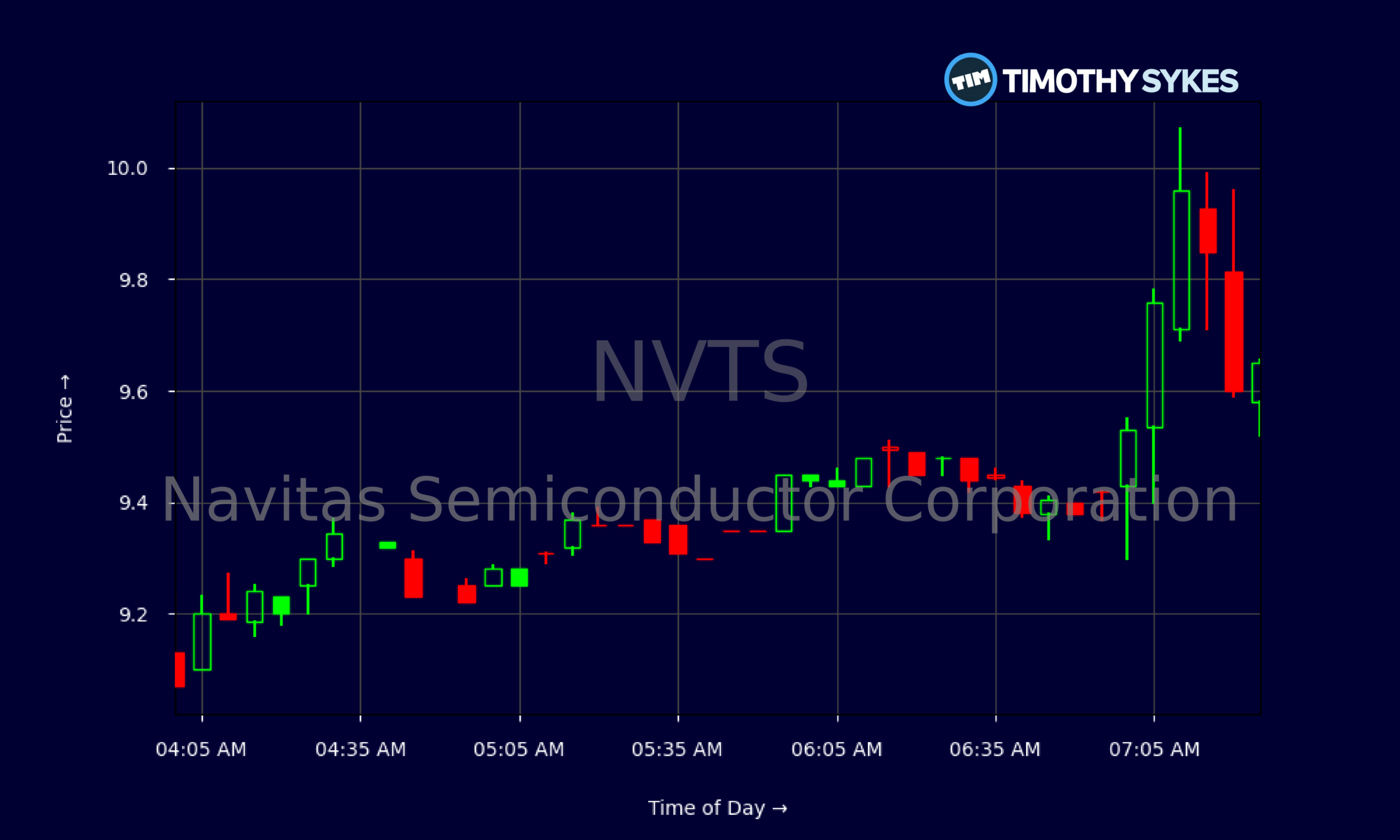
Live Update At 07:33:24 EST: On Wednesday, November 04, 2026 Navitas Semiconductor Corporation stock [NASDAQ: NVTS] is trending up by 13.88%! Discover the key drivers behind this movement as well as our expert analysis in the detailed breakdown below.
Quick Financial Overview
NVTS has been acting like a classic high-growth story stock: choppy price action, heavy losses, but clear revenue acceleration. In Q3, Navitas Semiconductor reported about $14.0M in revenue, up roughly 39% year over year and ahead of Street expectations in the $13.2M–$13.4M range. The adjusted loss of ($0.03) per share was narrower than the ($0.04) consensus, a small beat, but important for sentiment.
On guidance, Navitas Semiconductor is calling for Q4 revenue of $15.5M–$16.5M with non‑GAAP gross margin around 40.5%. That is modest improvement, but it shows NVTS moving in the right direction while it pivots hard into AI data centers and grid infrastructure. Operating expenses are climbing as Claros is integrated, so traders should remember this is still a cash‑burn story.
More Breaking News
Technically, NVTS has pulled back from the $10–$10.50 zone to close near $8.56 on 2026/11/03. The recent range between roughly $8.20 and $9.50 shows active trading but no full trend breakdown yet. Intraday, NVTS has held pre‑market support in the low $9s before spiking toward $10, a setup momentum traders know well. For now, Navitas Semiconductor remains a volatile growth name where news and AI headlines drive the tape more than current earnings.
Why Traders Are Watching NVTS Right Now
Traders crowd around tickers where story and price action line up, and NVTS checks both boxes. Navitas Semiconductor has spent 2026 transforming itself from a mobile and low‑end consumer play into a focused AI and electrification power supplier. Management says AI‑related segments should top 40% of revenue by year‑end, and the recent news flow backs that up.
The flagship catalyst has been the 24 kW 800V‑to‑12V GaN‑based DC‑DC power delivery board co‑developed with Nvidia for the MGX AI data center platform. NVTS not only expanded its 800V AI data‑center lineup, it also earned a slot on Nvidia’s AI Factory MGX Wall at OCP Global Summit 2026. One report notes Navitas Semiconductor stock jumped more than 5% after hours on that product launch alone. That tells traders exactly how sensitive NVTS is to AI‑linked headlines.
At the same time, Navitas Semiconductor closed the Claros acquisition, pulling integrated voltage regulator technology into its stack. With Claros, NVTS says its 2030 serviceable addressable market more than doubles to above $8B, stretching from the power grid all the way down to xPU power inside AI data centers. Add in the 800V DC‑to‑6V DC rack reference design with Microchip Technology—aligned with the Open Compute Project 800V standard and targeting up to 96% efficiency—and you have a textbook ecosystem build‑out.
This is why traders stay glued to the NVTS tape. Every new design win, standard‑aligned platform, or AI data center headline can spark sharp moves as the market reprices the long‑term growth story.
Conclusion
For active traders, NVTS sits at the intersection of hype and hard numbers. Navitas Semiconductor is still deeply unprofitable, with negative margins and heavy operating losses, but revenue is growing fast and the balance sheet is strong, with minimal debt and a hefty cash pile. The market is clearly paying for future potential in AI data centers, grid‑scale power, and electrification, not current earnings.
The recent run of news—earnings beats, Q4 guidance above consensus, the Claros acquisition, the Nvidia MGX collaboration, and the Microchip 800V rack design—pushes NVTS deeper into the AI infrastructure conversation. Each of these steps helps Navitas Semiconductor move from a niche GaN and SiC story toward a broader platform name tied to hyperscale data centers and energy transition projects.
That does not mean a straight line up. With a rich price‑to‑sales ratio and ongoing cash burn, NVTS remains vulnerable to sharp pullbacks if growth stumbles or AI enthusiasm cools. This is where discipline matters. As Tim Sykes loves to say, “The market doesn’t care about your opinion, it cares about your preparation.” As millionaire penny stock trader and teacher Tim Sykes, says, “Embrace the journey, the ups and downs; each mistake is a lesson to improve your strategy.”. For traders, that preparation on NVTS means watching the AI headline flow, tracking earnings and guidance closely, and treating each spike or dip as a potential trading setup—not a long‑term promise. This content is for educational and research purposes only and is not investment advice.
This is stock news, not investment advice. Timothy Sykes News delivers real-time stock market news focused on key catalysts driving short-term price movements. Our content is tailored for active traders and investors seeking to capitalize on rapid price fluctuations, particularly in volatile sectors like penny stocks. Readers come to us for detailed coverage on earnings reports, mergers, FDA approvals, new contracts, and unusual trading volumes that can trigger significant short-term price action. Some users utilize our news to explain sudden stock movements, while others rely on it for diligent research into potential investment opportunities.
Dive deeper into the world of trading with Timothy Sykes, renowned for his expertise in penny stocks. Explore his top picks and discover the strategies that have propelled him to success with these articles:
- Penny Stocks Trading Guide
- Best Penny Stocks Under $1 to Buy Today
- Top 8 Penny Stocks to Watch on Robinhood
Once you’ve got some stocks on watch, elevate your trading game with StocksToTrade the ultimate platform for traders. With specialized tools for swing and day trading, StocksToTrade will guide you through the market’s twists and turns.
Dig into StocksToTrade’s watchlists here:





Leave a reply