

Super Micro Computer Inc. stocks have been trading up by 7.84 percent amid bullish sentiment on accelerating AI server demand
Key Takeaways Traders Need To Know
- Super Micro Computer reported fiscal Q1 EPS of $1.81 versus $1.23 consensus and revenue of $19.9B versus $16.26B consensus, powered by its shift into full AI and IT datacenter solutions.
- The company raised Q2 guidance to EPS of $1.66–$1.90 and revenue of $19.5B–$21.5B, far above prior Street estimates, pointing to stronger near‑term AI demand.
- Super Micro Computer now targets FY27 revenue of $72B–$82B, lifting its long‑term outlook above earlier guidance and Wall Street expectations.
- SMCI shares have spiked 10–12% on several news days after preliminary and final Q1 numbers and margin guidance beat forecasts and confirmed strong AI server demand.
- A securities law firm has launched an early‑stage probe into potential wrongdoing at Super Micro Computer, creating headline risk even as no specific allegations or regulatory actions have been disclosed.
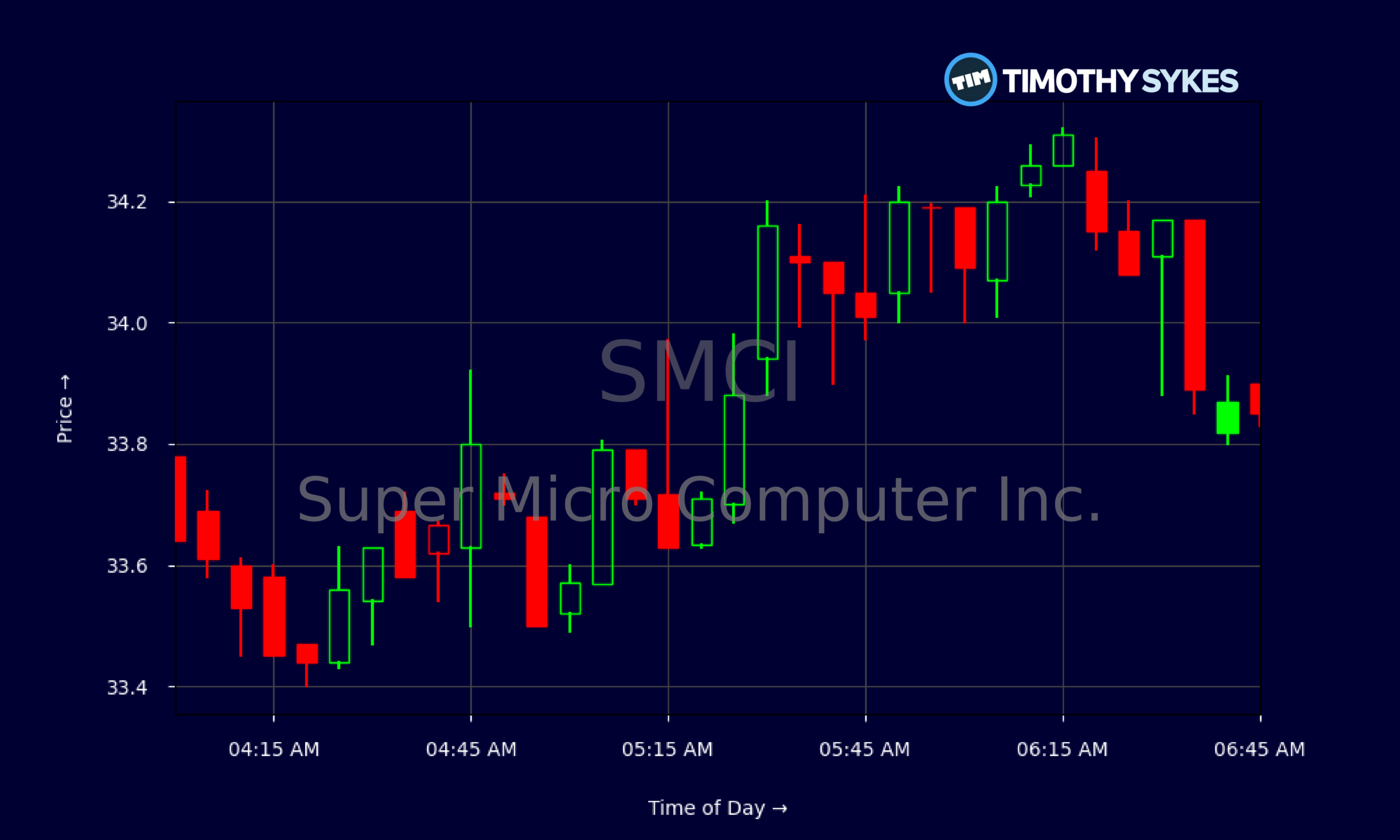
Live Update At 06:48:07 EST: On Wednesday, November 04, 2026 Super Micro Computer Inc. stock [NASDAQ: SMCI] is trending up by 7.84%! Discover the key drivers behind this movement as well as our expert analysis in the detailed breakdown below.
Quick Financial Overview
For active traders, SMCI’s tape and fundamentals are finally lining up. On the fundamental side, Super Micro Computer just printed a blowout fiscal Q1: EPS of $1.81 versus $1.23 expected and revenue of $19.9B versus $16.26B. That is not a small beat — that is a different regime. It confirms SMCI is becoming a core supplier of AI and IT datacenter infrastructure rather than a niche server name.
The underlying ratios back up the growth story. SMCI generated about $39.1B in trailing revenue with an asset turnover of 1.8, meaning it squeezes a lot of sales out of every dollar of assets. A price‑to‑sales around 0.7 and a P/E of 12.84 keep the valuation in “growth at a reasonable price” territory compared with many AI peers. Return on equity near 27% and solid balance‑sheet strength — current ratio 3.9, total debt‑to‑equity 0.45 — give SMCI flexibility to keep scaling.
More Breaking News
On the chart, though, SMCI hasn’t just gone straight up. The recent daily data show the stock sliding from the low $40s down toward the low $30s, with the latest close around $31.39. That is a hard pullback. Intraday, the 5‑minute action between $33.5 and $34.3 shows tight consolidation and fading volatility. For momentum traders, that mix — strong fundamentals, cooling price — screams “watch for the next catalyst and breakout level.”
Why Traders Are Locked In On SMCI
Super Micro Computer gave traders a classic multi‑catalyst run. First came the preliminary fiscal Q1 numbers in late October. SMCI pre‑announced revenue and gross margins ahead of expectations, and the stock ripped — 12% premarket, then roughly 9–10% intraday on several sessions as the Street recalibrated. When a name this liquid jumps that hard on fundamentals, day traders notice and algorithms lock in.
Then the final Q1 print on 2026/11/03 turned the early optimism into a full thesis. SMCI’s EPS and revenue beat were massive, and management did not play it safe. They pushed Q2 guidance up to EPS of $1.66–$1.90 and revenue of $19.5B–$21.5B, well above prior consensus of $1.14 and $17.51B. For traders, raised guidance like that is fuel — it signals confidence that AI server orders are not just a one‑quarter wonder.
Super Micro Computer also raised its FY27 revenue outlook to $72B–$82B, up from $65B–$72B and ahead of the Street’s $70.27B. Longer‑dated guidance rarely moves scalpers, but swing traders and position traders track it because it tells you how far the AI infrastructure cycle might run. SMCI is effectively telling the market it plans to be a core supplier through that whole wave.
Around the edges, there is more to the story. SMCI‑backed Argentum AI is negotiating a $5B private credit loan to secure AI chips, and shares popped more than 7% on that headline. New collaborations with Nokia, NVIDIA, Nutanix and SambaNova keep adding AI hooks — from 5G/edge AI‑RAN to high‑density Blackwell GPU racks and disaggregated inference systems. Each partnership gives traders another angle for news‑driven spikes, which is exactly what short‑term players hunt.
Conclusion
The SMCI setup right now is the kind of thing momentum traders study for years. Super Micro Computer has stacked a series of fundamental wins — huge Q1 beat, aggressive Q2 guidance, and a bigger FY27 revenue target — on top of a growing web of AI partnerships and product launches. At the same time, the stock has pulled back sharply from prior highs into the low $30s, while guidance still points up. That disconnect between price action and business momentum is where disciplined trading plans are built.
There are real risks. A plaintiffs’ law firm has opened a securities investigation tied to older SMCI holders, and details remain thin. Headline risk can hit hard in a crowded AI trade, and no trader should ignore that. Volatility also cuts both ways; the same stock that jumps 10–12% on good news can unwind fast on disappointment.
For traders in the Tim Sykes community, this is exactly the kind of chart‑plus‑catalyst puzzle they work to solve every day. The rules still apply: cut losses fast, let the best setups come to you, and never chase hype without a clear plan. As millionaire penny stock trader and teacher Tim Sykes, says, “Cut losses quickly, let profits ride, and don’t overtrade.”. As Tim Sykes likes to remind students, “The market doesn’t care about your opinion — it rewards preparation, discipline, and the ability to react, not predict.” This SMCI story is a live case study in that mindset, and it should stay on every active trader’s watchlist for educational and research purposes.
This is stock news, not investment advice. Timothy Sykes News delivers real-time stock market news focused on key catalysts driving short-term price movements. Our content is tailored for active traders and investors seeking to capitalize on rapid price fluctuations, particularly in volatile sectors like penny stocks. Readers come to us for detailed coverage on earnings reports, mergers, FDA approvals, new contracts, and unusual trading volumes that can trigger significant short-term price action. Some users utilize our news to explain sudden stock movements, while others rely on it for diligent research into potential investment opportunities.
Dive deeper into the world of trading with Timothy Sykes, renowned for his expertise in penny stocks. Explore his top picks and discover the strategies that have propelled him to success with these articles:
- Penny Stocks Trading Guide
- Best Penny Stocks Under $1 to Buy Today
- Top 8 Penny Stocks to Watch on Robinhood
Once you’ve got some stocks on watch, elevate your trading game with StocksToTrade the ultimate platform for traders. With specialized tools for swing and day trading, StocksToTrade will guide you through the market’s twists and turns.
Dig into StocksToTrade’s watchlists here:





Leave a reply