
Denison Mines Corp (Canada) stocks have been trading up by 7.05 percent after upbeat uranium sector demand headlines boosted sentiment.
Key Takeaways
- Denison Mines has begun full‑scale construction at its Phoenix in‑situ recovery (ISR) uranium project in Saskatchewan, starting with installation of the Phase 1 freeze wall.
- The move to install the Phase 1 freeze wall at Phoenix is seen as a key de‑risking step on the path toward production for Denison Mines.
- Long‑term uranium contract prices are at nominal record highs while utilities are still contracting below replacement rates, indicating a structurally tightening uranium market.
- Major uranium producers such as Kazatomprom are facing sulfuric acid supply and plant‑delay issues, underscoring broader supply risks in the sector.
- A wider group of uranium names, including Cameco, are cited as key beneficiaries of rising uranium prices and renewed focus on security of supply, framing a supportive backdrop for uranium developers like Denison.
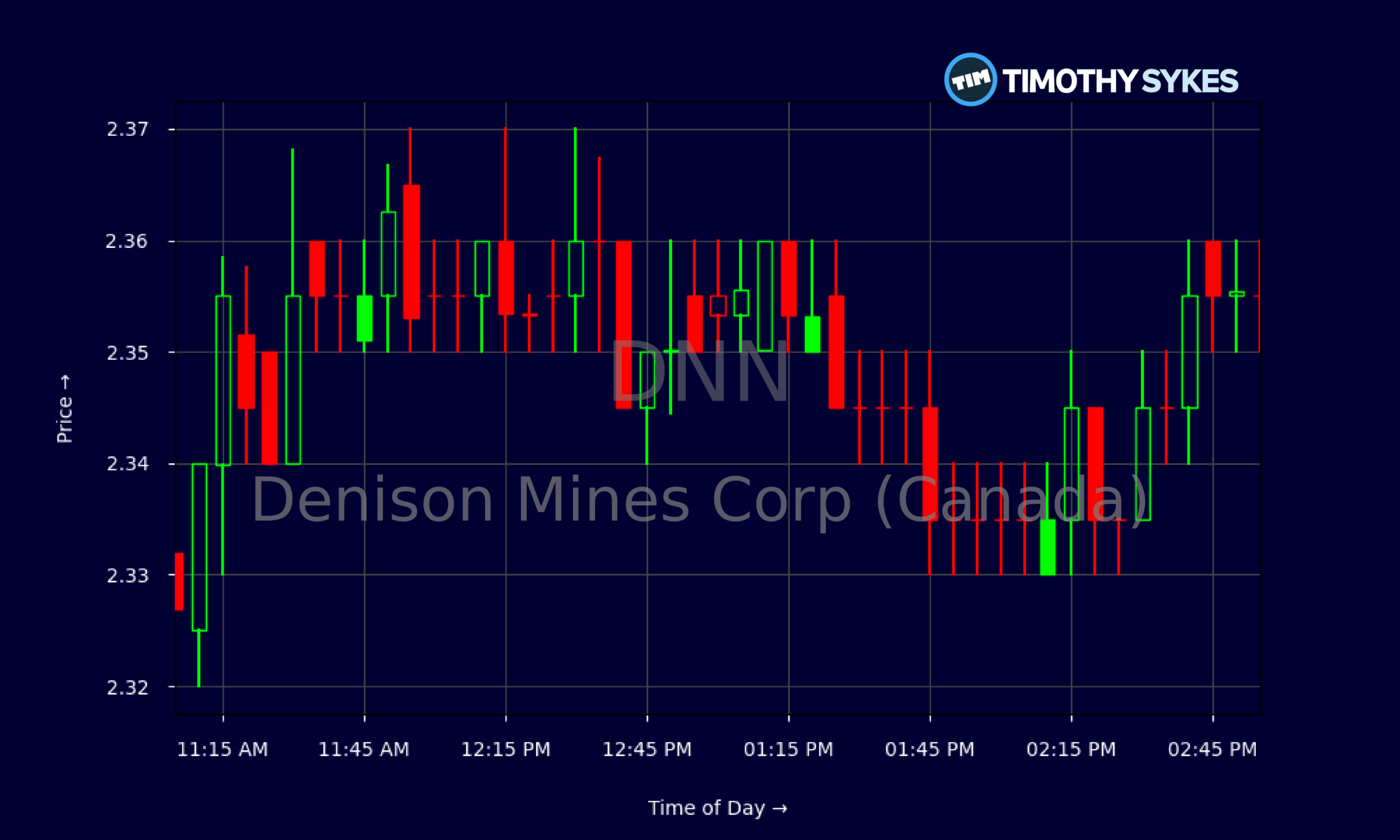
Live Update At 15:02:36 EDT: On Tuesday, October 27, 2026 Denison Mines Corp (Canada) stock [NYSE American: DNN] is trending up by 7.05%! Discover the key drivers behind this movement as well as our expert analysis in the detailed breakdown below.
Quick Financial Overview
DNN has been grinding higher over the past few weeks, not spiking, but stair‑stepping. From early October 2026 around $2.57 to $2.71, the stock pulled back, then found support in the low $2.20s, and has now bounced to about $2.36. For active traders, that’s a constructive pattern: higher lows, controlled ranges, and no panic flush.
Intraday, the 5‑minute tape shows DNN holding a tight band between roughly $2.32 and $2.37 for most of the day, with plenty of trading around $2.34–$2.36. That’s classic consolidation after a short bounce. It tells traders that supply and demand are close to balanced, and any strong push above the recent $2.37 area could trigger momentum.
More Breaking News
On the fundamentals, Denison Mines is still a pre‑production uranium name. Revenue is tiny at about $4.9M versus a market value implying a very high price‑to‑sales multiple. Margins on paper look ugly and deeply negative, which is normal for a developer that has not yet brought its main asset into production. Cash, though, is a key cushion: DNN sits on hundreds of millions in cash and short‑term investments, with a current ratio near 9. That liquidity gives Denison Mines room to build Phoenix without constantly tapping the market, which traders should factor into any longer‑term thesis.
Why Traders Are Watching DNN Right Now
Denison Mines just flipped an important switch. By starting full‑scale construction at its Phoenix ISR uranium project in Saskatchewan and installing the Phase 1 freeze wall, DNN is moving from “story stock” to actual builder. Traders love clear milestones, and this is one. A freeze wall is part of the containment system for in‑situ recovery mining; getting it in place is a visible, verifiable step that lowers execution risk.
For DNN, that matters because the timing lines up with a powerful uranium backdrop. Recent reports show long‑term uranium contract prices at nominal record highs. Yet utilities are still signing contracts below replacement rates. That means the fuel leaving the system is not being fully covered by fresh long‑term deals. Structurally, that pushes the market toward tighter supply and, often, higher prices.
Layer on top the issues at Kazatomprom, the world’s largest uranium producer, which is facing sulfuric acid supply constraints and plant delays. When a heavyweight stumbles, traders look for who benefits. Projects like Phoenix, in a stable jurisdiction like Canada, suddenly look more strategic. DNN is positioned exactly there.
Meanwhile, producers such as Paladin are already reporting strong production and revenue growth, showing how rising uranium prices translate into real numbers. Cameco and other uranium names are cited as key winners from this shift in focus toward security of supply. For Denison Mines, the read‑through is straightforward: if today’s producers are cashing in, developers that are now de‑risking projects — like DNN — are leveraged to the same trend. That’s why traders keep DNN on their screens when uranium headlines heat up.
Conclusion
For active traders, DNN sits at the crossroads of a company‑specific catalyst and a strong macro theme. Denison Mines is no longer just talking about Phoenix; it is building it. The Phase 1 freeze wall installation signals that management is confident enough in market conditions and project economics to spend serious capital. Combine that with high long‑term uranium prices, contracting that still lags replacement needs, and supply hiccups at Kazatomprom, and the setup around Denison Mines looks materially better than it did a few years ago.
None of that removes risk. DNN still shows weak traditional profitability ratios, high valuation metrics relative to current revenue, and the usual execution risk that comes with any mining build‑out. The recent trading range between roughly $2.20 support and the mid‑$2.30s resistance also tells you this is not a one‑way bet; the market is still testing both sides.
This is where discipline matters. As Tim Sykes often reminds traders, “Cut losses quickly, because staying wrong is how you blow up.” As millionaire penny stock trader and teacher Tim Sykes, says, “Cut losses quickly, let profits ride, and don’t overtrade.”. DNN gives a clean case study in that mindset: respect the trend, track the construction and uranium headlines, use clearly defined levels, and remember this is uranium — a volatile sector where both breakouts and shakeouts tend to move fast. All analysis here is for educational and research purposes only, to help traders think through the DNN setup with a clearer framework.
This is stock news, not investment advice. Timothy Sykes News delivers real-time stock market news focused on key catalysts driving short-term price movements. Our content is tailored for active traders and investors seeking to capitalize on rapid price fluctuations, particularly in volatile sectors like penny stocks. Readers come to us for detailed coverage on earnings reports, mergers, FDA approvals, new contracts, and unusual trading volumes that can trigger significant short-term price action. Some users utilize our news to explain sudden stock movements, while others rely on it for diligent research into potential investment opportunities.
Dive deeper into the world of trading with Timothy Sykes, renowned for his expertise in penny stocks. Explore his top picks and discover the strategies that have propelled him to success with these articles:
- Penny Stocks Trading Guide
- Best Penny Stocks Under $1 to Buy Today
- Top 8 Penny Stocks to Watch on Robinhood
Once you’ve got some stocks on watch, elevate your trading game with StocksToTrade the ultimate platform for traders. With specialized tools for swing and day trading, StocksToTrade will guide you through the market’s twists and turns.
Dig into StocksToTrade’s watchlists here:





Leave a reply