

American Airlines Group Inc. stocks have been trading up by 3.4 percent after strong passenger demand and revenue outlook improvements.
Key Takeaways Traders Need To Know
- Q3 adjusted EPS of $0.28 topped expectations for a $0.36 loss on record $16.34B revenue, but fuel costs jumped 67.5% year over year and kept American in the red.
- Management said the quarterly loss was mainly fuel-driven and argued AAL would have been solidly profitable excluding fuel, while pledging to push results higher.
- Credit-card spending on the Citi co-branded cards rose 10% year over year, and American flagged more upside from its expanded Citi partnership.
- Major Wall Street firms cut AAL price targets but kept positive ratings, pointing to macro and jet fuel headwinds rather than company-specific problems.
- Leadership outlined 2027 revenue priorities, highlighted unit revenue gains, and signaled it will “keep our eyes open” for airline sector M&A.
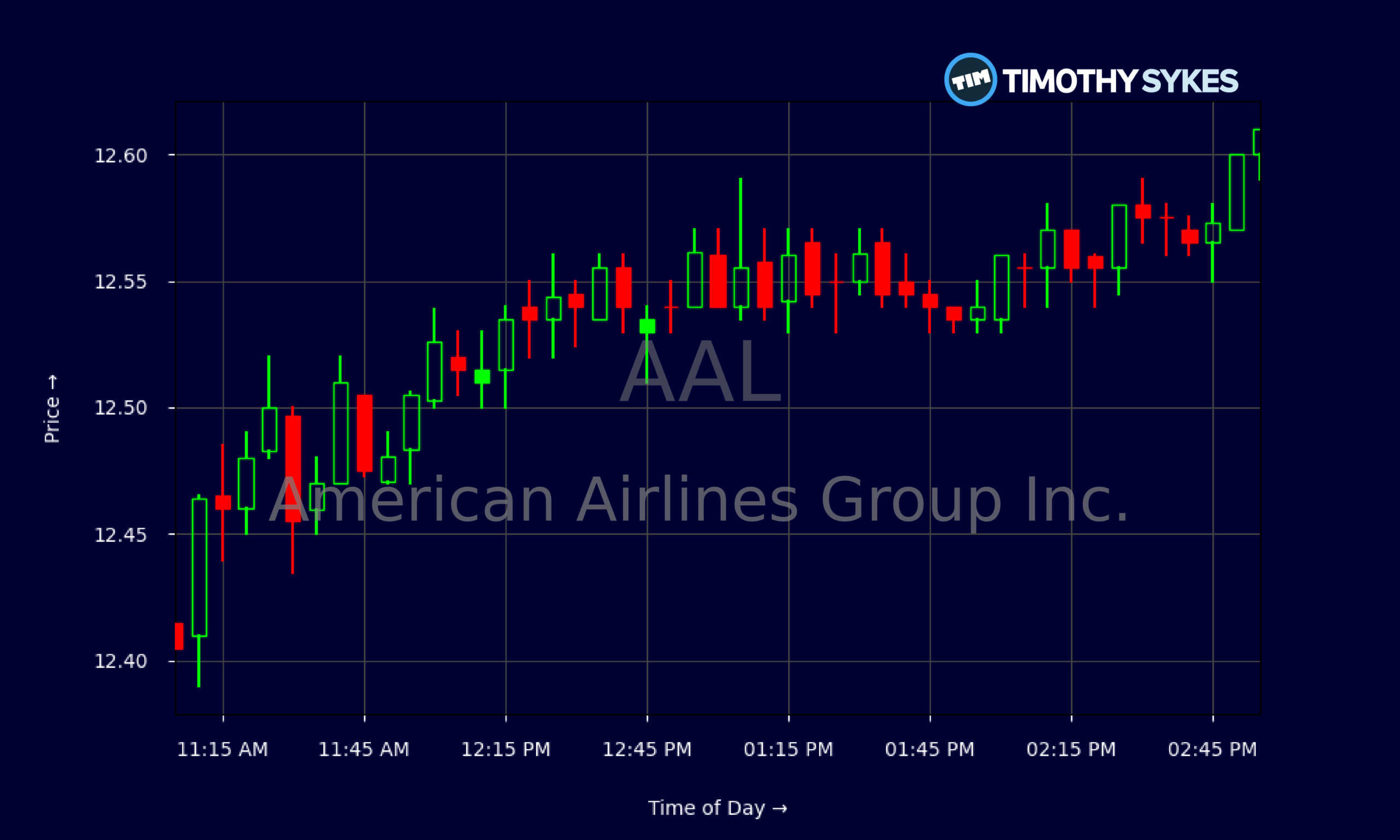
Live Update At 15:02:47 EDT: On Tuesday, October 27, 2026 American Airlines Group Inc. stock [NASDAQ: AAL] is trending up by 3.4%! Discover the key drivers behind this movement as well as our expert analysis in the detailed breakdown below.
Quick Financial Overview
AAL is trading in a tight range, but under the hood this is a classic tug-of-war chart. Over the last few weeks, American Airlines has mostly bounced between about $11.70 and $13.00, with recent closes clustering near $12.60. That tells traders the market is undecided but not panicking. The most recent session shows AAL opening near $12.39, dipping early, and grinding back to close at $12.615. Intraday 5‑minute candles show a slow, steady bid from around $12.20 in the morning toward the $12.55–$12.60 zone into the close. No wild spikes, just accumulation.
More Breaking News
Fundamentals show why the stock is stuck in this range. American Airlines generated $16.34B in quarterly revenue and roughly $54.63B over the last year, yet margins remain razor thin. EBIT margin is only 2.2%, while net margin is negative. AAL carries heavy debt, with about $31.55B of long‑term debt and a current ratio of just 0.5, meaning limited short‑term cushion. Traders watching AAL have to respect both sides: strong top-line power, but a balance sheet and fuel exposure that can turn small macro moves into big equity swings.
Why Traders Are Watching AAL After Earnings
AAL’s latest earnings dropped a complicated story on the tape, which is exactly the kind of setup active traders hunt. On the surface, American Airlines beat expectations: adjusted EPS came in at $0.28 versus a forecast loss of $0.36, and revenue hit a record $16.34B, ahead of the $16.21B consensus. That beat was driven by strong premium demand and better commercial execution. In plain English, AAL is packing planes and selling higher-yield seats.
But the problem child is fuel. American Airlines reported that fuel expense jumped 67.5% year over year, and management was blunt that the quarter slipped into a loss mainly because of that spike. They even argued AAL would have been “solidly profitable” without the fuel shock. For short‑term trading, that line matters. It tells you the core business is functioning, but the stock is now a leveraged bet on the next leg in jet fuel prices.
Wall Street’s response reinforces this mixed setup. Morgan Stanley cut its AAL price target to $22 from $24 but kept an Overweight rating, calling out a solid beat and pointing to slower capacity growth as a response to high fuel. Bernstein trimmed its American Airlines target from $23 to $19, still at Outperform, mainly because of a worse fuel outlook through 2026, not because AAL’s execution broke. UBS nudged its target to $16 from $17 while staying Buy, saying strong demand must hold and fuel needs to cool for a real rally. So traders see a clear pattern: the Street still leans positive on American Airlines, but it is dialing back the upside band.
There is also a quieter bull angle building underneath. AAL reported a 10% year‑over‑year jump in spending on its Citi co‑branded credit cards and talked up more upside from that partnership. Those credit‑card economics are usually high margin and less cyclical than ticket sales. Combine that with management’s 2027 plan to improve overall revenue performance and boost unit revenue, and you get a long runway of potential efficiency gains. Add in the comment that American Airlines will “keep our eyes open” on mergers and acquisitions, and you have a stock where operational tweaks, fuel swings, and possible sector deals can all trigger momentum bursts that active traders love to stalk.
Conclusion
For traders, AAL right now is a volatility engine waiting for a catalyst. American Airlines is printing record revenue and showing it can out-execute expectations, yet the stock sits near the low teens because fuel and debt keep a lid on enthusiasm. The tape reflects that tension: a tight trading band around $12–$13, modest intraday trends instead of breakouts, and a Street that cuts price targets while still calling the name Overweight, Outperform, or Buy.
The key is to accept what American Airlines actually is: a cyclical, highly leveraged business with real pricing power and strong demand, but margins that can flip from positive to negative with one commodity line item. Management guiding to another quarter of record revenue growth, leaning on the Citi card partnership, and focusing on unit revenue through 2027 all point to a team playing offense, not just hiding in cost cuts. At the same time, the balance sheet and current ratio remind traders not to overstay when the macro wind shifts.
For active market players, that means AAL remains a textbook “plan your trade, trade your plan” ticker. In the words of Tim Sykes, “The market doesn’t care about your opinion, only your preparation — study the chart, know the catalysts, and always respect your stop.” That discipline is especially critical in a name like AAL, where tight ranges can suddenly give way to sharp moves; as millionaire penny stock trader and teacher Tim Sykes, says, “It’s better to go home at zero than to go home in the red.”. American Airlines gives plenty of catalysts; it’s on traders to manage the risk.
This is stock news, not investment advice. Timothy Sykes News delivers real-time stock market news focused on key catalysts driving short-term price movements. Our content is tailored for active traders and investors seeking to capitalize on rapid price fluctuations, particularly in volatile sectors like penny stocks. Readers come to us for detailed coverage on earnings reports, mergers, FDA approvals, new contracts, and unusual trading volumes that can trigger significant short-term price action. Some users utilize our news to explain sudden stock movements, while others rely on it for diligent research into potential investment opportunities.
Dive deeper into the world of trading with Timothy Sykes, renowned for his expertise in penny stocks. Explore his top picks and discover the strategies that have propelled him to success with these articles:
- Penny Stocks Trading Guide
- Best Penny Stocks Under $1 to Buy Today
- Top 8 Penny Stocks to Watch on Robinhood
Once you’ve got some stocks on watch, elevate your trading game with StocksToTrade the ultimate platform for traders. With specialized tools for swing and day trading, StocksToTrade will guide you through the market’s twists and turns.
Dig into StocksToTrade’s watchlists here:





Leave a reply