

Celestica Inc. stocks have been trading up by 12.99 percent after strong earnings and AI-driven demand boosted investor confidence.
Key Takeaways
- Q3 revenue surged 83% year over year to $5.83B, with adjusted EPS up 109% to $3.30 and a record 8.5% adjusted operating margin, topping Wall Street expectations.
- Management lifted 2026 guidance to $21B in revenue and $11.55 in adjusted EPS, both above prior consensus, signaling durable earnings power.
- Q4 guidance calls for $6.28B–$6.58B in revenue and $3.37–$3.57 in adjusted EPS, with an 8.7% adjusted operating margin, pointing to continued near-term strength.
- An aggressive 2027 outlook targets about $40B in revenue, a 9% adjusted operating margin, and $21.50 in adjusted EPS, fueled by hyperscaler and AI data center demand.
- A recent $3.45B equity raise funds $1.5B–$2B in capex and a new buyback plan, while near-term free cash flow runs lower as Celestica leans into growth.
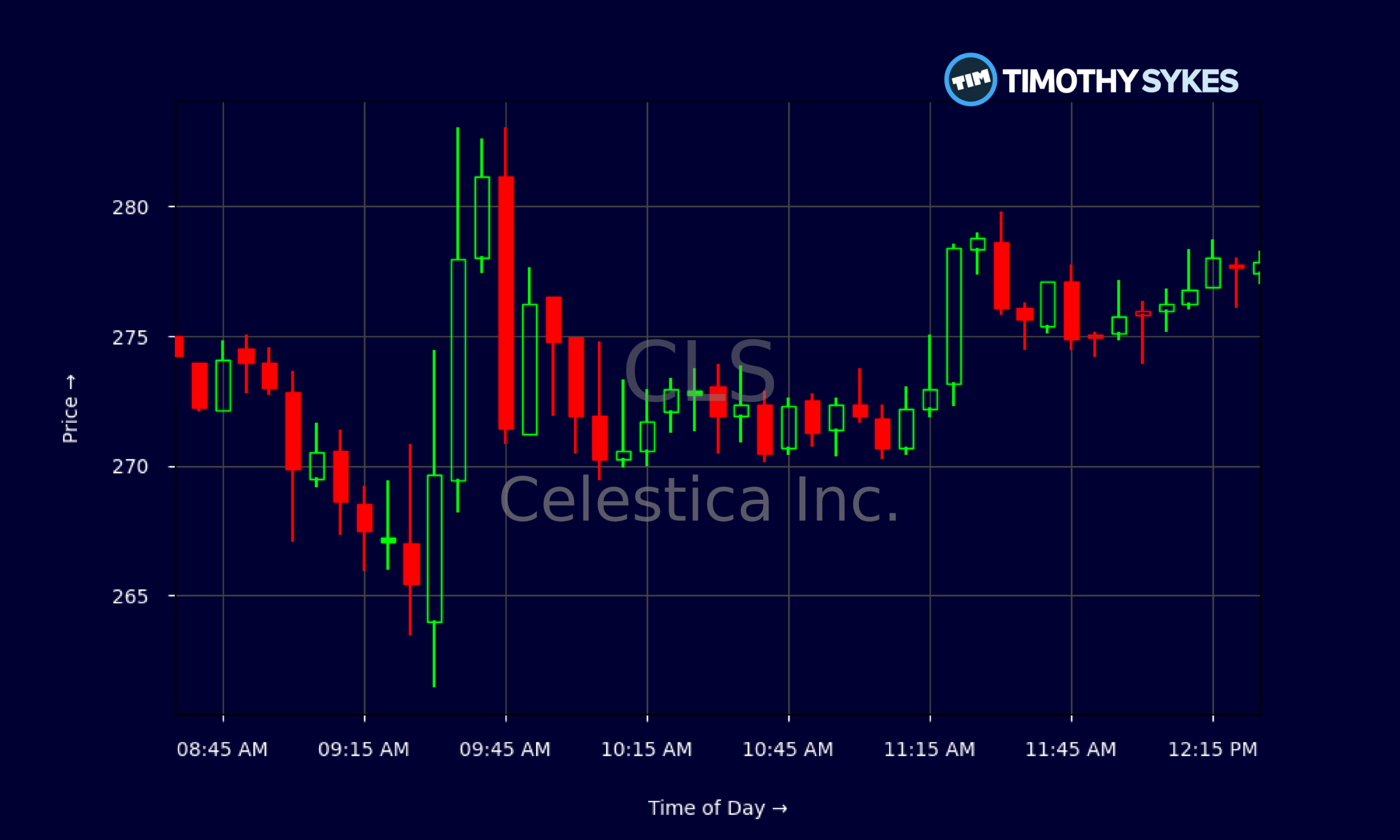
Live Update At 12:32:41 EDT: On Tuesday, October 27, 2026 Celestica Inc. stock [NYSE: CLS] is trending up by 12.99%! Discover the key drivers behind this movement as well as our expert analysis in the detailed breakdown below.
Quick Financial Overview
CLS has been trading like an AI infrastructure proxy, and the tape shows the story. After peaking above $380 earlier in October 2026, Celestica slid into the mid‑$240s by 2026/10/26, then snapped back hard to close at $278.56 on 2026/10/27. That intraday action — a gap down to $264, flush to $261.50, then a steady grind back toward the high $270s — shows aggressive dip‑buying and shorts getting squeezed.
Under the hood, the fundamentals back that strength. Celestica just posted Q3 revenue of $5.83B and net income of $397.2M, with EBIT of $479.9M. That supports an 8.8% EBIT margin and roughly 12% gross margin — strong numbers for a contract manufacturer tied to complex hardware builds.
More Breaking News
Return on equity above 50% and asset turnover of 2x tell traders CLS is squeezing real efficiency out of its balance sheet. Debt looks manageable with total‑debt‑to‑equity at 0.33 and interest coverage around 24.8x. The flip side: a rich 2.75x price‑to‑sales and 17.29x price‑to‑book say traders are paying up for this AI story. If growth cools, that premium becomes a problem. For now, CLS is priced as a momentum leader, and the chart agrees.
Why Traders Are Watching Celestica’s AI Supercycle Bet
Celestica is not guiding for slow and steady. CLS is effectively planting a flag on the AI hill, telling the market it plans to be one of the core builders of hyperscaler and frontier AI lab infrastructure. Management is targeting about $40B of revenue in 2027, nearly 90% above current levels, with a 9% adjusted operating margin and $21.50 in adjusted EPS. For traders, those are not incremental tweaks — they are moon‑shot numbers that reset expectations across the board.
The bullish part is that CLS is not selling a dream with no receipts. Q3 revenue jumped 83% year over year and adjusted EPS climbed 109%, with a record 8.5% adjusted operating margin. Celestica beat its own guidance and Street numbers, then immediately raised its 2026 outlook to $21B in revenue and $11.55 in adjusted EPS. That kind of beat‑and‑raise pattern is classic fuel for momentum trading.
Near term, Q4 guidance from Celestica — $6.28B–$6.58B in revenue, $3.37–$3.57 in adjusted EPS, and an 8.7% adjusted operating margin — shows the AI tailwind is not a one‑quarter spike. CLS is guiding to stable or improving margins as volume ramps.
To fund the build‑out, Celestica raised $3.45B in equity and plans $1.5B–$2B in capex, while also setting up a new buyback. That mix tells traders two things: dilution risk is real, but management is confident enough to return cash even as free cash flow runs light. The key trading question is whether the AI data center supercycle lasts long enough for CLS to grow into this bigger capital base.
Conclusion
For active traders, CLS is the kind of name that rewards homework. Celestica’s Q3 numbers — 83% revenue growth, 109% adjusted EPS growth, record margins — line up with a stock that has already run hard and still finds dip‑buyers on sharp pullbacks. The raised 2026 targets and aggressive 2027 roadmap give longer‑dated traders a clear narrative: CLS wants to ride the AI infrastructure boom as far as it goes.
But high expectations cut both ways. Celestica’s premium valuation, heavy capex, and lower near‑term free cash flow mean execution has to stay tight. Any stumble in hyperscaler orders, margin compression, or delays in AI projects and the same leverage that helps on the way up can hurt fast on the way down. That’s why many short‑term traders in CLS will keep tight risk controls and focus on key levels around recent highs and the $250–$260 support zone. As millionaire penny stock trader and teacher Tim Sykes says, “Cut losses quickly, let profits ride, and don’t overtrade.” Those basic trading rules matter even more with a volatile, high‑expectation name like CLS.
The educational takeaway matches what Tim Sykes and Tim Bohen hammer home: “Patterns repeat, but the market always humbles traders who stop doing their homework.” With CLS, the pattern right now is strong growth, rising guidance, and heavy AI‑driven demand. Your job as a trader is to track the earnings, watch the guidance, study the chart, and be ready to react — not hope. This article is for educational and research purposes only and is not investment advice.
This is stock news, not investment advice. Timothy Sykes News delivers real-time stock market news focused on key catalysts driving short-term price movements. Our content is tailored for active traders and investors seeking to capitalize on rapid price fluctuations, particularly in volatile sectors like penny stocks. Readers come to us for detailed coverage on earnings reports, mergers, FDA approvals, new contracts, and unusual trading volumes that can trigger significant short-term price action. Some users utilize our news to explain sudden stock movements, while others rely on it for diligent research into potential investment opportunities.
Dive deeper into the world of trading with Timothy Sykes, renowned for his expertise in penny stocks. Explore his top picks and discover the strategies that have propelled him to success with these articles:
- Penny Stocks Trading Guide
- Best Penny Stocks Under $1 to Buy Today
- Top 8 Penny Stocks to Watch on Robinhood
Once you’ve got some stocks on watch, elevate your trading game with StocksToTrade the ultimate platform for traders. With specialized tools for swing and day trading, StocksToTrade will guide you through the market’s twists and turns.
Dig into StocksToTrade’s watchlists here:





Leave a reply