

Celestica Inc. stocks have been trading up by 12.51 percent amid bullish sentiment on its expanding AI hardware manufacturing opportunities.
Key Takeaways
- Q3 2026 revenue jumped 83% year over year to $5.83B, topping the $5.46B consensus and signaling powerful demand for CLS.
- Adjusted EPS surged 109% to $3.30 with a record 8.5% adjusted operating margin, showing Celestica Inc. is scaling profitably.
- The company lifted 2026 targets to $21B in revenue and $11.55 in adjusted EPS, both above prior Street models.
- Management guided Q4 revenue to $6.28B–$6.58B and adjusted EPS to $3.37–$3.57, implying continued strong profitability.
- Celestica’s new 2027 outlook calls for $40B in revenue, 9% margins, $21.50 EPS, and $1.5B–$2B in capex to feed hyperscaler and frontier AI lab demand.
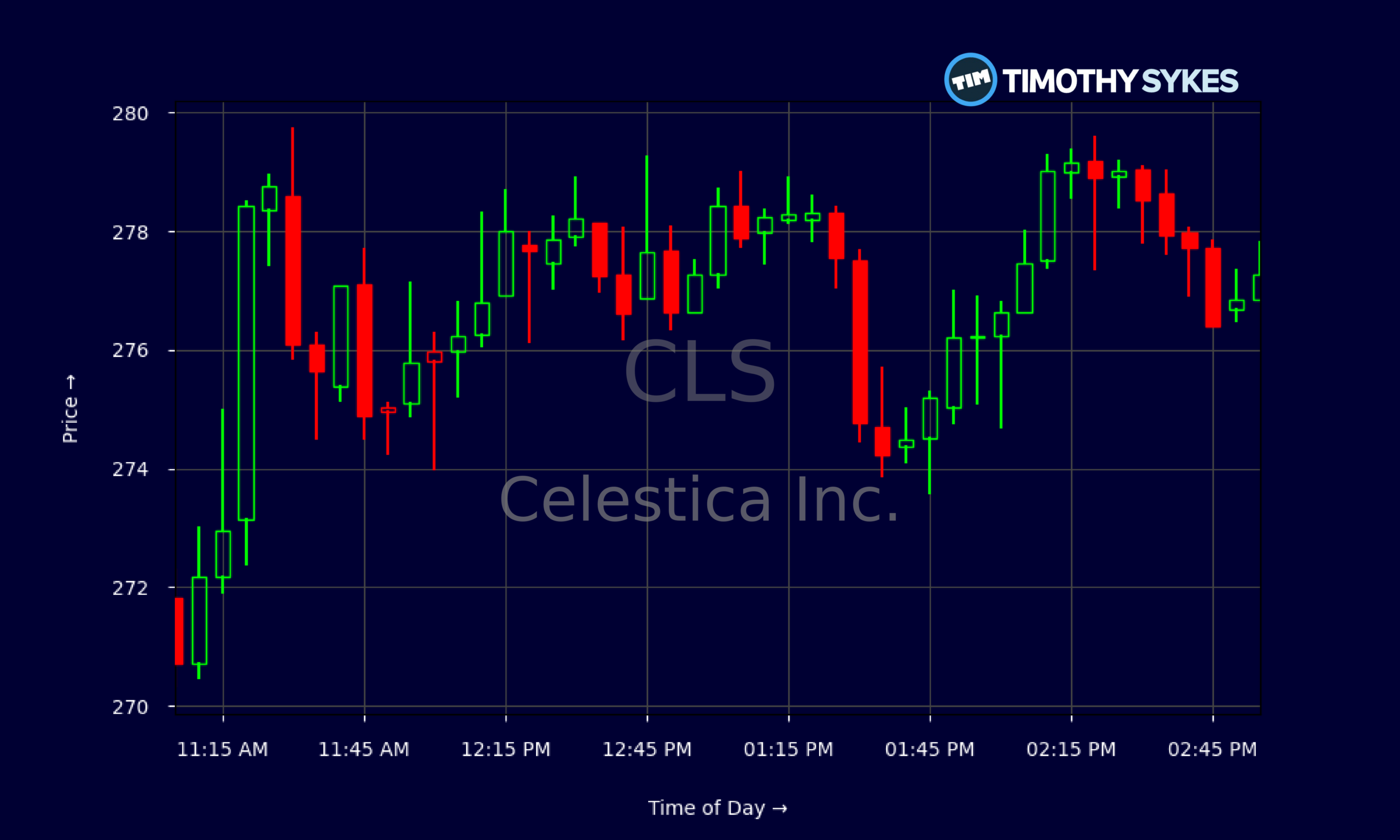
Live Update At 15:02:19 EDT: On Tuesday, October 27, 2026 Celestica Inc. stock [NYSE: CLS] is trending up by 12.51%! Discover the key drivers behind this movement as well as our expert analysis in the detailed breakdown below.
Quick Financial Overview
Celestica Inc. just backed up the hype with numbers that matter to traders. In Q3 2026, CLS delivered $5.83B in revenue and $3.30 in adjusted EPS, blasting past guidance and Street expectations. Revenue grew 83% year over year, while adjusted EPS climbed 109%. That is not slow, steady growth. That is a rocket.
Margins tell the same story. CLS posted an 8.5% adjusted operating margin in the quarter and sits on a 12% gross margin. For a contract manufacturer tied into AI data center hardware, that kind of profitability says management is controlling costs and winning higher‑value deals.
On the balance sheet, Celestica ended the period with about $3.96B in cash and a modest total‑debt‑to‑equity ratio near 0.33, giving the company room to fund big projects. Return on equity above 50% and strong asset turnover show the business is squeezing a lot of profit out of its footprint.
More Breaking News
The chart, though, reminds traders nothing goes straight up. CLS has pulled back sharply from recent highs near the mid‑$380s to around $277.50 on 2026/10/27. Still, the intraday 5‑minute tape shows tight action between roughly $270 and $280, suggesting dip‑buyers are active after the earnings spike. For active traders, that combination of explosive fundamentals and recent volatility sets the stage for large, tradable swings.
Why Traders Are Watching CLS After This AI Surge
Traders are glued to CLS because Celestica Inc. just laid out one of the boldest AI roadmaps in hardware. Management now targets $40B in revenue by 2027, roughly 90% growth from current levels, with a 9% adjusted operating margin and $21.50 in adjusted EPS. Those are not small tweaks to guidance — they reset the entire narrative around what this company wants to be in the AI data center build‑out.
The engine behind this ambition is demand from hyperscalers and frontier AI labs. These customers are racing to build out infrastructure for large AI models, and Celestica Inc. is positioning CLS as a go‑to manufacturing and integration partner. Management even says customer forecasts into 2028 run ahead of what the company has put into its 2027 outlook. For traders, that hints at a pipeline strong enough that today’s “aggressive” numbers may not be the ceiling.
Near term, Celestica’s Q4 guide keeps the momentum intact: revenue of $6.28B–$6.58B and adjusted EPS of $3.37–$3.57, with an 8.7% adjusted operating margin. That points to sequential growth and slight margin expansion, not a one‑quarter wonder.
There is a trade‑off, though. CLS raised its 2026 revenue target to $21B and adjusted EPS to $11.55, but also flagged lower free cash flow because of heavier capex. The company recently raised $3.45B in equity to fund this build‑out and still talks about launching a new buyback. For active traders, that blend of dilution, capex, and a planned NCIB screams “high‑beta growth story” — big upside if execution continues, but also sensitive to any slowdown in AI orders.
Conclusion
For traders who chase momentum backed by real numbers, CLS is now squarely on the radar. Celestica Inc. just delivered a rare combo: Q3 revenue up 83%, adjusted EPS up 109%, and record margins, then turned around and pushed its 2026 and 2027 targets sharply higher. The balance sheet holds billions in fresh cash to fund $1.5B–$2B a year in capex, all aimed at servicing hyperscalers and frontier AI labs. That is the heart of today’s AI hardware trade.
At the same time, the chart is flashing opportunity and risk. Celestica CLS has sold off hard from its recent peak, even as guidance moves higher. That kind of disconnect often creates emotional trading — breakouts, failed breakouts, and sharp dips that reward disciplined entries and fast risk management. Short‑term pressure from dilution and spending can clash with the longer‑term AI growth story, which is exactly where skilled day and swing traders thrive.
This is where the Sykes‑style mindset matters. As Tim Sykes likes to hammer home, “Volatility is your best friend and worst enemy — you either prepare for it, or it exposes you.” As millionaire penny stock trader and teacher Tim Sykes, says, “You must adapt to the market; the market will not adapt to you.”. CLS now sits in that zone: massive AI‑driven growth targets, rising earnings power, heavy reinvestment, and a volatile tape. For educational and research purposes, traders should treat Celestica Inc. as a live case study in how to trade a high‑conviction growth story without forgetting rule number one — always, always manage risk first.
This is stock news, not investment advice. Timothy Sykes News delivers real-time stock market news focused on key catalysts driving short-term price movements. Our content is tailored for active traders and investors seeking to capitalize on rapid price fluctuations, particularly in volatile sectors like penny stocks. Readers come to us for detailed coverage on earnings reports, mergers, FDA approvals, new contracts, and unusual trading volumes that can trigger significant short-term price action. Some users utilize our news to explain sudden stock movements, while others rely on it for diligent research into potential investment opportunities.
Dive deeper into the world of trading with Timothy Sykes, renowned for his expertise in penny stocks. Explore his top picks and discover the strategies that have propelled him to success with these articles:
- Penny Stocks Trading Guide
- Best Penny Stocks Under $1 to Buy Today
- Top 8 Penny Stocks to Watch on Robinhood
Once you’ve got some stocks on watch, elevate your trading game with StocksToTrade the ultimate platform for traders. With specialized tools for swing and day trading, StocksToTrade will guide you through the market’s twists and turns.
Dig into StocksToTrade’s watchlists here:




Leave a reply