

Skydance Corporation Class B stocks have been trading down by -3.47 percent amid reports questioning the studio’s long-term profitability.
Key Takeaways
- Skydance completed its acquisition of Warner Bros. Discovery’s assets and restructured most of the legacy notes, but its shares dropped 8.3% after announcing the debt retirement and exchanges.
- Shares of Skydance fell about 6.7%, making it the worst performer in the S&P 500, after it detailed restructuring of Warner Bros. Discovery’s outstanding notes and retirement of most legacy debt.
- Skydance, owner of CNN, saw its shares drop about 25% on heavy volume after CNN and other outlets won a court order blocking Donald Trump’s attempted ban on their White House access.
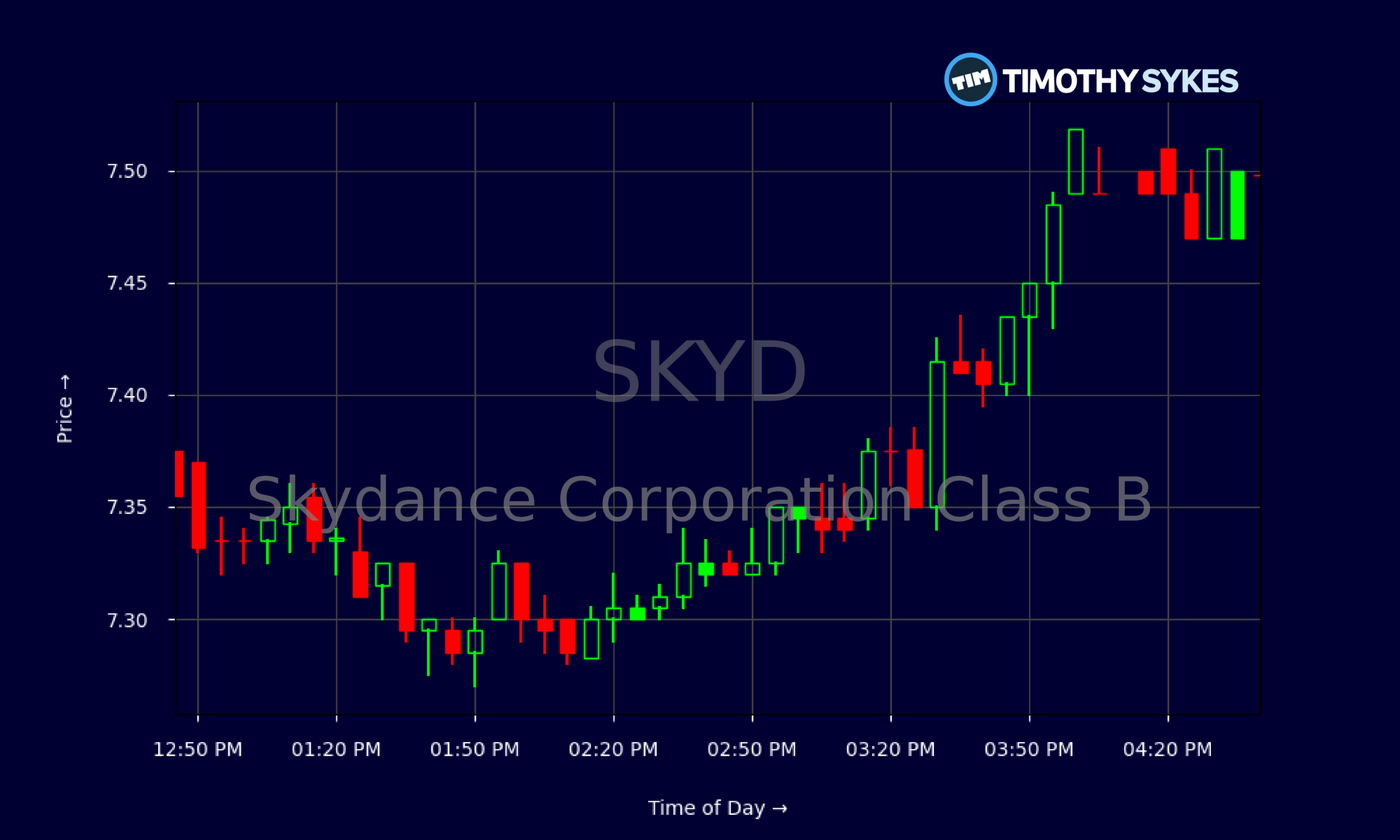
Live Update At 16:46:44 EDT: On Monday, October 26, 2026 Skydance Corporation Class B stock [NYSE: SKYD] is trending down by -3.47%! Discover the key drivers behind this movement as well as our expert analysis in the detailed breakdown below.
Quick Financial Overview
SKYD has been trading like a textbook downtrend. In early October, Skydance Corporation Class B changed hands around the low $10s. By the latest close, SKYD finished near $7.49, a steep slide of roughly 25% in a few weeks. That tells traders money is flowing out, not in.
The daily chart shows a series of lower highs from $10.26 down through the $9s and now the $7s. Each bounce in SKYD is getting sold into. For short-term traders, that usually signals strong overhead supply and fading confidence in the story.
Intraday, SKYD’s 5‑minute tape around the close is tight, stuck between roughly $7.30 and $7.50 with very little range. That type of choppy, low‑range action after a big drop often means many traders are on the sidelines, waiting for the next headline before committing.
More Breaking News
Fundamentally, Skydance still throws off cash. The latest quarter shows about $4.12B in revenue and EBITDA of $679M, plus free cash flow of $222M. But margins are thin, and net income is slightly negative, so every new risk headline hits SKYD harder. With price‑to‑sales near 0.4 and price‑to‑book around 0.9, the market is treating SKYD like a turnaround, not a growth story.
Why Traders Are Watching SKYD’s Volatility
SKYD is on the screens of momentum traders for one simple reason: the stock is moving, and the news flow is heavy. Skydance Corporation Class B has stacked multiple major events in a short window, and the market response has been brutally clear.
First came the strategic pivot. SKYD completed its acquisition of Warner Bros. Discovery’s assets and moved quickly to clean up the balance sheet. Management restructured most of the legacy notes and retired a big chunk of old debt through tender offers and exchanges. On paper, that sounds like the responsible move: less legacy debt, simpler capital structure, more room to operate.
But the tape told a different story. SKYD dropped 8.3% on that news, then another 6.7% in a session where it ranked as the worst name in the S&P 500. Traders clearly focused on deal risk, integration headaches, and the sheer size of the debt stack rather than any long‑term upside. When a stock sells off on “good housekeeping,” that’s a sign sentiment is fragile.
Then the political twist hit. Skydance, as owner of CNN, was in the middle of a courtroom battle over Donald Trump’s attempted ban on CNN’s White House access. A judge sided with CNN and other outlets, stating the ban likely violated constitutional rights. Legally, that was a win for CNN. Market‑wise, SKYD was hammered, dropping about 25% on heavy volume. That massive flush told traders that the market now assigns serious political and headline risk to SKYD’s news assets.
For active traders, those back‑to‑back hits make SKYD a high‑beta, news‑driven ticker where headlines can crush or spike the stock in a single session.
Conclusion
SKYD now trades like a classic battleground stock. On one side, Skydance Corporation Class B controls major media assets, including CNN and the newly acquired Warner Bros. Discovery properties. It generates strong EBITDA, posts over $28.89B in annual revenue, and throws off solid free cash flow. Debt is being reworked, legacy notes are getting retired, and the price‑to‑sales and price‑to‑book ratios suggest the market is already discounting a lot of bad news.
On the other side, the chart and the news tape are stacked against SKYD in the near term. The stock has fallen from above $10 to the mid‑$7s, and each big corporate update or legal twist has triggered more selling. The 25% drop tied to the CNN court order, plus the back‑to‑back declines after the Warner Bros. Discovery debt moves, show just how little patience traders have for uncertainty around this name right now.
For traders, that combination means one thing: opportunity, but only with a clear plan. SKYD can offer fast moves for day and swing traders who respect risk, study the catalysts, and react to price action instead of headlines alone. As millionaire penny stock trader and teacher Tim Sykes, says, “It’s not about how much money you make; it’s about how much money you keep.”. As Tim Sykes likes to say, “The market doesn’t care about your opinion, only your preparation.” With SKYD, preparation means knowing the news, watching the levels, and cutting losses fast when the story turns.
This is stock news, not investment advice. Timothy Sykes News delivers real-time stock market news focused on key catalysts driving short-term price movements. Our content is tailored for active traders and investors seeking to capitalize on rapid price fluctuations, particularly in volatile sectors like penny stocks. Readers come to us for detailed coverage on earnings reports, mergers, FDA approvals, new contracts, and unusual trading volumes that can trigger significant short-term price action. Some users utilize our news to explain sudden stock movements, while others rely on it for diligent research into potential investment opportunities.
Dive deeper into the world of trading with Timothy Sykes, renowned for his expertise in penny stocks. Explore his top picks and discover the strategies that have propelled him to success with these articles:
- Penny Stocks Trading Guide
- Best Penny Stocks Under $1 to Buy Today
- Top 8 Penny Stocks to Watch on Robinhood
Once you’ve got some stocks on watch, elevate your trading game with StocksToTrade the ultimate platform for traders. With specialized tools for swing and day trading, StocksToTrade will guide you through the market’s twists and turns.
Dig into StocksToTrade’s watchlists here:





Leave a reply