

CrowdStrike Holdings Inc. stocks have been trading up by 8.41 percent after bullish analyst upgrades and strong cybersecurity demand.
What Traders Need To Know
- Nvidia collaboration embeds Falcon Guardian into OpenShell now and Sentry later, pushing CrowdStrike Holdings Inc. deeper into AI infrastructure security.
- Shares spiked about 6% on 2026/10/21 after the Nvidia news, confirming strong momentum in CRWD around the AI security story.
- A wave of target hikes to the $275–$320 range underscores Street confidence that AI security and the Falcon platform can drive faster growth.
- Flex subscriptions and early AI use cases are boosting annual recurring revenue uplift and broadening CrowdStrike’s platform penetration.
- Insider Form 4 filings and a previously disclosed mini‑tender are background noise compared with the Nvidia deal and AI‑driven demand.
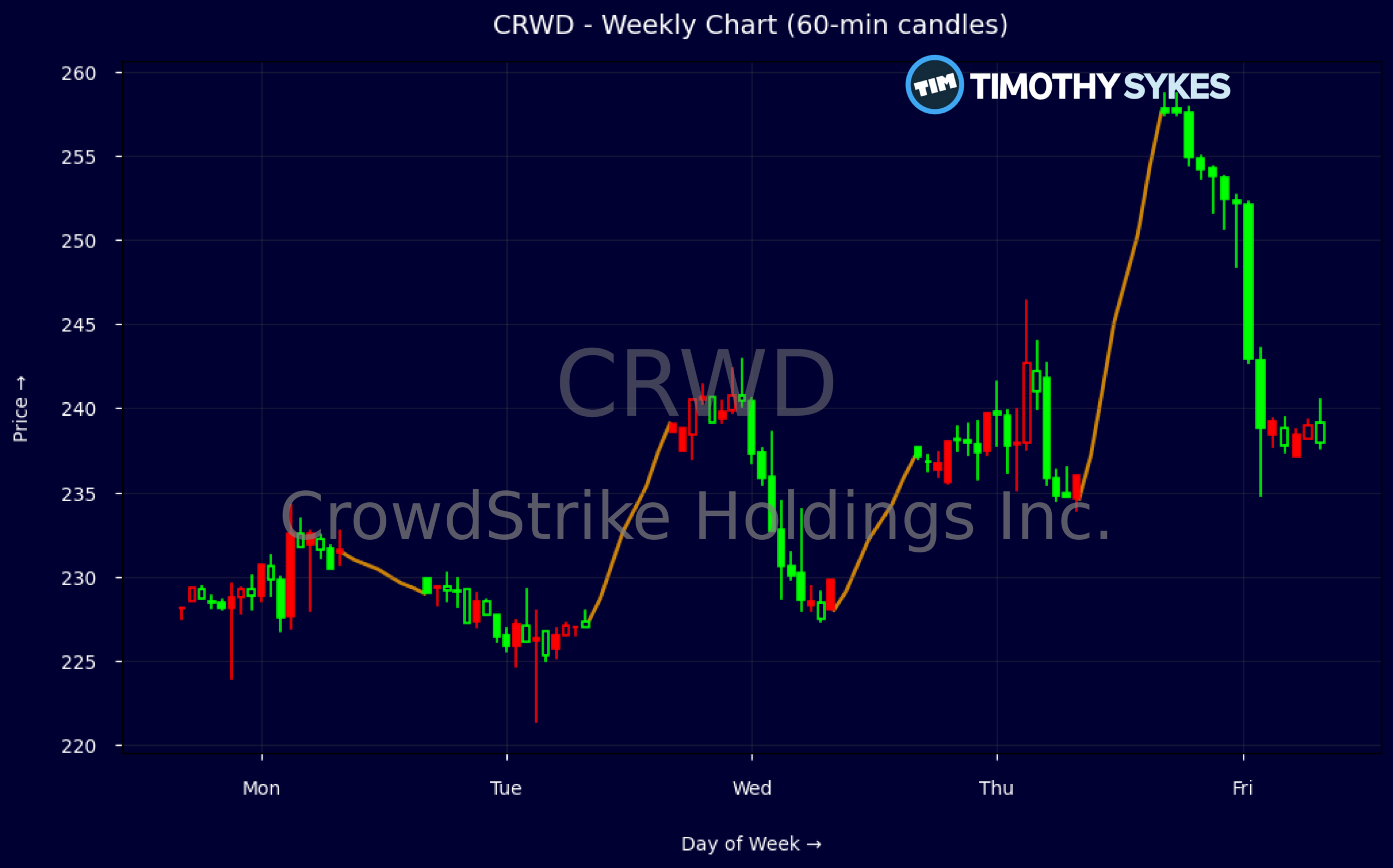
Weekly Update Oct 19 – Oct 23, 2026: On Friday, October 23, 2026 CrowdStrike Holdings Inc. stock [NASDAQ: CRWD] is trending up by 8.41%! Discover the key drivers behind this movement as well as our expert analysis in the detailed breakdown below.
Technology industry expert:
Analyst sentiment – positive
CrowdStrike sits as a top-tier cybersecurity platform vendor, with revenue growing ~27% three-year CAGR and ~36% over five years, well ahead of broader Software & IT Services. Gross margin at 75% is best-in-class, but GAAP profitability remains thin: EBIT margin ~2%, profit margin ~1%, and ROE barely positive as stock-based compensation dilutes returns. Balance sheet quality is strong (net cash, debt/equity 0.16, current ratio 1.6), and free cash flow of ~$376M this quarter underscores robust unit economics despite headline valuation excess (P/S ~52, P/E >1,200).
Technically, CRWD is in a clear bullish phase, with a strong weekly progression from ~$228 to ~$258, including a sharp breakout day (10/23) that closed near the high, confirming aggressive dip buying. Intraday 5‑minute action shows sustained bids on pullbacks with rising volume into strength, not exhaustion. The dominant trend is up, with immediate resistance near $260 and prior mini‑tender reference at $260 reinforcing that zone; actionable support is $238–240, a buyable pullback area for momentum accounts.
Fundamentally and versus Tech and Software & IT benchmarks, CrowdStrike warrants a premium: growth, platform breadth, and AI leverage are clearly superior, now reinforced by the Nvidia OpenShell/Sentry integration, rising Street targets ($265–$320), and strong Flex‑driven ARR uplift (~40% on migrations). Sector tailwinds in AI security and high‑profile wins with the FBI further validate the franchise. I see upside to $285–300 over 6–12 months, with key support $238 and secondary support near $220.
More Breaking News
Quick Financial Overview
CrowdStrike Holdings Inc. is trading in a strong upswing, with the weekly chart showing a sharp move from the low $230s to the upper $250s over a few sessions. The latest weekly close near $257.96 marks a clear breakout from the prior $230–$240 range. Intraday, the 5‑minute tape shows steady accumulation, with higher lows building from the mid‑$240s in the morning toward the high‑$250s into the close. That pattern signals buyers in control, not a one‑and‑done news spike.
On the news side, CRWD got a major catalyst as it deepened its collaboration with Nvidia to integrate Falcon Guardian AI Detection and Response into Nvidia’s OpenShell secure runtime and, longer term, into Nvidia Sentry in‑silicon enforcement. The stock jumped about 6.1% on 2026/10/21 after the collaboration headlines, confirming the market sees real value in being embedded at both software and chip levels for AI workloads. This sits on top of a series of bullish target hikes from firms like Mizuho, KeyBanc, Citi, Needham, BTIG, Freedom Broker, and Truist, many now in the $275–$320 band.
Financially, CrowdStrike Holdings Inc. is a classic high‑growth, premium‑multiple name. Revenue over the last year is about $4.81B, growing above 25% annually, with a gross margin around 75.3%. Profitability at the bottom line is still thin, with a profit margin near 1% and a sky‑high P/E above 1,200, but cash generation is solid: recent quarterly free cash flow was roughly $376.34M on operating cash flow of about $530.27M. The balance sheet is strong, with low debt‑to‑equity near 0.16 and more than $5.01B in cash and equivalents, giving CRWD room to keep investing in AI security and platform expansion.
Conclusion
Strategic Nvidia Deal And AI Tailwinds Drive Setup
For traders, the CRWD story right now is about momentum backed by catalysts. Price action shows a clean shift from consolidation to trend as CrowdStrike Holdings Inc. broke above the mid‑$230s and pushed into the high‑$250s, with intraday demand supporting higher closes rather than fading the move. The Nvidia collaboration locks CRWD deeper into the AI stack, from runtime software into future in‑silicon security, which the market rewarded with a 6%+ surge.
At the same time, nearly every major covering firm has stepped up price targets into a tighter $265–$320 band, anchored on Flex‑driven ARR uplift and rising AI security budgets. Financials back the growth narrative: strong top‑line expansion, elite gross margins, positive free cash flow, and a cash‑rich, low‑debt balance sheet. The flip side is valuation risk, with the P/E and price‑to‑sales both at extreme levels, leaving CRWD vulnerable to any slowdown in security spending or AI enthusiasm.
Traders should treat CrowdStrike Holdings Inc. as a momentum name where execution and sentiment must stay hot to justify the premium. That means respecting risk in a name that can move sharply both ways; as millionaire penny stock trader and teacher Tim Sykes says, “It’s better to go home at zero than to go home in the red.”. Key tells will be whether price can hold above the recent breakout area in the $240s–$250s and whether subsequent earnings confirm the AI and Flex tailwinds implied by the analyst hikes. As I tell my own students, “Your edge in names like CRWD comes from tracking the tape around each catalyst and being ruthless about only trading when price, volume, and story are all moving in the same direction.””,”scores”:{“risk-level”:”High”},”trade”:”true
This is stock news, not investment advice. Timothy Sykes News delivers real-time stock market news focused on key catalysts driving short-term price movements. Our content is tailored for active traders and investors seeking to capitalize on rapid price fluctuations, particularly in volatile sectors like penny stocks. Readers come to us for detailed coverage on earnings reports, mergers, FDA approvals, new contracts, and unusual trading volumes that can trigger significant short-term price action. Some users utilize our news to explain sudden stock movements, while others rely on it for diligent research into potential investment opportunities.
Dive deeper into the world of trading with Timothy Sykes, renowned for his expertise in penny stocks. Explore his top picks and discover the strategies that have propelled him to success with these articles:
- Penny Stocks Trading Guide
- Best Penny Stocks Under $1 to Buy Today
- Top 8 Penny Stocks to Watch on Robinhood
Once you’ve got some stocks on watch, elevate your trading game with StocksToTrade the ultimate platform for traders. With specialized tools for swing and day trading, StocksToTrade will guide you through the market’s twists and turns.
Dig into StocksToTrade’s watchlists here:





Leave a reply