

TeraWulf Inc. stocks have been trading down by -6.95 percent after bearish sentiment over its cryptocurrency mining prospects.
Key Takeaways
- GPU data-center names including TeraWulf, Neocloud, Nebius, IREN, Applied Digital, and CoreWeave recently logged share gains tied to AI demand.
- Elon Musk warned that debt markets have “almost entirely shut off” to AI data centers that lack meaningful non-AI revenue streams.
- Morgan Stanley highlighted financing and capacity-deployment uncertainty at CoreWeave, signaling broader funding questions for GPU-heavy operators.
- WULF trades inside this hot but capital-hungry AI build-out theme, where momentum and balance-sheet strength both matter.
Live Update At 15:46:54 EST: On Monday, November 02, 2026 TeraWulf Inc. stock [NASDAQ: WULF] is trending down by -6.95%! Discover the key drivers behind this movement as well as our expert analysis in the detailed breakdown below.
Quick Financial Overview
For traders, WULF is a classic high-growth, high-burn AI infrastructure story. TeraWulf posted about $168.5M in revenue over the trailing period, with revenue growth rates that look explosive on paper. But profitability is deeply negative. Profit margins run more than -1,100%, and EBITDA for the latest reported quarter was roughly -$861.3M. WULF is scaling hard, and it is paying the price through the income statement.
On the balance-sheet side, TeraWulf shows about $8.0B in total assets, with heavy exposure to property, plant, and equipment as it builds out GPU and data-center capacity. Cash and short-term investments sit around $2.6B, which sounds comfortable, yet WULF’s current ratio of 0.8 and working capital near -$957.4M tell a different story. The company leans on financing: enterprise value is roughly $8.47B, and long-term debt is just over $4.0B.
More Breaking News
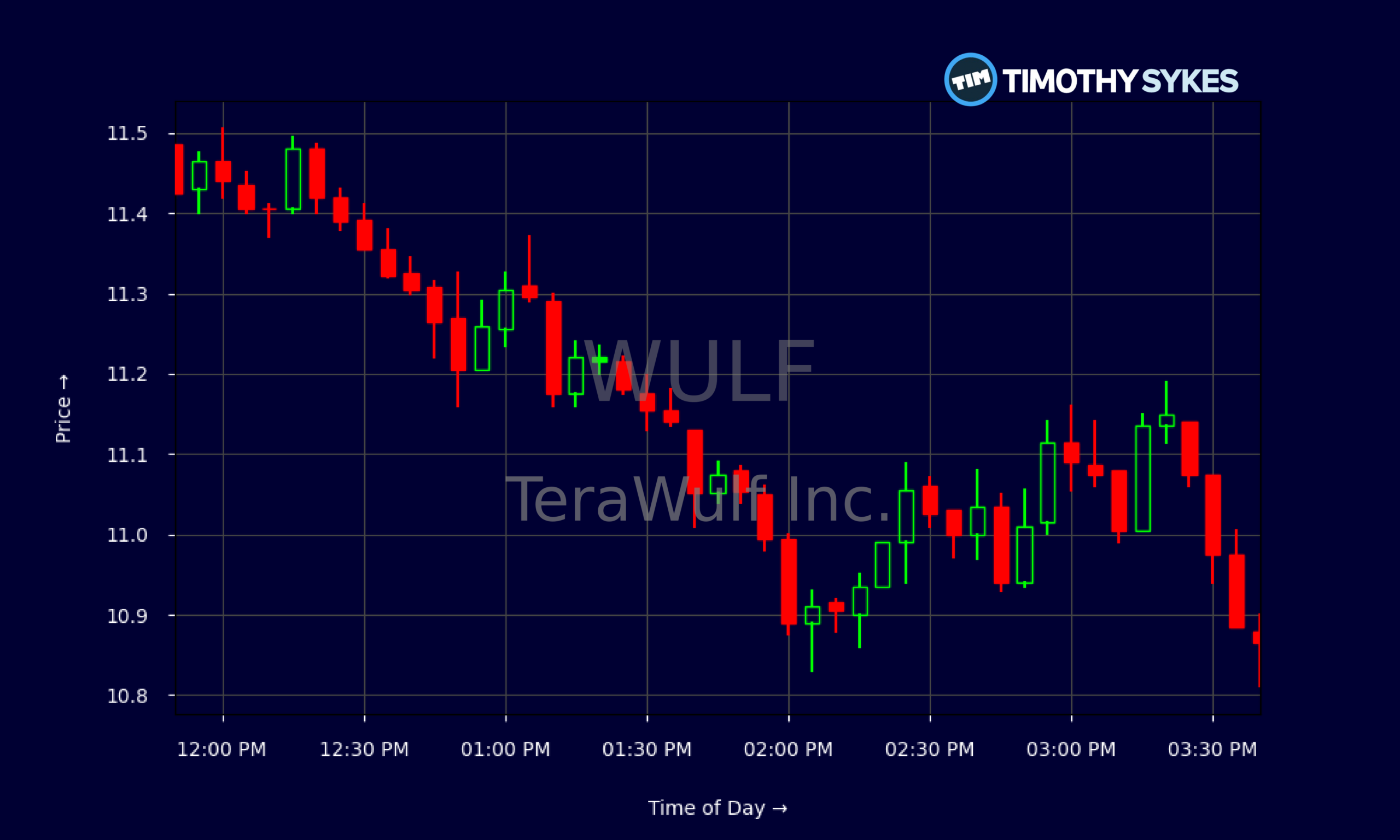
In the chart, WULF has slipped from the low-$14s down toward the low-$11s over recent sessions, with the latest close near $10.92 after opening at $11.96. Intraday, WULF showed a steady fade from premarket levels around $12.20–$12.30 into regular-hours selling pressure, then a slow grind around $11.00. For active traders, that pattern signals momentum cooling, but not broken, inside a volatile uptrend that started above $14 earlier in the month.
Why Traders Are Watching WULF In The AI Build-Out
WULF sits at the crossroads of two powerful forces: surging demand for AI compute and tightening capital for the data centers that supply it. In the latest sector move, GPU data-center operators like Neocloud, Nebius, IREN, Applied Digital, CoreWeave, and TeraWulf all enjoyed share gains. That tells traders one thing clearly: the market still wants exposure to AI infrastructure, and WULF remains part of that core theme.
But this rally comes with a warning label. Elon Musk recently said debt markets have “almost entirely shut off” to AI data centers without strong non-AI revenue. To short-term traders, that is a sentiment headline. To WULF as a business model, it is a direct risk. TeraWulf relies on huge capital outlays—over $1.08B in capital expenditures in the last quarter alone—to scale out its GPU-rich facilities.
Morgan Stanley’s comments on CoreWeave—flagging financing and capacity-deployment uncertainty—only add to that cloud. While those remarks targeted another player, WULF trades in the same bucket in many screens and quant models. If lenders and bond markets stay cautious toward this group, traders in WULF need to assume more equity raises, more dilution, or slower build-outs.
That tension—AI upside versus funding strain—is what makes WULF such an active trading vehicle right now. Short squeezes and momentum spikes remain possible any time AI headlines heat up. At the same time, every filing around new debt, equity, or capex plans can flip sentiment fast. For day traders and swing traders, WULF is less about long-term comfort and more about reading the tape against this backdrop of capital scarcity.
Conclusion
TeraWulf offers traders a clean, high-beta way to express a view on AI infrastructure. WULF’s fundamentals show strong revenue growth but massive losses, extreme negative returns on equity, and a balance sheet dominated by expensive hardware and substantial debt. At the same time, WULF holds a sizable cash pile and sits in the middle of a GPU land grab that has driven recent share gains across names like Neocloud, IREN, Applied Digital, and CoreWeave.
The catch is the funding backdrop. Musk’s warning that debt markets are “almost entirely shut off” to AI data centers without diversified revenue, plus Morgan Stanley’s concerns about deployment risk, hang over the entire group. That means WULF momentum trades are happening under a low ceiling for cheap capital. Any sign of easier financing can light the stock up; any sign of stress can crush it just as fast.
For active traders, the playbook is discipline. WULF’s 5‑minute chart shows clean intraday levels around $11 where liquidity clusters, and the recent slide from above $14 reminds everyone that chasing without a plan is dangerous. As Tim Sykes likes to say, “Cut losses quickly, because big losses start out as small ones.” As millionaire penny stock trader and teacher Tim Sykes, says, “Be patient, don’t force trades, and let the perfect setups come to you.”. With WULF in this AI data-center spotlight, the edge goes to traders who respect both the upside hype and the very real downside risk.
This is stock news, not investment advice. Timothy Sykes News delivers real-time stock market news focused on key catalysts driving short-term price movements. Our content is tailored for active traders and investors seeking to capitalize on rapid price fluctuations, particularly in volatile sectors like penny stocks. Readers come to us for detailed coverage on earnings reports, mergers, FDA approvals, new contracts, and unusual trading volumes that can trigger significant short-term price action. Some users utilize our news to explain sudden stock movements, while others rely on it for diligent research into potential investment opportunities.
Dive deeper into the world of trading with Timothy Sykes, renowned for his expertise in penny stocks. Explore his top picks and discover the strategies that have propelled him to success with these articles:
- Penny Stocks Trading Guide
- Best Penny Stocks Under $1 to Buy Today
- Top 8 Penny Stocks to Watch on Robinhood
Once you’ve got some stocks on watch, elevate your trading game with StocksToTrade the ultimate platform for traders. With specialized tools for swing and day trading, StocksToTrade will guide you through the market’s twists and turns.
Dig into StocksToTrade’s watchlists here:





Leave a reply