

Wingstop Inc. stocks have been trading up by 9.24 percent amid upbeat sentiment over strong same-store sales and expansion.
Key Takeaways
- Fiscal Q3 adjusted EPS for Wingstop Inc. (WING) hit $1.08, topping the $1.02 consensus even as it slipped a hair from $1.09 a year ago.
- Revenue climbed to $185.1M but missed the $192.9M forecast, with domestic same-store sales down 5.4% year over year and management trimming its outlook.
- Despite softer sales, WING ripped roughly 12% intraday after earnings, while the Street’s average rating stayed Overweight with a mean price target near $187.38.
- Major firms including RBC, Morgan Stanley, Citi, StoneX, Baird, and UBS adjusted price targets but mostly held positive or Neutral stances on Wingstop.
- Wingstop’s Q3 call spotlighted 2,300+ committed new restaurants, 27% international unit growth to 544 stores, and a 10,000+ location goal, including a 1,000-unit India opportunity starting by early 2027.
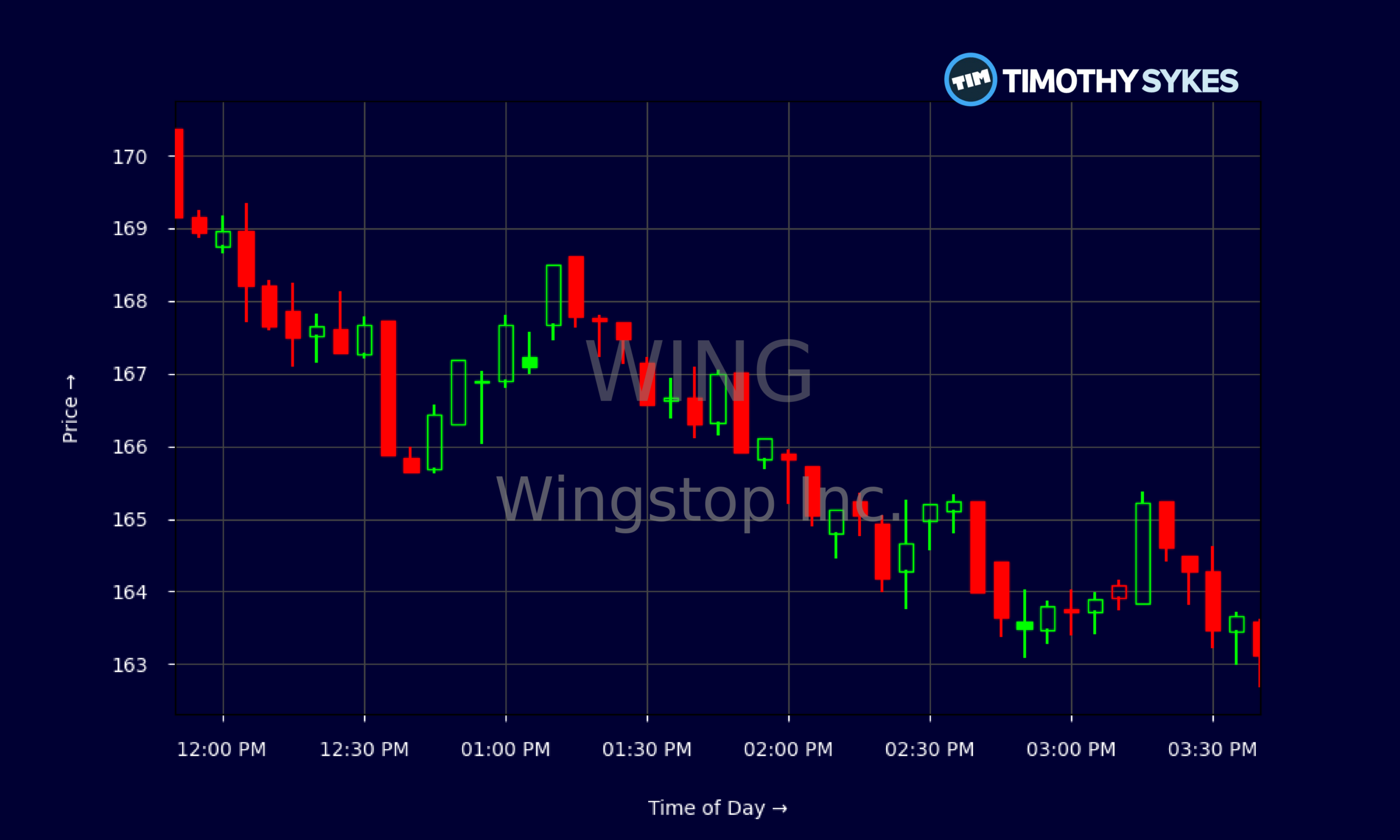
Live Update At 15:46:38 EST: On Monday, November 02, 2026 Wingstop Inc. stock [NASDAQ: WING] is trending up by 9.24%! Discover the key drivers behind this movement as well as our expert analysis in the detailed breakdown below.
Quick Financial Overview
Wingstop Inc. just reminded traders why WING trades like a growth name, not a sleepy restaurant chain. Fiscal Q3 adjusted EPS came in at $1.08, ahead of the $1.02 Wall Street expected, even though it was fractionally below last year’s $1.09. That beat shows Wingstop still has serious margin power.
Revenue told a different story. Sales rose to $185.1M but fell short of the $192.9M consensus. On top of that, domestic same-store sales dropped 5.4% versus Q3 2025, forcing management to cut its outlook. For traders, that’s the clear weak spot: demand momentum inside existing WING boxes.
Yet the stock has been in full trend mode. WING closed at $163.69 on 2026/11/02, up sharply from sub-$135 levels right before earnings, confirming strong dip-buying. Intraday action on the latest session showed tight consolidation between roughly $163 and $170, a sign that recent buyers are not bailing.
More Breaking News
Fundamentally, Wingstop is still highly profitable, with an EBIT margin near 28% and gross margin around 77%. A P/E around 29 and price-to-sales near 4.6 keep WING in “premium growth” territory. For active traders, that combination of rich valuation, strong cash generation, and volatile chart action makes Wingstop a classic momentum playground.
Why Traders Are Watching WING After Q3
WING is back on momentum screens because the tape and the story are pulling in opposite directions — and that’s where opportunity often lives. On one hand, Wingstop admitted domestic comps were weak and formally lowered its outlook after Q3. On the other, the stock jumped roughly 12% intraday once the numbers hit, then kept grinding higher into early November.
The catalyst was earnings quality and the long-term roadmap. Wingstop’s $1.08 adjusted EPS beat the $1.02 estimate, and traders clearly rewarded the beat despite the revenue miss. The Q3 call went further, laying out a development pipeline of more than 2,300 committed restaurants and 27% international unit growth, taking the footprint to 544 non-U.S. locations. Management talked openly about a long-term path to 10,000-plus restaurants. They even singled out India as a 1,000-restaurant opportunity expected to start opening by early 2027.
Wall Street, for now, is mostly siding with that growth vision. RBC lifted its WING target to $175 and kept an Outperform rating. Across the Street, the mean target sits around $187.38 with an Overweight stance overall. Yes, Mizuho, StoneX, Citi, Morgan Stanley, and Baird trimmed price targets, and UBS nudged its view to $150 with a Neutral label. But importantly, they largely maintained positive ratings on Wingstop.
For traders, this is classic “expectations reset but story intact.” Same-store sales weakness and a lowered outlook cap near-term enthusiasm, yet the massive unit growth runway and loyalty push via Club Wingstop keep the bull case alive. That tension can fuel sharp moves both ways — ideal for disciplined day and swing trading.
Conclusion
Wingstop Inc. sits at an interesting crossroads. WING is not a cheap name, and the revenue miss plus a 5.4% domestic same-store sales drop prove that the brand is not bulletproof. Management’s decision to lower guidance confirms the near-term challenge. Short-term traders need to respect that risk any time they chase strength in Wingstop.
At the same time, the Q3 print showed why WING still attracts momentum capital. EPS outperformance, a development pipeline of 2,300+ committed units, and a bold 10,000+ restaurant target — including a 1,000-unit India plan — give Wingstop a growth runway most restaurant chains would love to have. The stock’s 12% spike after earnings, plus a Street average target well above current prices, shows plenty of traders are betting on execution rather than collapse.
For active traders studying Wingstop, the playbook is clear: track same-store sales trends and how fast management can reignite traffic with marketing, operations, and Club Wingstop. As Tim Sykes loves to remind his students, “Patterns repeat, but only for traders who are prepared and disciplined enough to act.” That mindset lines up with another of his core trading lessons. As millionaire penny stock trader and teacher Tim Sykes, says, “Small gains add up over time; focus on building wealth gradually, not chasing jackpots.”. With WING, that means riding the momentum when the chart confirms — and cutting losses fast if the growth story starts to crack.
This is stock news, not investment advice. Timothy Sykes News delivers real-time stock market news focused on key catalysts driving short-term price movements. Our content is tailored for active traders and investors seeking to capitalize on rapid price fluctuations, particularly in volatile sectors like penny stocks. Readers come to us for detailed coverage on earnings reports, mergers, FDA approvals, new contracts, and unusual trading volumes that can trigger significant short-term price action. Some users utilize our news to explain sudden stock movements, while others rely on it for diligent research into potential investment opportunities.
Dive deeper into the world of trading with Timothy Sykes, renowned for his expertise in penny stocks. Explore his top picks and discover the strategies that have propelled him to success with these articles:
- Penny Stocks Trading Guide
- Best Penny Stocks Under $1 to Buy Today
- Top 8 Penny Stocks to Watch on Robinhood
Once you’ve got some stocks on watch, elevate your trading game with StocksToTrade the ultimate platform for traders. With specialized tools for swing and day trading, StocksToTrade will guide you through the market’s twists and turns.
Dig into StocksToTrade’s watchlists here:





Leave a reply