

AT&T Inc. stocks have been trading up by 3.61 percent after upbeat network expansion news improved investor sentiment.
Key Takeaways
- Q3 for AT&T came in ahead of expectations, with adjusted EPS at $0.65 versus $0.60 and revenue at $32.3B, while postpaid phone net adds were 379,000 and churn stayed low at 0.92%.
- Management lifted 2026 adjusted EPS guidance to about $2.40 and guided Q4 free cash flow near $6B, sharply higher than the $4.2B generated a year earlier.
- AT&T plans to return more than $45B to shareholders from 2026–2028, backed by a $4B annual cost-savings program and tighter capital spending, while targeting leverage around 2.5x by 2029.
- The company is reshaping its portfolio by selling AT&T Mexico for $2B in cash and speeding the shutdown of copper-based legacy lines in favor of modern broadband.
- Despite stronger guidance, T slid more than 5% after Q3 as traders focused on softer postpaid phone growth, higher acquisition costs, and renewed worries about wireless competition, including satellite entrants.
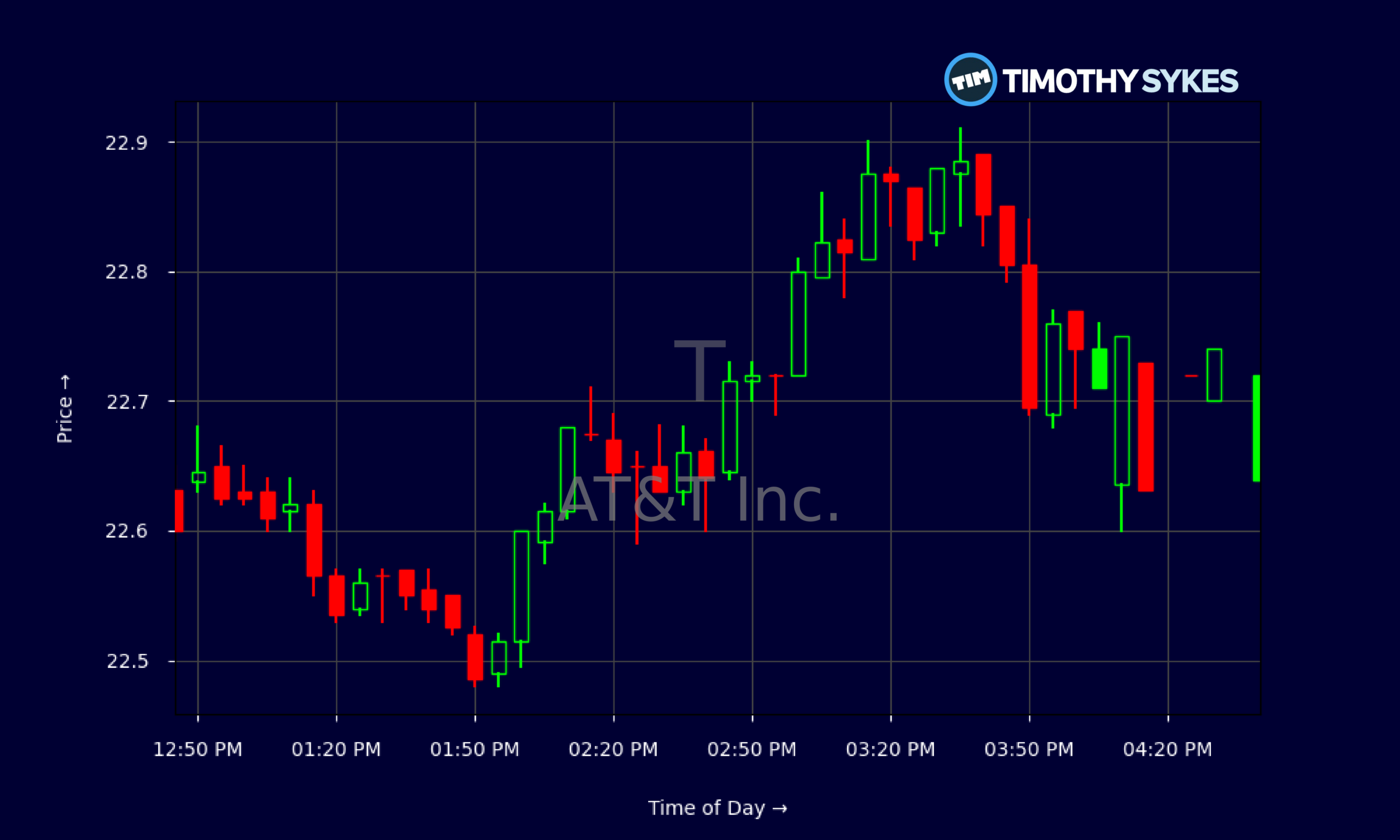
Live Update At 16:46:59 EDT: On Thursday, October 22, 2026 AT&T Inc. stock [NYSE: T] is trending up by 3.61%! Discover the key drivers behind this movement as well as our expert analysis in the detailed breakdown below.
Quick Financial Overview
AT&T Inc. just delivered one of its cleaner quarters in years, and the chart is still telling a nervous story. On the numbers, T posted Q3 revenue of $32.32B and adjusted EPS of $0.65, both ahead of consensus. Free cash flow was a solid $5.0B, and management now sees 2026 adjusted EPS near $2.40, above prior guidance and Street estimates. That kind of earnings bump usually gives a legacy telecom some breathing room.
Look at the daily chart, though, and you see pressure. T has slipped from the mid‑$24s in late September 2026 to around $22.74 on 2026/10/22. That’s a clear downtrend of roughly 7%–8% across the period, despite the earnings beat. Intra‑day, the 5‑minute tape around $22.50–$22.90 shows T grinding higher into the close, but without true range expansion — more of a controlled bounce than a momentum breakout.
More Breaking News
Fundamentally, margins remain healthy: AT&T is running gross margin near 59.7% and EBIT margin above 26%. A price/earnings ratio around 7.4 and price‑to‑free‑cash in the mid‑single digits tell traders the market is still discounting T heavily for debt and structural risk. That disconnect between solid cash flow and a low multiple is exactly what shorter‑term traders like to stalk for sentiment swings.
Why Traders Are Watching AT&T Now
Traders are locked in on AT&T because the story is finally shifting from “can they survive the debt?” to “what do they do with all this cash?” In Q3, T not only beat on EPS and revenue but also logged its strongest consolidated service revenue growth in more than four years. Over 1 million Advanced Connectivity net adds for a second straight quarter, plus record fiber and fixed‑wireless internet additions, show where the real growth engine sits.
Management backed that up with guidance. AT&T now targets roughly $6B of free cash flow in Q4, well above last year’s $4.2B. Longer term, the company raised 2026 EPS guidance to about $2.40, committed to more than $45B in capital returns over 2026–2028, and is still on track for $4B in annual cost savings by year‑end 2028. For a name like T, those are not hype numbers — they are balance‑sheet repair and dividend‑support numbers.
At the same time, AT&T is cleaning house. The planned $2B sale of AT&T Mexico to Grupo Televisa and Fintech Holdings, plus the aggressive retirement of copper‑based legacy services by 2029, pushes capital toward U.S. fiber and 5G. Management says AT&T’s fiber reach is at record levels and its spectrum position “stronger than ever,” which matters as AI‑driven and high‑bandwidth demand ramps.
Yet the stock sold off more than 5% after earnings and even 10%–12% alongside Verizon and T‑Mobile when SpaceX’s low‑band spectrum deal spooked the entire sector. Goldman Sachs and Scotiabank still see upside and maintain positive ratings on T, but both trimmed price targets and flagged weaker phone net adds and rising acquisition costs. That clash — improving fundamentals vs. cautious sentiment — is exactly the kind of tension active traders try to exploit.
Conclusion
For active traders, AT&T is a classic “good numbers, bad reaction” setup. The company is throwing off cash, raising EPS guidance, and promising more than $45B in returns over 2026–2028, all while keeping capex disciplined and targeting leverage around 2.5x by 2029. Fiber is scaling, Advanced Connectivity is growing double‑digits, and T is leaning into higher‑quality revenue while exiting non‑core assets like AT&T Mexico.
But the tape is reminding everyone that narrative alone does not move price. Concerns over slower postpaid phone net adds, rising customer acquisition costs, and satellite competition from players like SpaceX have weighed on T, pulling the stock from the mid‑$20s down toward the low‑$20s even after an earnings beat. Analysts like MoffettNathanson say Starlink is unlikely to be a major threat in the near term, yet the fear is clearly there in the chart.
This is where discipline matters. As Tim Sykes likes to say, “The market doesn’t care about your opinion, only your preparation and your risk management.” As millionaire penny stock trader and teacher Tim Sykes, says, “It’s better to go home at zero than to go home in the red.”. For traders studying AT&T now, that means respecting the downtrend while recognizing that strong free cash flow, a 5%+ cash yield, and aggressive cost cuts can act as a floor if sentiment turns. Plan your levels, watch volume on every bounce and breakdown, and let the price action — not the story — dictate your trading decisions.
This is stock news, not investment advice. Timothy Sykes News delivers real-time stock market news focused on key catalysts driving short-term price movements. Our content is tailored for active traders and investors seeking to capitalize on rapid price fluctuations, particularly in volatile sectors like penny stocks. Readers come to us for detailed coverage on earnings reports, mergers, FDA approvals, new contracts, and unusual trading volumes that can trigger significant short-term price action. Some users utilize our news to explain sudden stock movements, while others rely on it for diligent research into potential investment opportunities.
Dive deeper into the world of trading with Timothy Sykes, renowned for his expertise in penny stocks. Explore his top picks and discover the strategies that have propelled him to success with these articles:
- Penny Stocks Trading Guide
- Best Penny Stocks Under $1 to Buy Today
- Top 8 Penny Stocks to Watch on Robinhood
Once you’ve got some stocks on watch, elevate your trading game with StocksToTrade the ultimate platform for traders. With specialized tools for swing and day trading, StocksToTrade will guide you through the market’s twists and turns.
Dig into StocksToTrade’s watchlists here:





Leave a reply