

Spotify Technology S.A. stocks have been trading up by 10.6 percent amid strong user growth and widening podcast monetization efforts.
Key Takeaways For SPOT Traders
- New AI remix and cover licensing deal with Believe and TuneCore pushes Spotify deeper into paid creator tools while addressing artist consent and royalty payouts.
- Joe Rogan multiyear renewal, reportedly worth up to $250M, keeps Spotify’s top podcast while shifting to broader distribution and lifted shares about 2.3% after the news.
- Cantor Fitzgerald cut its SPOT price target to $490 from $530, flagging margin pressure from regulatory charges and higher AI spending despite solid user and revenue trends.
- Piper Sandler started SPOT at Neutral with a $540 target, seeing slower premium growth but room for better-than-modeled margins over time.
- StoneX downgraded SPOT from Buy to Hold and dropped its target, underscoring growing caution even as product and content moves stack up.
Live Update At 16:47:10 EDT: On Thursday, October 22, 2026 Spotify Technology S.A. stock [NYSE: SPOT] is trending up by 10.6%! Discover the key drivers behind this movement as well as our expert analysis in the detailed breakdown below.
Quick Financial Overview
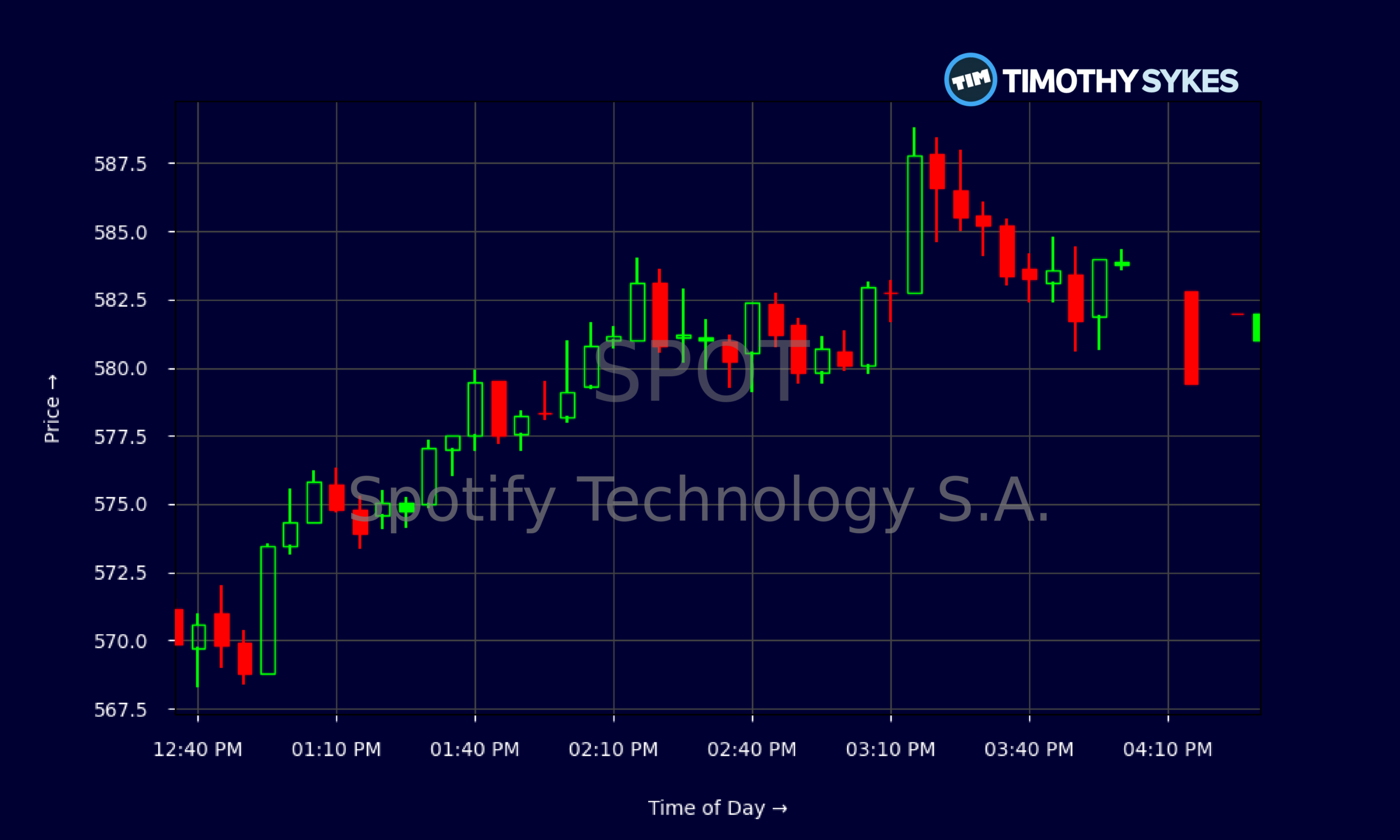
SPOT has been in a powerful uptrend on the chart. Over the last few weeks, Spotify stock climbed from closes around the low $470s to $583.66 on 2026/10/22. That’s a strong extension and tells traders momentum money is still flowing into SPOT.
Daily candles show steady higher lows from 2026/09/28 onward, with only brief pullbacks. The latest session opened at $561.29 and pushed as high as $588.88 before closing near the top of the range. That intraday action, backed by a strong close, often signals dip buyers are active and shorts are on their heels.
The 5‑minute data for SPOT shows early volatility, then a grind higher through the afternoon, with price holding the high $570s to $580s into the close. That kind of tight consolidation near highs is what momentum traders want to see.
More Breaking News
Fundamentally, Spotify is now a scale player. The company posted roughly $17.19B in revenue with a price-to-sales ratio near 5.46, and an enterprise value around $99.7B. Returns on capital look much healthier than legacy returns on assets or equity, which hints SPOT is emerging from its heavy-build phase and focusing more on profitability.
Why Traders Are Watching SPOT Right Now
For active traders, SPOT is a classic tension name: huge strategic moves colliding with a more cautious Wall Street. That’s where the best volatility often comes from.
On the bullish side, Spotify Technology S.A. just signed a licensing agreement with Believe and TuneCore artists for an AI-powered remix and cover tool. This is not a gimmick feature. SPOT plans to sell it as a paid add-on for Premium users, pay royalties to original rights holders, and require artists to opt in. That combo hits three trading themes at once: new high-margin product, recurring upsell opportunity, and a strong attempt to avoid the usual “AI vs. creators” backlash.
Spotify doubled down on durable attention too. The company renewed its multiyear licensing deal for “The Joe Rogan Experience,” reportedly worth up to about $250M and now allowing broader distribution beyond the platform. The market vote was quick: SPOT shares jumped roughly 2.3% after the news, a clear sign that traders still see Rogan as a key engagement driver and ad engine.
But the sell side is not in cheerleader mode. Cantor Fitzgerald cut its SPOT price target from $530 to $490, even while calling for a modest Q3 beat on revenue and gross profit plus solid user gains. They flagged sequential margin pressure from regulatory charges and higher AI spending, partially offset by FX tailwinds and year-over-year margin improvement from prior price hikes.
Piper Sandler came in with a Neutral on SPOT and a $540 target, saying subscriber-driven premium revenue growth likely slows from near 100% to around 60%, but margins may come in better than most models. Then StoneX stepped back from a Buy to Hold and even removed its target altogether. That kind of downgrade can be a sentiment drag and a source of fast flushes when headlines hit.
Layer on top the macro setup: SPOT sits in the crosshairs as large-cap tech names move around earnings while traders watch Treasury yields, inflation prints, and oil. That macro noise can amplify every headline around Spotify.
Conclusion
SPOT is not trading like a sleepy, mature media stock. It’s acting like a name in transition — from pure growth story to a platform trying to prove it can print strong margins off a $17B+ revenue base.
On the product side, Spotify’s AI remix and cover tool deal with Believe and TuneCore is a clear swing at building a new paid layer on top of Premium. If traders see traction there, they will likely reward the stock for recurring, software-like revenue rather than just streaming volume. The Joe Rogan renewal, with an estimated $250M earn-out and broader distribution, signals Spotify still believes in flagship podcasts as a core moat and ad driver.
At the same time, the analyst tape tells a different story. A trimmed $490 target from Cantor, a Neutral $540 level from Piper Sandler, and a Hold from StoneX with no target send one message: the easy rerate for SPOT may be behind it, and the next leg will have to be earned through consistent margin expansion and smart AI spending.
Technically, Spotify stock is extended after a strong run into the high $580s, but the intraday action shows aggressive buying into strength and little sign of panic selling. For short-term SPOT traders, that means one simple playbook: respect the trend, but be ready for sharp snaps if another downgrade or macro headline hits. As millionaire penny stock trader and teacher Tim Sykes, says, “Embrace the journey, the ups and downs; each mistake is a lesson to improve your strategy.” For active SPOT traders navigating these sharp swings, that mindset can be critical when sizing positions, managing risk, and reviewing past trades for edge.
Tim Sykes loves to remind traders, “Patterns repeat, but you have to study them nonstop.” For SPOT, the pattern right now is clear — big headlines on AI and podcasts squeeze the stock higher, cautious analyst notes knock it back, and disciplined traders who track both price and news flow have the best shot at staying on the right side of the move. This article is for educational and research purposes only and is not investment advice.
This is stock news, not investment advice. Timothy Sykes News delivers real-time stock market news focused on key catalysts driving short-term price movements. Our content is tailored for active traders and investors seeking to capitalize on rapid price fluctuations, particularly in volatile sectors like penny stocks. Readers come to us for detailed coverage on earnings reports, mergers, FDA approvals, new contracts, and unusual trading volumes that can trigger significant short-term price action. Some users utilize our news to explain sudden stock movements, while others rely on it for diligent research into potential investment opportunities.
Dive deeper into the world of trading with Timothy Sykes, renowned for his expertise in penny stocks. Explore his top picks and discover the strategies that have propelled him to success with these articles:
- Penny Stocks Trading Guide
- Best Penny Stocks Under $1 to Buy Today
- Top 8 Penny Stocks to Watch on Robinhood
Once you’ve got some stocks on watch, elevate your trading game with StocksToTrade the ultimate platform for traders. With specialized tools for swing and day trading, StocksToTrade will guide you through the market’s twists and turns.
Dig into StocksToTrade’s watchlists here:





Leave a reply