

Bloom Energy Corporation stocks have been trading up by 9.49 percent following highly positive coverage on its clean energy solutions.
Key Takeaways
- Record Q2 2026 revenue of $1.065B, up 165.5% year over year, shows Bloom Energy’s AI data center story is moving into scale, with full‑year guidance lifted to $3.9–$4.2B.
- Street heavyweights UBS and Baird pushed price targets on BE to $350 and $351, while overall analyst consensus sits near $295–$298 and remains overweight.
- Truist and Roth Capital also raised targets on BE but warned that rich valuation and high expectations leave little room for error heading into Q3 2026 earnings on 2026/10/22.
- BE popped roughly 3% after Oracle’s Project Jupiter update, underscoring how AI data center headlines are now direct trading catalysts for the stock.
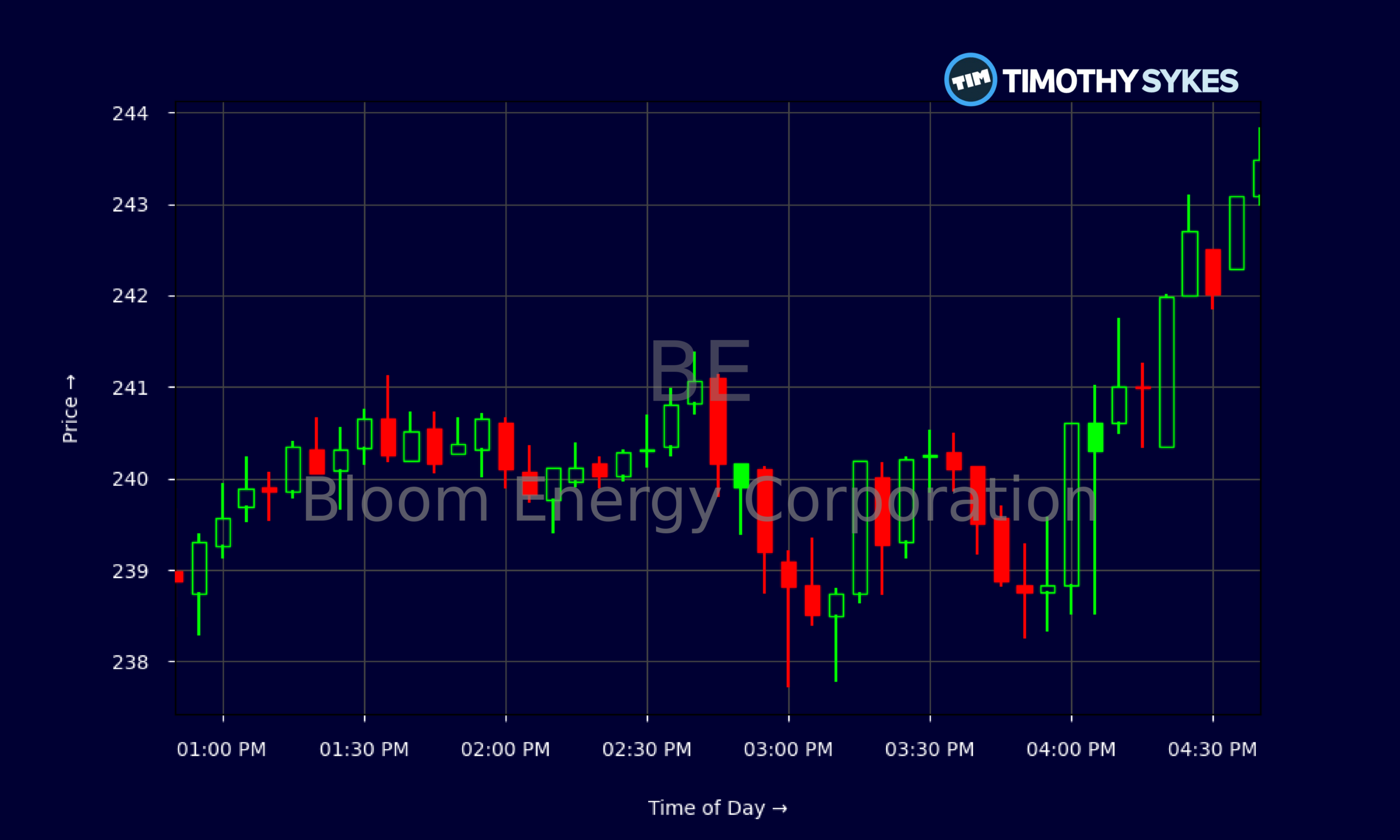
Live Update At 16:47:06 EDT: On Wednesday, October 21, 2026 Bloom Energy Corporation stock [NYSE: BE] is trending up by 9.49%! Discover the key drivers behind this movement as well as our expert analysis in the detailed breakdown below.
Quick Financial Overview
Bloom Energy (BE) is trading like a high‑beta AI infrastructure play, not a sleepy utility. The daily chart shows a sharp pullback from the $290s–$300 zone down toward $220–$240 in recent sessions, a classic momentum unwind after a big run. Yet intraday action around $238–$244 still shows strong liquidity and tight ranges, a sign traders are actively jockeying for position rather than abandoning the name.
On the fundamentals, BE just printed Q2 2026 revenue of $1.065B, up 165.5% year over year. Product revenue surged 215.4%, driven by its solid‑oxide fuel cells powering AI data centers. Management raised full‑year guidance to $3.9–$4.2B, telling traders this is not a one‑quarter fluke.
More Breaking News
Margins are solid for a growth story: gross margin at 31.2% and EBIT margin at 9.5%. The balance sheet shows $2.7B in cash and a current ratio above 4, giving BE room to ride out volatility. The flip side is valuation. A price‑to‑sales ratio around 26.5 and price‑to‑book above 50 tell you traders are paying up for growth. For active trading, that combination—explosive revenue, strong liquidity, and stretched multiples—usually means big swings around catalysts.
Why Traders Are Watching BE Into AI And Earnings
The core driver for BE right now is simple: it has become an AI power story. Bloom Energy’s solid‑oxide fuel cell platform is finding a home inside power‑hungry AI data centers, and the Q2 2026 numbers back that up. When a company jumps to $1.065B in quarterly revenue, up 165.5% year over year, and then raises full‑year guidance to as high as $4.2B, traders pay attention. That kind of acceleration screams “re‑rating.”
Wall Street clearly heard it. UBS lifted its price target on Bloom Energy to $350 while sticking with a Buy rating. Baird went even further, bumping its target to $351 and reiterating Outperform. Across recent notes, BE holds an overweight rating, with the mean target clustered around $295–$298. For traders, that means a lot of big desks model significant upside from current prices.
You can also see how tightly BE is tied to the AI buildout. Shares jumped about 3% after Oracle said its Project Jupiter data center campus is moving ahead quickly. That wasn’t a Bloom Energy press release, but the market immediately connected the dots: more AI compute needs more reliable onsite power, and BE is positioning itself as the “de facto standard” for that niche.
Still, not every analyst is all‑in. Truist raised its target on BE to $240 and expects strong Q3 numbers but kept a Hold, arguing a lot of growth is already in the price. Roth Capital pushed its target to $260, yet stayed Neutral, flagging rich valuation, transparency worries, and big expectations for orders and capacity. For short‑term traders, that tension—monster growth versus sky‑high bar—is exactly what creates tradable volatility.
Conclusion
For active traders, Bloom Energy sits at the crossroads of two hot themes: AI infrastructure and clean power. BE just delivered breakout Q2 2026 results, raised guidance to as much as $4.2B in revenue, and earned aggressive price‑target hikes from UBS and Baird up near the $350 level. At the same time, the chart shows the stock pulling back hard from the $290s to the low‑$200s, a reminder that momentum names rarely move in straight lines.
The next big test is Q3 2026 earnings on 2026/10/22. With Truist and Roth Capital both warning about valuation and transparency even as they raise targets, BE now has to prove that its AI data center pipeline and margins can keep pace with the hype. Any stumble on orders, guidance, or disclosure could hit a stock priced at more than 26 times sales.
Bloom Energy is also working its brand, from donations to first responders in Texas and Gainesville to ESPN college football tour sponsorships. Those moves help long‑term awareness, but for traders the real focus stays on numbers, guidance, and AI‑linked headlines.
As Tim Sykes loves to say, “The market rewards preparation, not prediction.” As millionaire penny stock trader and teacher Tim Sykes, says, “It’s not about how much money you make; it’s about how much money you keep.”. For BE, that means studying the chart levels, understanding how AI news moves the tape, and having a clear trading plan before the Q3 conference call—always ready to cut losses fast if the story shifts. This article is for educational and research purposes only and is not investment advice.
This is stock news, not investment advice. Timothy Sykes News delivers real-time stock market news focused on key catalysts driving short-term price movements. Our content is tailored for active traders and investors seeking to capitalize on rapid price fluctuations, particularly in volatile sectors like penny stocks. Readers come to us for detailed coverage on earnings reports, mergers, FDA approvals, new contracts, and unusual trading volumes that can trigger significant short-term price action. Some users utilize our news to explain sudden stock movements, while others rely on it for diligent research into potential investment opportunities.
Dive deeper into the world of trading with Timothy Sykes, renowned for his expertise in penny stocks. Explore his top picks and discover the strategies that have propelled him to success with these articles:
- Penny Stocks Trading Guide
- Best Penny Stocks Under $1 to Buy Today
- Top 8 Penny Stocks to Watch on Robinhood
Once you’ve got some stocks on watch, elevate your trading game with StocksToTrade the ultimate platform for traders. With specialized tools for swing and day trading, StocksToTrade will guide you through the market’s twists and turns.
Dig into StocksToTrade’s watchlists here:





Leave a reply