

Cipher Digital Inc. stocks have been trading up by 3.83 percent after unveiling a major AI-driven cybersecurity platform expansion.
Key Takeaways Traders Need To Know
- Cipher Digital plans to issue $850M of 0.00% convertible senior notes due 2032, with an option for an additional $150M, while exchanging part of its 1.75% 2030 notes into equity.
- Shares of Cipher Mining dropped 16.4% intraday to $10.87 on heavy selling after the convertible announcement, without any new fundamental data.
- Proceeds from the zero-coupon convertibles will back capped calls, the Barber Lake data center project, high-performance computing growth, site expansion, and general corporate needs.
- Cipher Digital is building lateral natural-gas pipelines targeting up to 2.5GW of on-site power to support industrial-scale high-performance computing data centers.
- Morgan Stanley and Cantor Fitzgerald both cut CIFR price targets but kept Overweight ratings, pointing to sector-wide AI/data-center pressure instead of company-specific deterioration.
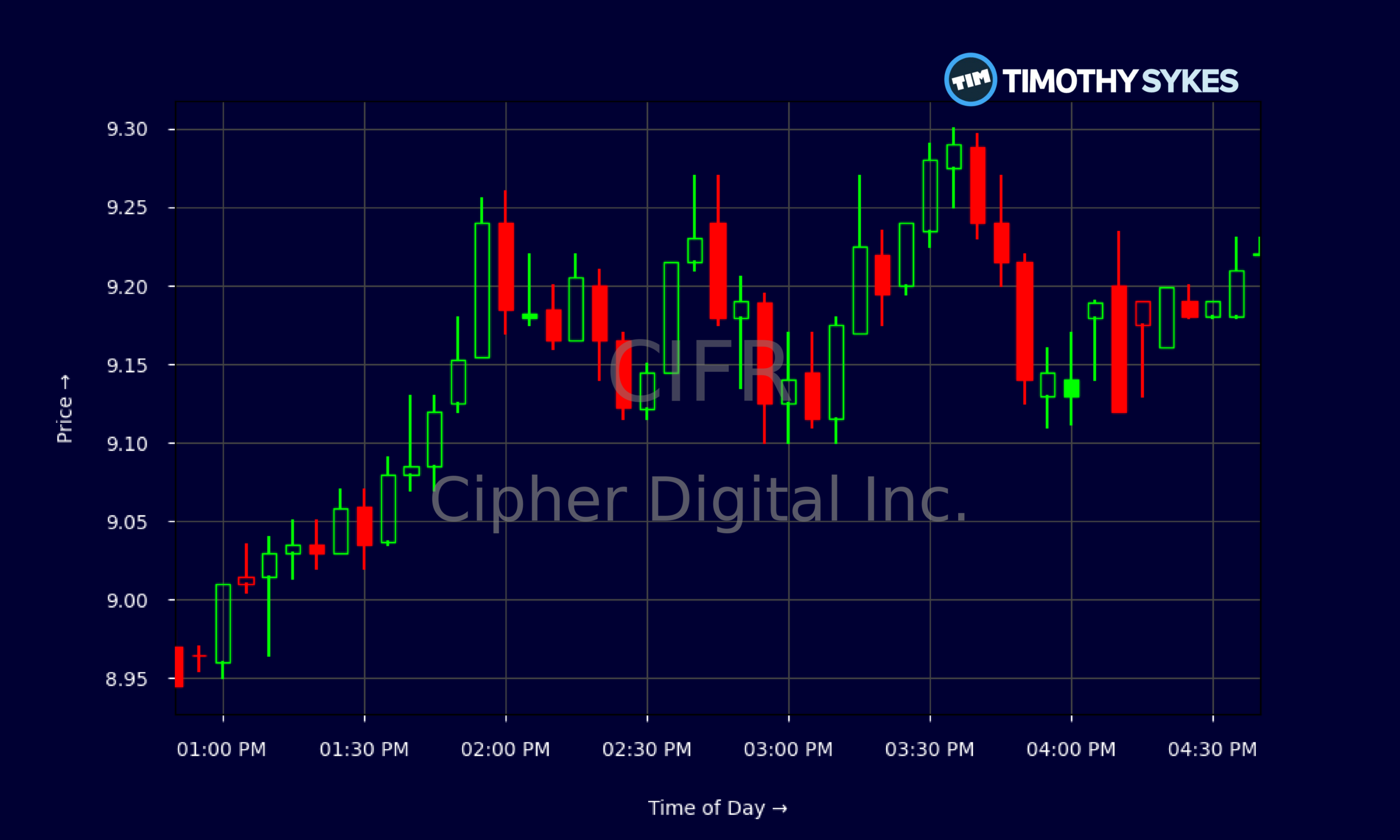
Live Update At 16:47:01 EDT: On Wednesday, October 21, 2026 Cipher Digital Inc. stock [NASDAQ: CIFR] is trending up by 3.83%! Discover the key drivers behind this movement as well as our expert analysis in the detailed breakdown below.
Quick Financial Overview
Cipher Digital Inc. is trading like a high-beta story stock. CIFR has fallen from a recent close of 16.74 on 2026/09/28 to 9.13 on 2026/10/21, a slide of about 45% in less than a month. For short-term traders, that’s a broken uptrend and a clear momentum unwind.
The intraday tape shows CIFR stuck around the 9.10–9.25 zone for much of the latest session, with tight 5‑minute candles and no strong push either way. That tells traders the panic phase may be cooling, but conviction on both sides is low. It is more of a consolidation after a big dump than a fresh breakout.
Fundamentals show why Cipher Digital is trading more like a growth bet than a steady cash machine. Revenue sits around $223.9M with a healthy 49.7% gross margin, but profit margins are deep in the red and returns on equity are sharply negative. CIFR is plowing cash into build‑out: capital expenditures around $410.3M and free cash flow at roughly -$653.8M highlight an aggressive expansion cycle.
More Breaking News
Leverage is heavy. Total debt-to-equity near 9.94 and long-term debt around $5.45B against equity of just $562.1M make capital structure a central trading thesis in CIFR.
Why Traders Are Laser-Focused On CIFR Now
Cipher Digital just lit up every capital-structure screen on the Street. CIFR is issuing $850M of zero-coupon convertible senior notes due 2032, with another $150M possible through an over-allotment option. At the same time, the company plans to swap about $165.9M of its 1.75% 2030 convertible notes into roughly 40.7M common shares. For equity traders, that’s classic dilution risk wrapped in a long-dated growth story.
The market’s first reaction was brutal. After the convertible deal hit, Cipher Mining shares fell nearly 10% in one session, then were reported down as much as 16.4% intraday to $10.87 on heavy selling. Importantly, there was no fresh operational blow-up. The pressure on CIFR was about structure, not a sudden collapse in its business.
Under the hood, Cipher Digital is using this zero-coupon paper to reload its war chest. Proceeds go to capped call hedges, a large additional equity check into the Barber Lake data center project, and expansion of its high-performance computing infrastructure and development sites. CIFR is trying to evolve from a cyclical crypto-heavy model toward a vertically integrated AI and HPC data-center platform.
That strategy shows up in another key headline: Cipher Digital is building lateral natural-gas pipelines to supply up to 2.5GW of on-site “bring-your-own-generation” power. For traders, this is the core of the CIFR long-term pitch. Cheap, controlled power close to servers can be a serious edge in high-performance computing.
Wall Street sees the same trade-off. Morgan Stanley trimmed its CIFR price target from $54 to $51.50 but stayed Overweight. Cantor Fitzgerald cut from $28 to $19, also sticking with Overweight and blaming sector-wide pressure on AI/data-center names. So the call from big desks is not “game over”; it is “same story, lower multiples, more volatility.”
With a Q3 2026 update set for 2026/11/02, CIFR now has a clear catalyst where management will be pushed to justify this leverage and dilution to active traders.
Conclusion
CIFR sits right in the middle of the modern high-beta battlefield: big dreams, big spending, big swings. Cipher Digital is taking on sizable zero-coupon convertible debt, exchanging older notes into equity, and leaning hard into Barber Lake and its high-performance computing roadmap. That is why the balance sheet looks stretched and why the stock sold off so sharply after the financing news.
At the same time, Cipher Mining is not just talking about growth; it is wiring the backbone for it. The push to build lateral natural-gas pipelines and secure up to 2.5GW of on-site power tells traders this is a scale-out story. If demand for AI and HPC capacity holds, CIFR wants to be the landlord with power on tap.
Analyst moves reinforce the mixed picture. Morgan Stanley and Cantor Fitzgerald both lowered price targets on CIFR but kept Overweight ratings, calling out sector pressure instead of company-specific collapse. Traders now have to weigh that support against dilution math, a near-50% slide in the chart, and a heavily levered capital stack.
For active traders, the playbook is discipline and data. As Tim Sykes likes to say, “The market doesn’t care about your opinion, only about your discipline and your preparation.” As millionaire penny stock trader and teacher Tim Sykes, says, “Consistency is key in trading; don’t let emotions dictate your trades.”. Cipher Digital will give the next big data point on 2026/11/02; until then, CIFR remains a high-volatility classroom for anyone studying how growth financing, leverage, and sentiment collide in real time.
This is stock news, not investment advice. Timothy Sykes News delivers real-time stock market news focused on key catalysts driving short-term price movements. Our content is tailored for active traders and investors seeking to capitalize on rapid price fluctuations, particularly in volatile sectors like penny stocks. Readers come to us for detailed coverage on earnings reports, mergers, FDA approvals, new contracts, and unusual trading volumes that can trigger significant short-term price action. Some users utilize our news to explain sudden stock movements, while others rely on it for diligent research into potential investment opportunities.
Dive deeper into the world of trading with Timothy Sykes, renowned for his expertise in penny stocks. Explore his top picks and discover the strategies that have propelled him to success with these articles:
- Penny Stocks Trading Guide
- Best Penny Stocks Under $1 to Buy Today
- Top 8 Penny Stocks to Watch on Robinhood
Once you’ve got some stocks on watch, elevate your trading game with StocksToTrade the ultimate platform for traders. With specialized tools for swing and day trading, StocksToTrade will guide you through the market’s twists and turns.
Dig into StocksToTrade’s watchlists here:





Leave a reply