

Applovin Corporation stocks have been trading up by 29.63 percent amid upbeat sentiment on its expanding mobile ad technology platform.
Key Takeaways For APP Traders
- Q3 numbers from AppLovin crushed expectations, with EPS at $4.30 vs. $4.03 and revenue at $2.18B vs. $2.07B, while also showing huge year‑over‑year growth.
- Management guided Q4 revenue to roughly $2.37B–$2.40B and adjusted EBITDA near $2.0B, signaling strong confidence in APP’s ad and AI engine.
- The board expanded AppLovin’s share repurchase authorization by $3.2B, lifting total buyback capacity to $3.6B and adding a powerful technical tailwind.
- Major banks cut APP price targets but kept positive ratings, with average Street targets still in the mid‑$400s despite recent volatility and a 34% prior drawdown.
- A securities class action over APP’s AI disclosures adds headline risk, even as fresh results and guidance show fundamental strength in the core business.
Live Update At 14:02:50 EST: On Thursday, November 05, 2026 Applovin Corporation stock [NASDAQ: APP] is trending up by 29.63%! Discover the key drivers behind this movement as well as our expert analysis in the detailed breakdown below.
Quick Financial Overview
APP just printed the kind of quarter momentum traders love to see. AppLovin reported Q3 revenue of $2.18B, not only ahead of the $2.07B consensus but also up sharply from $1.41B a year earlier. EPS jumped to $4.30 from $2.45 year over year, another clean beat versus $4.03 expectations. That is real acceleration, not a rounding error.
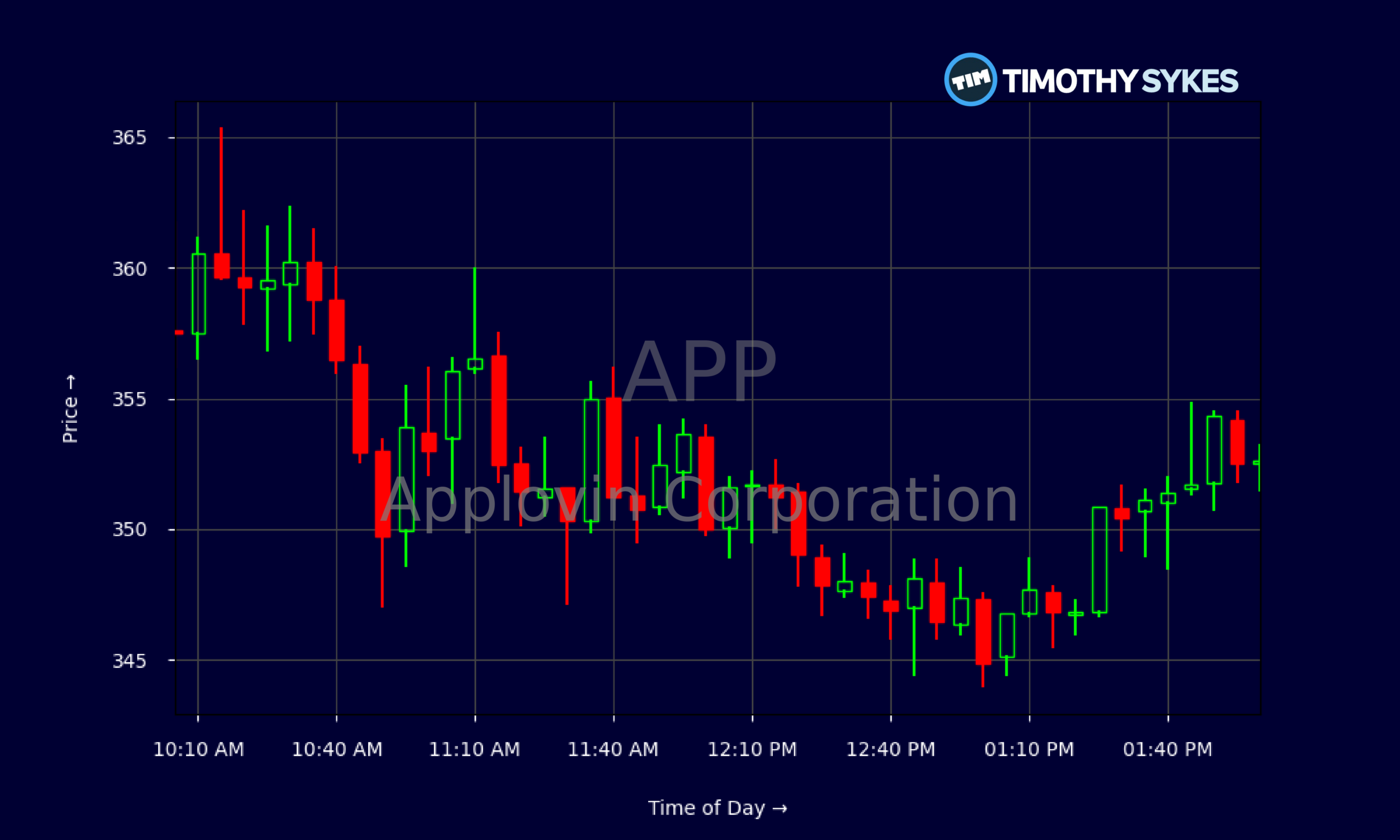
On the tape, APP has reacted like a coiled spring. The stock ripped from a close near $271.75 on 2026/11/04 to around $352.61 on 2026/11/05, a massive gap‑and‑go move after earnings. The daily chart shows APP grinding in the $260s–$270s for weeks, then exploding higher once the numbers and guidance hit.
More Breaking News
Intraday five‑minute candles on 2026/11/05 tell the same story: heavy range, early spike to $365.33, and strong dips getting bought above $338.88. That’s classic high‑volume power action. Under the hood, margins are elite — gross margin near 88.5% and EBIT margin around 81.9% — and APP is throwing off serious cash, with about $1.43B in quarterly free cash flow. For active traders, this mix of breakout price action and fat profitability is exactly why APP stays on the watchlist.
Why Traders Are Locked In On APP Now
The core driver of this latest surge is simple: AppLovin did what the Street wanted and then some. APP’s Q3 beat was broad‑based, not a one‑line accounting trick. Revenue at $2.18B topped expectations and showed powerful growth versus last year. EPS at $4.30 did the same. When a name like APP grows this fast at scale, traders pay attention.
The forward look is just as important. Management guided Q4 revenue to about $2.365B–$2.395B (other reports round to $2.37B–$2.40B), well ahead of the $2.25B Street estimate. Adjusted EBITDA guidance of roughly $1.995B–$2.025B tells traders APP expects to keep printing strong profit, not just chasing top‑line vanity.
Then comes the capital‑return hammer. The board lifted AppLovin’s share repurchase authorization by $3.2B, pushing total buyback firepower to $3.6B as of the end of October. For traders, that’s a potential bid under the stock. Big buybacks often tighten float, support pullbacks, and amplify moves when good news hits.
At the same time, the APP story isn’t risk‑free. A securities class action claims AppLovin overstated the pace of its AI model gains and the ramp of its ad and generative video tools. That legal overhang followed a slight Q2 revenue miss and softer e‑commerce ad data, feeding a roughly 34% prior share‑price slide and a wave of target cuts. Even now, RBC, UBS, and Macquarie have all trimmed price targets on APP, though they still sit with Outperform/Buy ratings and average targets in the mid‑$400s. For traders, that says the core thesis remains intact, but the bar has been reset — a classic setup where strong prints like this can drive sharp re‑rating moves.
Conclusion
For active traders studying APP, this is a textbook case of a broken chart trying to repair itself with hard numbers. AppLovin’s latest quarter backed up the bull story: fast revenue growth, expanding EPS, and guidance that forces models higher. The balance sheet looks sturdy, with about $3.17B in cash, a current ratio above 4, and strong interest coverage. APP is also leveraging its ad‑tech platform beyond gaming, with its Wurl unit unveiling a CTV Trends Report and a Content Intelligence Platform that works across more than 140B monthly impressions. That points to optionality in connected TV, not just mobile.
Still, traders need to respect the other side. The securities class action around APP’s AI claims keeps headline risk in play. Price‑target cuts from big banks show that even bullish analysts are moderating expectations, worried about competition and the true size of the opportunity. High valuation metrics — like a price‑to‑sales ratio around 13.6 and rich price‑to‑cash‑flow multiples — leave little room for big execution mistakes.
This is why process matters. As Tim Sykes always tells traders, “Trade the price action, not the hype — and always, always cut losses quickly.” As millionaire penny stock trader and teacher Tim Sykes, says, “Small gains add up over time; focus on building wealth gradually, not chasing jackpots.”. For APP, that means using the earnings‑driven breakout, the expanded $3.6B buyback, and the elevated volatility as a trading playground — while staying disciplined, respecting risk, and remembering this is research and education, not investment advice.
This is stock news, not investment advice. Timothy Sykes News delivers real-time stock market news focused on key catalysts driving short-term price movements. Our content is tailored for active traders and investors seeking to capitalize on rapid price fluctuations, particularly in volatile sectors like penny stocks. Readers come to us for detailed coverage on earnings reports, mergers, FDA approvals, new contracts, and unusual trading volumes that can trigger significant short-term price action. Some users utilize our news to explain sudden stock movements, while others rely on it for diligent research into potential investment opportunities.
Dive deeper into the world of trading with Timothy Sykes, renowned for his expertise in penny stocks. Explore his top picks and discover the strategies that have propelled him to success with these articles:
- Penny Stocks Trading Guide
- Best Penny Stocks Under $1 to Buy Today
- Top 8 Penny Stocks to Watch on Robinhood
Once you’ve got some stocks on watch, elevate your trading game with StocksToTrade the ultimate platform for traders. With specialized tools for swing and day trading, StocksToTrade will guide you through the market’s twists and turns.
Dig into StocksToTrade’s watchlists here:





Leave a reply