

Joby Aviation Inc. stocks have been trading up by 10.5 percent after securing a pivotal FAA certification milestone driving optimism.
Key Takeaways For JOBY Traders
- Q3 revenue jumped to $55M, crushing the $39M estimate, while the $0.22 per-share loss beat expectations for a $0.25 deficit.
- Full-year 2026 revenue guidance was raised to $135M–$140M, well above both prior guidance and Wall Street’s $120M–$123M range.
- JOBY advanced into the fifth and final FAA certification stage, with “for credit” testing underway and manufacturing efficiency improving.
- U.S. Air Force autonomy commitments climbed to nearly $37M, with a higher $50M ceiling on the operational testing contract.
- A White House-backed Florida flight campaign is giving JOBY real-world operating data and visibility ahead of commercial launch.
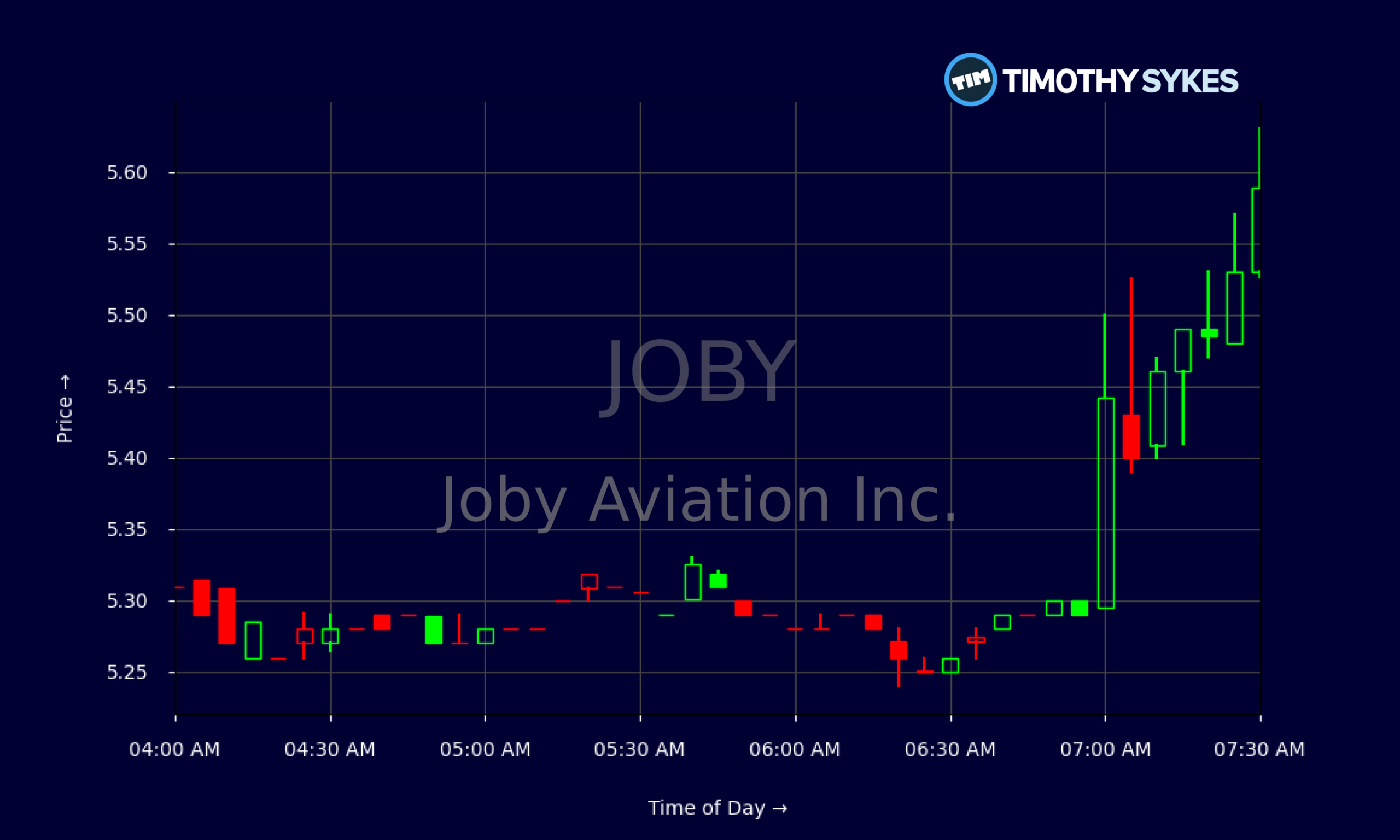
Live Update At 07:33:08 EST: On Thursday, November 05, 2026 Joby Aviation Inc. stock [NYSE: JOBY] is trending up by 10.5%! Discover the key drivers behind this movement as well as our expert analysis in the detailed breakdown below.
Quick Financial Overview
JOBY has looked like a classic pre-revenue story for years, but the latest numbers show that phase ending fast. Q3 revenue hit $55M, far ahead of the $39M Wall Street expected and more than double last year. For a name in early-stage electric aviation, that kind of ramp matters. It tells traders the business is starting to convert engineering work and government programs into real dollars.
JOBY still burns cash aggressively. The latest filings show negative operating cash flow around $173M for the quarter and free cash flow near -$202M. Margins are deep in the red, with profit metrics heavily negative as JOBY funds R&D and certification. But the balance sheet gives the company runway: roughly $2.26B in cash and short-term investments and a current ratio near 18 signal plenty of liquidity for now.
More Breaking News
On the chart, JOBY has been grinding higher off mid-October lows. Daily closes climbed from roughly $4.61 on 2026/10/14 to about $5.05 on 2026/11/04, with a clear support zone building in the high $4s. Intraday, JOBY’s premarket tape shows steady buying, with prints walking up from the $5.27–$5.30 area to the $5.58 zone. That intraday trend tells short-term traders momentum is shifting in favor of the long side, especially with news backing the move.
Why Traders Are Locked In On JOBY Now
JOBY has finally delivered the kind of catalyst-rich quarter momentum traders crave. The company didn’t just beat on one metric; it stacked wins across earnings, guidance, technology, and regulatory progress.
Start with the headline numbers. JOBY’s Q3 loss came in at $0.22 per share, a touch better than the $0.25 loss analysts expected and meaningfully narrower than last year’s deficit. That, paired with the $55M revenue beat, triggered about a 5% after-hours move. For a stock many still file under “future story,” JOBY now has a track record of outpacing expectations. Repeated surprises like this often force shorts and underweight funds to reassess.
Guidance is where JOBY really flexed. Management took its 2026 revenue outlook up to $135M–$140M from $115M–$125M, well ahead of consensus near $122M. That is a clear signal: the team expects a stronger commercial ramp than the market has been modeling. For traders, upward guidance revisions like this are classic catalysts that can re-rate a stock as the story transitions from concept to execution.
Under the hood, JOBY is also de-risking the regulatory and technology pillars that have capped upside. The company has moved into the fifth and final stage of FAA certification, with substantial “for credit” testing already banked. That means each test today counts directly toward the final type certificate JOBY needs to fly paying passengers. At the same time, JOBY is showcasing its air taxi in real urban environments, including a week of piloted flights across Florida under a White House-backed program to build the state’s Aerial Highway Network. Those flights aren’t just PR; they feed live operational data back to the FAA.
On the autonomy and defense side, JOBY has quietly built a second engine of value. Total U.S. Air Force commitments for its autonomous tech are now near $37M, and the service raised the ceiling on JOBY’s operational testing contract to $50M. That comes on top of a record-setting fully autonomous J208 flight across the U.S. and logistics exercises in the Pacific. For traders, this matters because it shows JOBY’s tech getting validated in harsh, real-world conditions with government dollars — a powerful backstop for a still-early commercial story.
The one big swing factor is cash burn. Management flagged heavy spending of $385M–$415M in the back half of 2026 to fund certification, factory build-out, and launch prep. JOBY has a sizable cash cushion, but growth names that spend this hard always carry funding and dilution risk. Active traders in JOBY will want to ride the momentum while staying alert to any capital-raise headlines that could reset the chart.
Conclusion
JOBY is acting like a name in transition — moving from “someday” story to a real, data-driven commercial ramp. The Q3 beat, narrower loss, and higher 2026 revenue guide show Joby Aviation turning its technology, Air Force contracts, and regulatory progress into a business the market has to take seriously. Add in the final-stage FAA certification work and the Florida eVTOL program, and JOBY now has visible milestones that traders can track on a calendar, not just a dream.
At the same time, the JOBY trade is not a straight line. Profit margins remain deeply negative, free cash flow is sharply in the red, and the company itself is signaling hundreds of millions in cash use ahead to reach scale. JOBY’s large cash pile and modest leverage help, but this is still a high-beta, news-driven name that will reward traders who manage risk aggressively and stay nimble around catalysts. In that kind of volatile environment, risk management and capital preservation become paramount. As millionaire penny stock trader and teacher Tim Sykes, says, “The goal is not to win every trade but to protect your capital and keep moving forward.” That mindset is especially relevant when navigating a story stock like JOBY through both positive headlines and inevitable drawdowns.
For active market players, the setup in JOBY is classic “speculative growth with rising proof.” The tape shows buyers stepping in above $4.70, premarket action is leaning higher, and the story has fresh fuel from earnings, guidance, and military work. As Tim Sykes likes to say, “Trade the price action, not the hype.” With JOBY, the hype is finally getting backed by numbers — but the price action is still the final judge, and that’s where disciplined traders should keep their focus. This analysis is for educational and research purposes only and is not investment advice.
This is stock news, not investment advice. Timothy Sykes News delivers real-time stock market news focused on key catalysts driving short-term price movements. Our content is tailored for active traders and investors seeking to capitalize on rapid price fluctuations, particularly in volatile sectors like penny stocks. Readers come to us for detailed coverage on earnings reports, mergers, FDA approvals, new contracts, and unusual trading volumes that can trigger significant short-term price action. Some users utilize our news to explain sudden stock movements, while others rely on it for diligent research into potential investment opportunities.
Dive deeper into the world of trading with Timothy Sykes, renowned for his expertise in penny stocks. Explore his top picks and discover the strategies that have propelled him to success with these articles:
- Penny Stocks Trading Guide
- Best Penny Stocks Under $1 to Buy Today
- Top 8 Penny Stocks to Watch on Robinhood
Once you’ve got some stocks on watch, elevate your trading game with StocksToTrade the ultimate platform for traders. With specialized tools for swing and day trading, StocksToTrade will guide you through the market’s twists and turns.
Dig into StocksToTrade’s watchlists here:





Leave a reply