

Sunrun Inc. stocks have been trading up by 21.5 percent amid bullish sentiment from strong residential solar demand momentum.
Key Takeaways
- Q3 from Sunrun crushed expectations, with EPS at $0.56 vs. $0.32 and revenue at $1.1B vs. $806M consensus, lighting a fire under RUN trading.
- The company’s direct business returned to growth, installations rose 9% year-over-year, and storage attachment hit a record 75%, tightening Sunrun’s grip on U.S. residential solar.
- Record California virtual power plant dispatches of 669 MW and 745 MW proved Sunrun’s home batteries can act like a grid-scale power plant.
- Major banks cut RUN price targets but kept Buy/Positive/Overweight/Outperform ratings, signaling caution on upside, not a breakdown in the story.
- Solar names, including RUN, rallied after Democrats took Congress, with traders betting on a friendlier clean-energy policy backdrop.
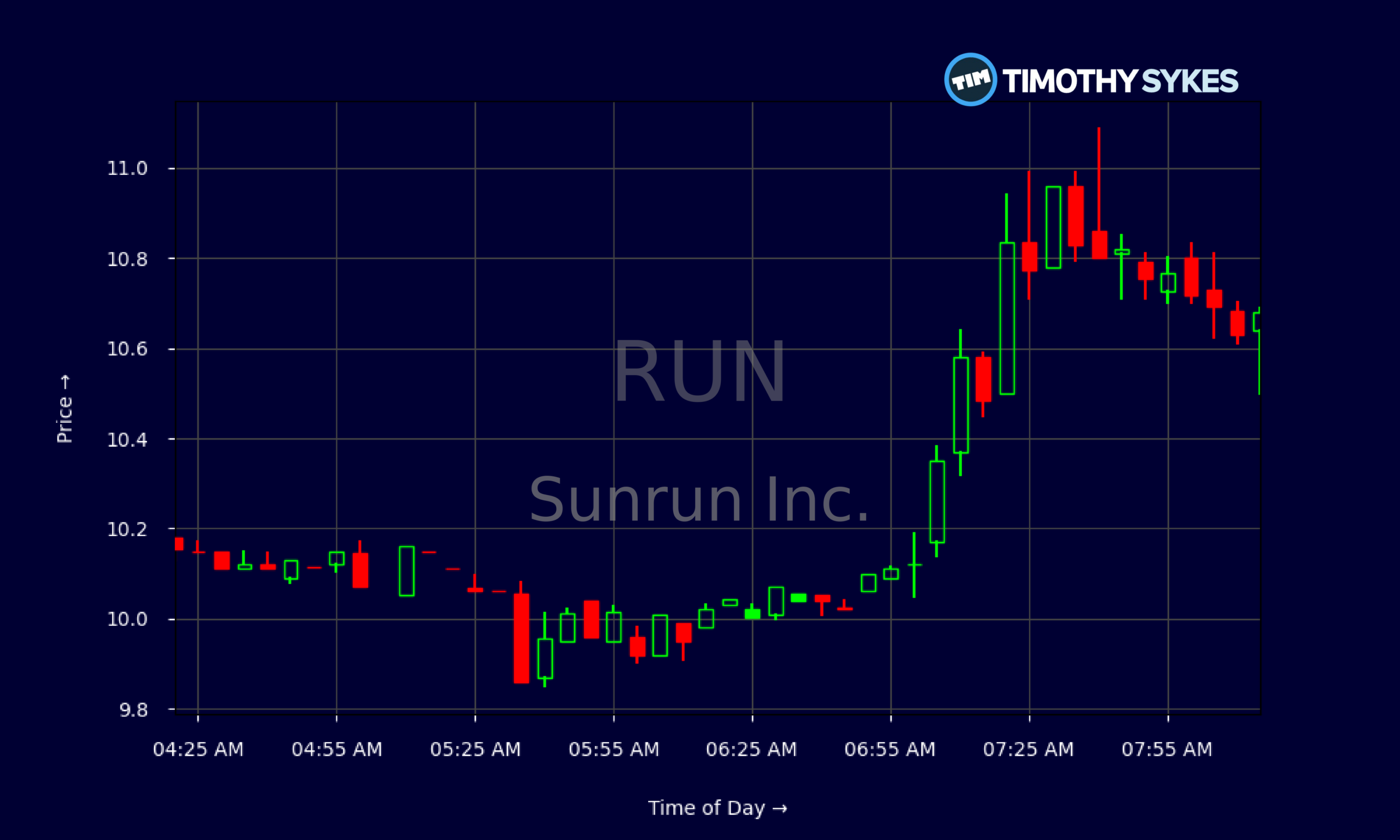
Live Update At 08:18:57 EST: On Thursday, November 05, 2026 Sunrun Inc. stock [NASDAQ: RUN] is trending up by 21.5%! Discover the key drivers behind this movement as well as our expert analysis in the detailed breakdown below.
Quick Financial Overview
RUN just delivered the kind of quarter that forces traders back to their charts. Sunrun reported Q3 revenue of $1.1B, far above a roughly $757M–$806M consensus range, and EPS of $0.56 versus $0.32 expected. That is a decisive beat on both the top and bottom line, and it hits at a time when many traders had written off residential solar as dead money.
On the chart, RUN has exploded off the mid-October base near $6.79–$7.30, pushing to recent closes around $8.79 and trading in the $10–$11 premarket range. That is a sharp trend change. The multi-day action shows higher lows and strong closes, a classic momentum shift after months of pressure.
More Breaking News
Fundamentals back that price action. Sunrun’s gross margin near 50.9% and an EBIT margin above 20% show the core business can make money, even though free cash flow is still negative and leverage is meaningful. For short-term traders, RUN is now a proven catalyst name. For swing traders, the combination of earnings surprise and sector tailwind creates a clear “hot money” magnet — as long as the chart holds higher support.
Why Traders Are Watching RUN Right Now
RUN is back on radar because Sunrun didn’t just beat numbers — it changed the narrative. The company posted Q3 EPS of $0.56 against $0.32 expectations and delivered $1.1B in revenue versus $806M consensus. That kind of spread forces algos and discretionary traders alike to re-rate the stock. It signals demand is stronger than the market was pricing in.
Under the hood, Sunrun’s 9% year-over-year installation growth and a record 75% storage attachment rate matter just as much as the headline beat. A higher attachment rate means each rooftop system is shipping with batteries more often, which boosts revenue per customer and opens doors for grid-services revenue. For traders, that’s multiple expansion fuel, not just one-quarter noise.
At the same time, Sunrun announced record distributed power plant dispatches in California, pushing 669 MW and then 745 MW of home battery power into the grid during a heat wave. That is RUN acting like a virtual utility, not just a rooftop installer. It speaks directly to the company’s pitch around utility and hyperscaler partnerships.
The macro layer is lining up too. U.S.-listed solar stocks, including Sunrun, rallied after Democrats won control of Congress, as traders looked for a more supportive clean-energy policy setup. Add in that Goldman Sachs, Citi, JPMorgan, Mizuho, Susquehanna, and RBC all trimmed price targets yet kept Buy/Positive/Overweight/Outperform stances, and you get a clear message: the Street still views RUN as a leader, even while acknowledging sector headwinds and tariff risk.
Conclusion
RUN now sits at the intersection of strong company execution and a friendlier tape. Sunrun has shown it can grow revenue, push installations higher, and attach storage at record levels while also proving, in California, that its home batteries can behave like a grid-scale asset. That reinforces Sunrun’s pitch as the leading U.S. residential independent power producer and not just a commoditized installer.
Traders still need to respect the risks. Free cash flow remains negative, leverage is meaningful, and Wall Street price targets have drifted down, even as ratings stay constructive. There is also insider activity on file via a recent Form 4, a reminder that management and insiders are active participants in RUN’s story and worth tracking.
From a trading mindset, this is exactly the kind of stock Tim Sykes and the community like to study — catalyst-driven, volatile, and liquid. As Tim says, “I’m not here to be right, I’m here to trade the patterns and cut losses fast.” As millionaire penny stock trader and teacher Tim Sykes, says, “You must adapt to the market; the market will not adapt to you.”. With Sunrun, the pattern now is clear: big fundamental beat, strong sector tailwind, and renewed momentum on the chart. Traders who treat RUN as a trading vehicle — not a forever hold — can use these earnings and policy catalysts as a roadmap for planning their next move, always with tight risk controls and a focus on price action over hope.
This is stock news, not investment advice. Timothy Sykes News delivers real-time stock market news focused on key catalysts driving short-term price movements. Our content is tailored for active traders and investors seeking to capitalize on rapid price fluctuations, particularly in volatile sectors like penny stocks. Readers come to us for detailed coverage on earnings reports, mergers, FDA approvals, new contracts, and unusual trading volumes that can trigger significant short-term price action. Some users utilize our news to explain sudden stock movements, while others rely on it for diligent research into potential investment opportunities.
Dive deeper into the world of trading with Timothy Sykes, renowned for his expertise in penny stocks. Explore his top picks and discover the strategies that have propelled him to success with these articles:
- Penny Stocks Trading Guide
- Best Penny Stocks Under $1 to Buy Today
- Top 8 Penny Stocks to Watch on Robinhood
Once you’ve got some stocks on watch, elevate your trading game with StocksToTrade the ultimate platform for traders. With specialized tools for swing and day trading, StocksToTrade will guide you through the market’s twists and turns.
Dig into StocksToTrade’s watchlists here:





Leave a reply