

Edgewise Therapeutics Inc. stocks have been trading up by 7.71 percent following strong trial progress and positive drug efficacy data.
Key Takeaways
- Q3 2026 results for Edgewise Therapeutics included a $1.348B gain from selling its sevasemten/muscular dystrophy franchise, boosting cash to about $1.74B and transforming the balance sheet.
- William Blair started coverage of EWTX with an Outperform rating, pointing to EDG-7500’s move into Phase III hypertrophic cardiomyopathy trials and a large, expanding HCM market.
- RBC Capital reiterated Outperform on Edgewise Therapeutics with a $59 target versus roughly $39.82, tying upside to >60% Phase 3 success odds and a ~$3.2B revenue opportunity for EDG-7500.
- The company has dosed the first patient in EQUINOX-HFpEF, a Phase 2 trial of EDG-15400 in about 90 heart failure with preserved ejection fraction patients.
- FactSet data show EWTX carries an average Buy rating and a mean price target of $50.46, reflecting broad Street optimism on future upside.
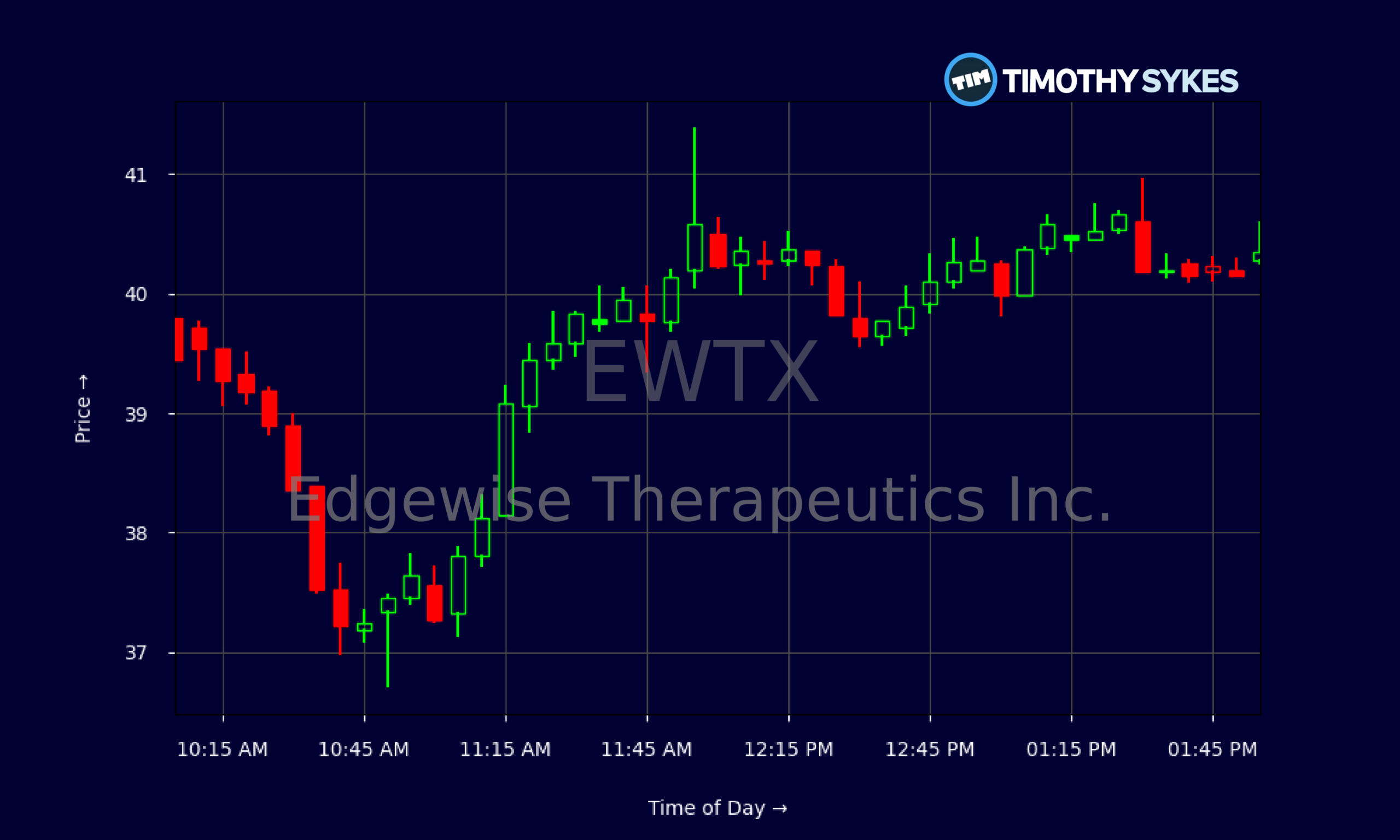
Live Update At 14:02:44 EST: On Thursday, November 05, 2026 Edgewise Therapeutics Inc. stock [NASDAQ: EWTX] is trending up by 7.71%! Discover the key drivers behind this movement as well as our expert analysis in the detailed breakdown below.
Quick Financial Overview
Edgewise Therapeutics Inc. is trading like a biotech that just hit a major inflection point. EWTX closed the latest session around $40.31 after an intraday range from $36.72 to $43. That’s real range for active traders. Over the past few weeks, EWTX has mostly held between $37 and $41, grinding higher from mid-October lows near $36, which tells you dip-buyers are still stepping in.
Intraday, the 5‑minute chart shows a classic high‑volatility open near $43, a sharp flush into the high‑$30s, and then a steady, controlled reclaim back toward $40+. That’s the kind of liquidity and range momentum traders look for when news hits.
More Breaking News
Under the hood, Edgewise looks like a classic development-stage biotech: limited revenue today, heavy R&D, but a big cash buffer. The Q3 2026 balance sheet shows roughly $1.74B in cash and short-term investments, against only about $2.4M in long-term debt and total liabilities of $147.35M. A current ratio of 16.2 and quick ratio of 15.9 mean near‑term funding risk is low. For traders, that shifts the game toward pure data and headline risk rather than surprise financings.
Why Traders Are Watching EWTX Now
EWTX has turned into a textbook catalyst stock. The Q3 2026 report was the pivot: Edgewise Therapeutics booked a $1.348B gain from selling its sevasemten muscular dystrophy business to Servier, pushing cash and equivalents to about $1.74B. For traders, that cash pile is huge. It means Edgewise can push EDG-7500 and EDG-15400 through expensive late-stage trials without constantly tapping the market.
That balance-sheet reset is powering a fresh round of bullish calls. RBC Capital highlighted Edgewise Therapeutics and its lead drug EDG-7500 for hypertrophic cardiomyopathy, laying out a ~$3.2B revenue opportunity if the drug lands “best-in-disease” labeling. RBC reiterated an Outperform on EWTX with a $59 target versus a roughly $39.82 trading level, and assigned greater than 60% odds of Phase 3 success. They also flagged a key near-term catalyst: if the FDA signs off on a Phase 3 design that removes echocardiogram-based titration, it strengthens the safety and convenience story versus cardiac myosin inhibitors.
William Blair is now in the bull camp too, initiating Edgewise Therapeutics with an Outperform and focusing on EDG-7500’s move into Phase III for both obstructive and nonobstructive hypertrophic cardiomyopathy. Add in FactSet data showing a mean Street target of $50.46 and EWTX screens as a consensus Buy with visible upside.
At the same time, Edgewise is broadening the story. The company has dosed the first patient in EQUINOX-HFpEF, a Phase 2 randomized, placebo-controlled trial of EDG-15400 in about 90 adults with heart failure with preserved ejection fraction. Positive Phase 2 CIRRUS-HCM Part D data for EDG-7500 and this second cardiac program give EWTX multiple shots on goal, which matters when traders are sizing risk around binary data events.
Conclusion
For active traders, EWTX now sits at the crossroads of strong fundamentals and binary biotech catalysts. Edgewise Therapeutics has reshaped itself into a focused cardiovascular story with a fortress-like cash position of roughly $1.74B, minimal debt, and working capital above $1.6B. That takes dilution worries off the front burner and puts EDG-7500 and EDG-15400 squarely in focus.
The tape is backing that up. EWTX is showing wide intraday swings but closing well off its lows, which is what you want to see when upgrades and pipeline news are driving the narrative. With RBC calling out a possible ~$3.2B revenue opportunity and a $59 target, and William Blair plus other firms clustering around a roughly $50–$60 range, traders have clear reference points for upside if the science keeps hitting.
This is still biotech. Phase 3 design decisions, trial execution for EDG-7500, and readouts from EQUINOX-HFpEF can all move Edgewise Therapeutics sharply in either direction. As Tim Sykes likes to say, “Patterns repeat, but they don’t guarantee anything — that’s why smart traders prepare, plan, and cut losses quickly.” As millionaire penny stock trader and teacher Tim Sykes, says, “The goal is not to win every trade but to protect your capital and keep moving forward.”. For EWTX, that means respecting the volatility, tracking the clinical calendar, and treating every spike and dip as a potential trading opportunity, not a promise. This article is for educational and research purposes only and is not investment advice.
This is stock news, not investment advice. Timothy Sykes News delivers real-time stock market news focused on key catalysts driving short-term price movements. Our content is tailored for active traders and investors seeking to capitalize on rapid price fluctuations, particularly in volatile sectors like penny stocks. Readers come to us for detailed coverage on earnings reports, mergers, FDA approvals, new contracts, and unusual trading volumes that can trigger significant short-term price action. Some users utilize our news to explain sudden stock movements, while others rely on it for diligent research into potential investment opportunities.
Dive deeper into the world of trading with Timothy Sykes, renowned for his expertise in penny stocks. Explore his top picks and discover the strategies that have propelled him to success with these articles:
- Penny Stocks Trading Guide
- Best Penny Stocks Under $1 to Buy Today
- Top 8 Penny Stocks to Watch on Robinhood
Once you’ve got some stocks on watch, elevate your trading game with StocksToTrade the ultimate platform for traders. With specialized tools for swing and day trading, StocksToTrade will guide you through the market’s twists and turns.
Dig into StocksToTrade’s watchlists here:





Leave a reply