

Range Resources Corporation stocks have been trading up by 15.96 percent amid strong positive sentiment on rising natural gas prices.
Key Takeaways RRC Traders Need Now
- UBS notes that Range Resources faces weak daily gas markets but is benefiting from improving NGL fundamentals and stronger export pricing, supporting cash flow into year-end and a 2.7 Bcfe/d target by 2027.
- Mizuho cut its price target on Range Resources from $55 to $52 but reiterated an Outperform rating, signaling still-positive expectations despite a modest valuation reset.
- Susquehanna raised its price target on Range Resources from $41 to $44 while reiterating a Neutral rating, driven by updated oil and gas assumptions in its Q3 E&P outlook.
- Morgan Stanley lifted its price target on Range Resources to $45 from $43, keeping an Equal Weight rating and spotlighting oil near $100 and 2027 plans as key themes.
- UBS lowered its price target on Range Resources to $44 from $49 while keeping a Neutral stance, with the broader analyst consensus at Hold and an average target around the mid-$40s.
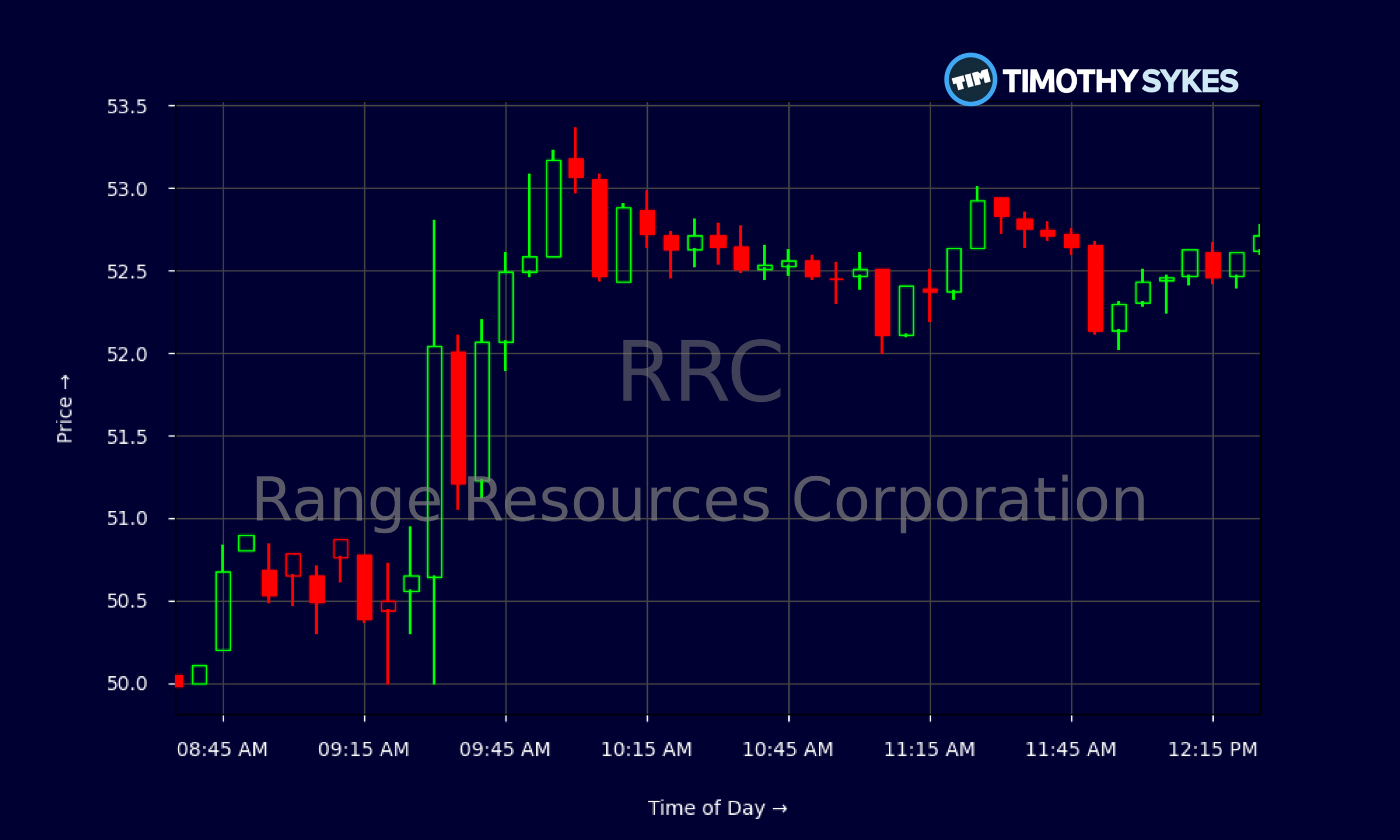
Live Update At 12:32:19 EDT: On Monday, October 26, 2026 Range Resources Corporation stock [NYSE: RRC] is trending up by 15.96%! Discover the key drivers behind this movement as well as our expert analysis in the detailed breakdown below.
Quick Financial Overview
RRC has ripped higher on the chart. In early October, Range Resources traded near $37.60; the latest daily close sits at $52.79 after tagging an intraday high of $53.36. That is a powerful multi-week trend, the kind of strength momentum traders hunt.
Intraday action shows RRC grinding higher rather than spiking wildly. After a volatile open around $50, the stock pushed above $52 and spent the late morning holding a tight band near $52.50–$52.80. That tells traders dip-buyers are stepping in and supply above $53 is the near-term ceiling to watch.
Under the hood, Range Resources is not just a story stock. Revenue runs near $2.99B, with a hefty 56.8% gross margin and about 35% EBIT margin. A price/earnings ratio near 11.3 and price-to-sales around 2.9 leave RRC looking like a typical profitable E&P name, not a bubble.
More Breaking News
Debt is manageable. Total debt-to-equity sits around 0.11, with interest coverage near 18.8 times, so RRC is not fighting for survival. Return on equity near the low-20% area shows management is squeezing solid profits out of its asset base, which supports the recent strength on the tape.
Why Traders Are Watching RRC So Closely
This entire move in RRC is happening while Wall Street sends mixed but generally constructive messages. UBS tells a key part of the story: Range Resources is facing weak daily gas prices, yet improving NGL fundamentals and stronger export pricing are propping up cash flow into year-end. On top of that, RRC is targeting 2.7 Bcfe/d of production by year-end 2027 and steadily reducing bank debt. That is a combination many traders respect — rising scale, better balance sheet, and resilient cash generation.
The market has noticed. UBS highlighted that Range Resources has not had to curtail production despite soft gas pricing. Shares responded with gains, confirming that traders are rewarding operational resilience. For momentum and breakout traders, that kind of reaction is critical; it shows good news is still being bought.
At the same time, the analyst deck is being shuffled, not flipped. Mizuho trimmed its Range Resources price target from $55 to $52 but kept an Outperform rating. That says, “less upside than before, but still upside,” a message that lines up with the rally into the low-$50s.
Elsewhere, Susquehanna nudged its target from $41 to $44 and stuck with Neutral. Morgan Stanley lifted its RRC target to $45 from $43, also staying at Equal Weight. Goldman Sachs only inched its target to $37 and kept Neutral, while Truist cut from $45 to $43 with a Hold rating, flagging El Niño-driven winter risk for natural gas. Put together, traders are looking at a cluster of mid-$40s targets while Range Resources trades above $50 — fuel for debates about whether price is getting ahead of fundamentals or front-running better 2027 cash flows.
Scotiabank’s Sector Perform at $42 and UBS’s revised $44 target reinforce the core message: Range Resources is seen as solid, not speculative, with long-term execution on track but plenty riding on commodity prices and weather.
Conclusion
For active traders, RRC is now a classic “strong stock, mixed narrative” setup. Range Resources has run hard from the high-$30s to the low-$50s while Wall Street mostly hovers at Hold and Neutral ratings with price targets in the $42–$46 zone. That gap between current price and average target is where trading opportunity and risk live.
On the bullish side, Range Resources is throwing off cash with EBITDA north of $350M in the latest quarter, double-digit returns on assets and equity, and a clear plan to grow to 2.7 Bcfe/d by 2027. UBS’s comments about better NGL and export pricing, plus no production curtailments, add real backing to the bull case. The balance sheet remains controlled, and RRC has room to keep talking about higher shareholder returns as free cash flow builds.
On the cautious side, multiple banks have trimmed price targets on Range Resources even as they praise execution. Truist and Goldman remind traders that natural gas fundamentals and an El Niño winter can hit sentiment fast. The announced Q3 2026 earnings date becomes the next big checkpoint, where traders will dissect RRC’s 2027 roadmap, cash-flow outlook, and return plans.
Tim Sykes likes to say, “The market doesn’t care about your opinion, only your preparation.” As millionaire penny stock trader and teacher Tim Sykes, says, “The goal is not to win every trade but to protect your capital and keep moving forward.”. Range Resources is a live example. Study the chart, respect the volatility, know the catalysts, and let the price action — not hope — drive your trading decisions.
This is stock news, not investment advice. Timothy Sykes News delivers real-time stock market news focused on key catalysts driving short-term price movements. Our content is tailored for active traders and investors seeking to capitalize on rapid price fluctuations, particularly in volatile sectors like penny stocks. Readers come to us for detailed coverage on earnings reports, mergers, FDA approvals, new contracts, and unusual trading volumes that can trigger significant short-term price action. Some users utilize our news to explain sudden stock movements, while others rely on it for diligent research into potential investment opportunities.
Dive deeper into the world of trading with Timothy Sykes, renowned for his expertise in penny stocks. Explore his top picks and discover the strategies that have propelled him to success with these articles:
- Penny Stocks Trading Guide
- Best Penny Stocks Under $1 to Buy Today
- Top 8 Penny Stocks to Watch on Robinhood
Once you’ve got some stocks on watch, elevate your trading game with StocksToTrade the ultimate platform for traders. With specialized tools for swing and day trading, StocksToTrade will guide you through the market’s twists and turns.
Dig into StocksToTrade’s watchlists here:





Leave a reply