

Unity Software Inc. stocks have been trading up by 19.08 percent following upbeat sentiment around its expanding AI-driven gaming tools.
Key Takeaways
- Unity’s new partnership with Google centers on AI‑driven game creation through Playground and the upcoming Unity Spark tool, letting users build games from simple text prompts.
- Multiple Wall Street firms, including Raymond James, raised targets on U to the mid‑$50s, highlighting strength in the Grow ad segment and the strategic value of the Google partnership.
- Jefferies now models Unity’s Vector ad business at $1.69B revenue in 2027, a forecast 45% year‑over‑year jump that underscores rising advertiser demand.
- Additional upgrades from Wedbush, Morgan Stanley, BTIG, and Citi flag stronger Vector adoption, better gaming DSP positioning, and a near‑term upside catalyst watch on U.
- A new PvX partnership offers non‑dilutive user‑acquisition financing to Unity ecosystem studios, tying capital directly to Unity Vector’s performance tools.
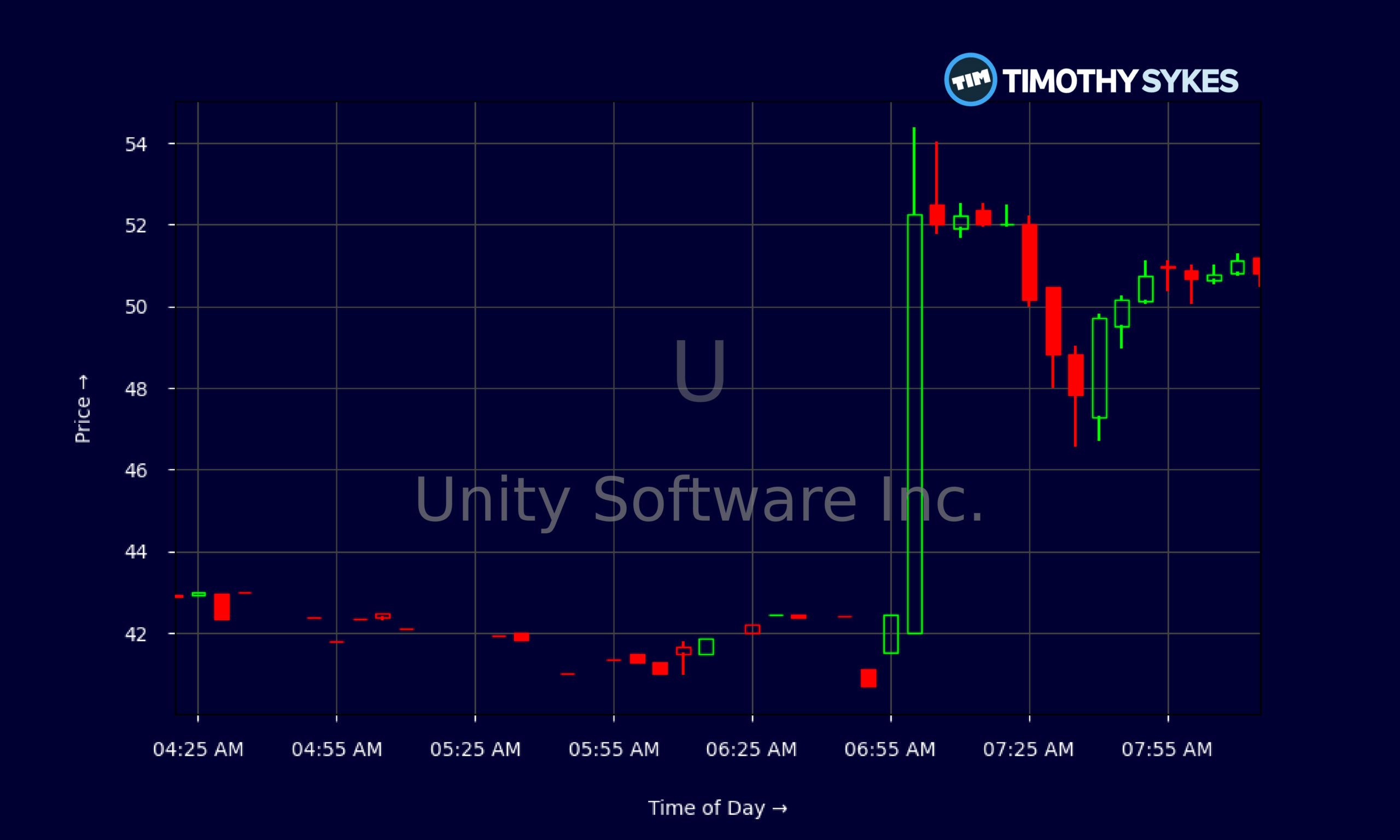
Live Update At 08:19:48 EST: On Thursday, November 05, 2026 Unity Software Inc. stock [NYSE: U] is trending up by 19.08%! Discover the key drivers behind this movement as well as our expert analysis in the detailed breakdown below.
Quick Financial Overview
Unity Software Inc. has been trading like a momentum name again. On the daily chart, U climbed from a recent close near $37.70 to $42.46 by 2026/11/04, breaking out after several choppy sessions around the $40 area. That push sets up $43–$45 as the next key resistance zone that short‑term traders will be watching.
Intraday, the 5‑minute tape shows exactly when sentiment flipped. U ripped from around $42 at 07:00‑05 to above $52 within an hour, with prints as high as $54.35 before cooling back near $50–$51. That’s classic news‑driven range expansion: big gap, heavy volume, wide candles. For active trading, it screams “trade the volatility, don’t marry the stock.”
More Breaking News
Under the hood, Unity is still not a profit machine. The latest quarterly income statement shows a net loss of about $23.6M on $546.5M in revenue, with an EBIT margin near ‑2.6% and profit margins deeply negative. Yet cash flow tells a different story. Unity generated roughly $205.6M in operating cash flow and $202.0M in free cash flow for the quarter, ending with about $2.36B in cash and equivalents. With a current ratio around 2.0 and long‑term debt of roughly $1.68B, Unity has room to keep funding growth while traders focus on revenue and platform momentum.
Why Traders Are Watching Unity Software Now
Unity Software is suddenly back in the spotlight because U just attached itself to one of the biggest growth themes in tech: AI‑driven content creation. The strategic partnership with Google puts Unity Spark on top of Google’s Playground, a platform where users can build games from natural‑language prompts instead of code. For traders, that’s not just a cool demo. It’s a funnel story.
By lowering the barrier to making a game, Unity aims to pull in non‑coders, hobbyists, and small studios. Those creators start in Playground with simple AI‑generated prototypes, then graduate into Unity’s full engine, monetization tools, and ad stack. The news that Unity shares traded more than 3% higher pre‑market after the Google announcement tells you how quickly the market connected those dots.
Analysts clearly did. Raymond James upgraded U to Outperform with a $54 target, calling out better‑than‑expected results in the Grow segment and the strategic importance of the Google tie‑up for Unity’s “creator funnel and monetization flywheel.” Wedbush, Morgan Stanley, and BTIG followed with targets up to $55, all leaning on the same core idea: Unity’s Vector ad channel is shifting from test budgets to fully funded campaigns. That means bigger, stickier ad dollars flowing across the Unity ecosystem.
Jefferies added more fuel by surveying mobile gaming ad buyers and bumping its U target to $54. Their work supports a 2027 Vector revenue forecast of $1.69B, implying 45% year‑over‑year growth. For U, that kind of ad ramp can matter more than pure game‑license revenue. Citi even put Unity on a 30‑day “upside catalyst watch” ahead of Q3, signaling that upcoming numbers for the Grow side may surprise to the upside if this momentum shows up in the print.
On top of that, Unity’s PvX partnership extends the same theme. By offering non‑dilutive user‑acquisition financing to eligible studios, Unity and PvX let developers scale their marketing using capital tied directly to campaign performance rather than new equity raises. That keeps studios in the ecosystem, spending more on Unity Vector while Unity deepens its role in the entire game‑growth stack. For traders, U is no longer just a game engine play; it’s turning into an AI‑plus‑ad‑tech platform trade with multiple levers.
Conclusion
For active traders, Unity Software sits at the crossroads of three hot trends: AI creation tools, mobile gaming ads, and data‑driven user acquisition. U is still a money‑losing company on a GAAP basis, but the combination of strong gross margins, solid free cash flow, and a $2B‑plus cash pile gives Unity time to execute on the Google and PvX deals.
The street’s view is tilted in one direction. Across Wall Street, Unity holds a broad Buy‑leaning stance, with average price targets in the low‑$50s versus the recent UBS note referencing U around $40.31. Wedbush sits at $55, Raymond James and Morgan Stanley at $54–$55, BTIG at $53, and UBS even nudged up to $49 while staying Neutral. That spread between where U trades and where the models sit represents potential upside, but also a clear expectations bar into Q3 2026 earnings on 2026/11/05.
For traders in the Timothy Sykes community, the setup is familiar: big catalyst, expanding range, and a crowded narrative around one ticker. As Tim Sykes likes to say, “Volatility is opportunity, but only if you respect the risk and cut losses fast.” As millionaire penny stock trader and teacher Tim Sykes says, “You must adapt to the market; the market will not adapt to you.”. With U, the play isn’t to believe the story blindly. It’s to study the chart, track how Unity Spark and Vector actually perform, and trade the real momentum — not the hype.
This is stock news, not investment advice. Timothy Sykes News delivers real-time stock market news focused on key catalysts driving short-term price movements. Our content is tailored for active traders and investors seeking to capitalize on rapid price fluctuations, particularly in volatile sectors like penny stocks. Readers come to us for detailed coverage on earnings reports, mergers, FDA approvals, new contracts, and unusual trading volumes that can trigger significant short-term price action. Some users utilize our news to explain sudden stock movements, while others rely on it for diligent research into potential investment opportunities.
Dive deeper into the world of trading with Timothy Sykes, renowned for his expertise in penny stocks. Explore his top picks and discover the strategies that have propelled him to success with these articles:
- Penny Stocks Trading Guide
- Best Penny Stocks Under $1 to Buy Today
- Top 8 Penny Stocks to Watch on Robinhood
Once you’ve got some stocks on watch, elevate your trading game with StocksToTrade the ultimate platform for traders. With specialized tools for swing and day trading, StocksToTrade will guide you through the market’s twists and turns.
Dig into StocksToTrade’s watchlists here:





Leave a reply