

Bloom Energy Corporation stocks have been trading down by -2.36 percent amid heightened concerns over fuel-cell demand and project delays.
Key Takeaways
- Bloom Energy shares fell about 6% following the release of its Q3 results and forward guidance, signaling traders saw the report and outlook as weaker than expected.
- The stock dropped about 11.3% on heavy volume after an Oppenheimer note flagged higher working capital needs that hurt Q3 cash flow.
- Bloom Energy shares were down 1.3% premarket after an 8.7% decline in the prior session, as BE trended on WallStreetBets.
- A securities law firm opened an investigation into potential corporate wrongdoing at Bloom Energy for those who purchased shares before 2026/02/27, raising litigation risk.
- These legal probes highlight governance, disclosure, compliance, or fraud‑related concerns, adding legal and reputational overhang for Bloom Energy.
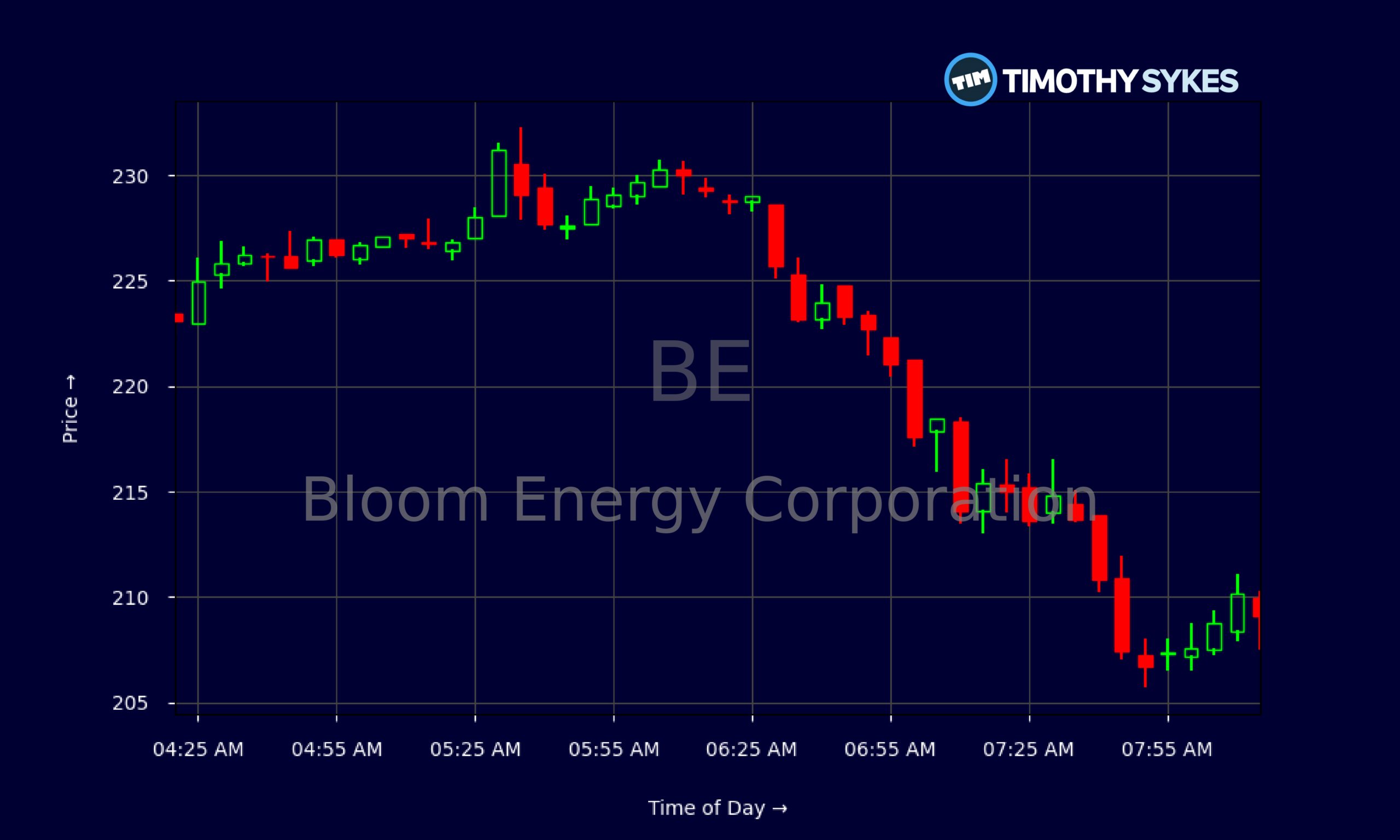
Live Update At 08:18:36 EST: On Wednesday, November 04, 2026 Bloom Energy Corporation stock [NYSE: BE] is trending down by -2.36%! Discover the key drivers behind this movement as well as our expert analysis in the detailed breakdown below.
Quick Financial Overview
Bloom Energy (BE) is trading like a high‑beta momentum name tied to big expectations and even bigger questions. The daily chart shows BE swinging from a recent high around $275 to the low $190s, then bouncing near $214. That is a sharp drawdown in a short window, which tells traders sentiment flipped quickly from optimism to defense.
On the intraday tape, BE has been leaking lower from the mid‑$220s into the low $210s, with repeated failures to hold pushes above $225. That intraday pattern looks like steady selling into strength rather than panic, but the message is clear: supply is in control.
Under the hood, Bloom Energy is not a tiny operation. Revenue over the last year tops roughly $2.02B, with solid gross margin above 30%. The latest quarterly income statement shows more than $1.06B in revenue and about $196M in net income, which is impressive for a company under pressure.
More Breaking News
But valuation is rich. A price‑to‑sales ratio above 26 and price‑to‑cash‑flow over 90 mean BE is priced for big growth and clean execution. Debt ratios show the balance sheet is leveraged but manageable, with a current ratio around 4.1 giving Bloom Energy some liquidity runway. For active traders, that mix—high expectations, heavy volatility, and real but not perfect fundamentals—creates a classic battleground stock.
Why Traders Are Watching Bloom Energy Now
The recent action in Bloom Energy has been driven by a one‑two punch: disappointing Q3 sentiment and new headline risk. First, BE’s Q3 results and forward guidance sparked a roughly 6% selloff. The market read that update as weaker than hoped, and when a premium‑valued name like Bloom Energy stumbles on guidance, traders usually do not wait around to see what happens next. They sell first, ask questions later.
The next day, pressure intensified. An Oppenheimer note pointed to higher working capital needs that hurt Q3 cash flow and warned of near‑term strain. That call helped drive an 11.3% slide in BE on sharply higher volume. For short‑term traders, that volume spike matters as much as the percentage move. It tells you big money was exiting or repositioning around Bloom Energy, not just a few weak hands bailing.
At the same time, BE started trending on WallStreetBets, with the stock down another 1.3% in premarket after an 8.7% hit the prior session. That meme‑style attention turns Bloom Energy into a volatility magnet. You can get face‑ripping bounces and brutal flushes, often disconnected from fundamentals on a minute‑to‑minute basis.
Layered on top of all this, multiple securities law firms have launched investigations into potential corporate wrongdoing at Bloom Energy tied to traders who bought before 2026/02/27. These probes hint at governance, disclosure, compliance, or even fraud‑related concerns, and they raise the risk of derivative or class‑action litigation. For BE, that is more than noise; it is an overhang that can cap rallies and keep cautious money on the sidelines.
Conclusion
For active traders, Bloom Energy is a textbook example of how narrative, numbers, and news can collide. On one hand, BE posts more than $1B in quarterly revenue, positive net income, and decent margins. On the other, the stock has been hammered—down double digits on weak cash‑flow optics and guidance that failed to excite the street.
The Oppenheimer focus on working capital and Q3 cash‑flow strain tells you where the next pressure point is. Cash flow and balance‑sheet quality now sit at the center of the Bloom Energy debate. Meanwhile, the securities law investigations add a second front. Governance and disclosure questions rarely resolve overnight, and each new headline around BE can trigger fresh waves of algorithmic and retail selling.
For short‑term trading, that mix can be powerful. High valuation, negative news flow, and meme‑stock attention often create big intraday ranges and clean technical levels to trade against. But it also demands discipline. As Tim Sykes likes to remind traders, “Volatility is an opportunity only if you respect risk and cut losses quickly.” As millionaire penny stock trader and teacher Tim Sykes, says, “There is always another play around the corner; don’t chase just because you feel FOMO.”.
This article is produced strictly for educational and research purposes. Anyone following Bloom Energy or any other stock should do their own research, understand their risk tolerance, and treat every trade as a business decision, not a hope trade.
This is stock news, not investment advice. Timothy Sykes News delivers real-time stock market news focused on key catalysts driving short-term price movements. Our content is tailored for active traders and investors seeking to capitalize on rapid price fluctuations, particularly in volatile sectors like penny stocks. Readers come to us for detailed coverage on earnings reports, mergers, FDA approvals, new contracts, and unusual trading volumes that can trigger significant short-term price action. Some users utilize our news to explain sudden stock movements, while others rely on it for diligent research into potential investment opportunities.
Dive deeper into the world of trading with Timothy Sykes, renowned for his expertise in penny stocks. Explore his top picks and discover the strategies that have propelled him to success with these articles:
- Penny Stocks Trading Guide
- Best Penny Stocks Under $1 to Buy Today
- Top 8 Penny Stocks to Watch on Robinhood
Once you’ve got some stocks on watch, elevate your trading game with StocksToTrade the ultimate platform for traders. With specialized tools for swing and day trading, StocksToTrade will guide you through the market’s twists and turns.
Dig into StocksToTrade’s watchlists here:





Leave a reply