

Amazon.com Inc. stocks have been trading up by 2.2 percent amid strong e-commerce demand and cloud growth optimism.
Key Takeaways For AMZN Traders
- Record 13.9% operating margin on Q3 2026 sales of $201.9B, fueled by a re-accelerating AWS business growing 39% year over year at ~39% margin.
- AWS net sales jumped to $45.98B from $33.0B, with operating income up to $17.77B, highlighting powerful operating leverage in AMZN’s cloud engine.
- CEO Andy Jassy flagged 39.3% AWS growth, a $578B backlog, and AWS capacity effectively sold out into 2028, all driven by intense AI demand.
- Bedrock has become AWS’s fastest-growing multi‑billion‑dollar service, while Graviton and Trainium chips are growing triple-digits and delivered over $2B in customer savings in Q3.
- UBS and Freedom Broker both raised AMZN price targets, leaning on expectations for AWS growth above 40% in FY27–FY28 and a credible path to a $1T AWS business.
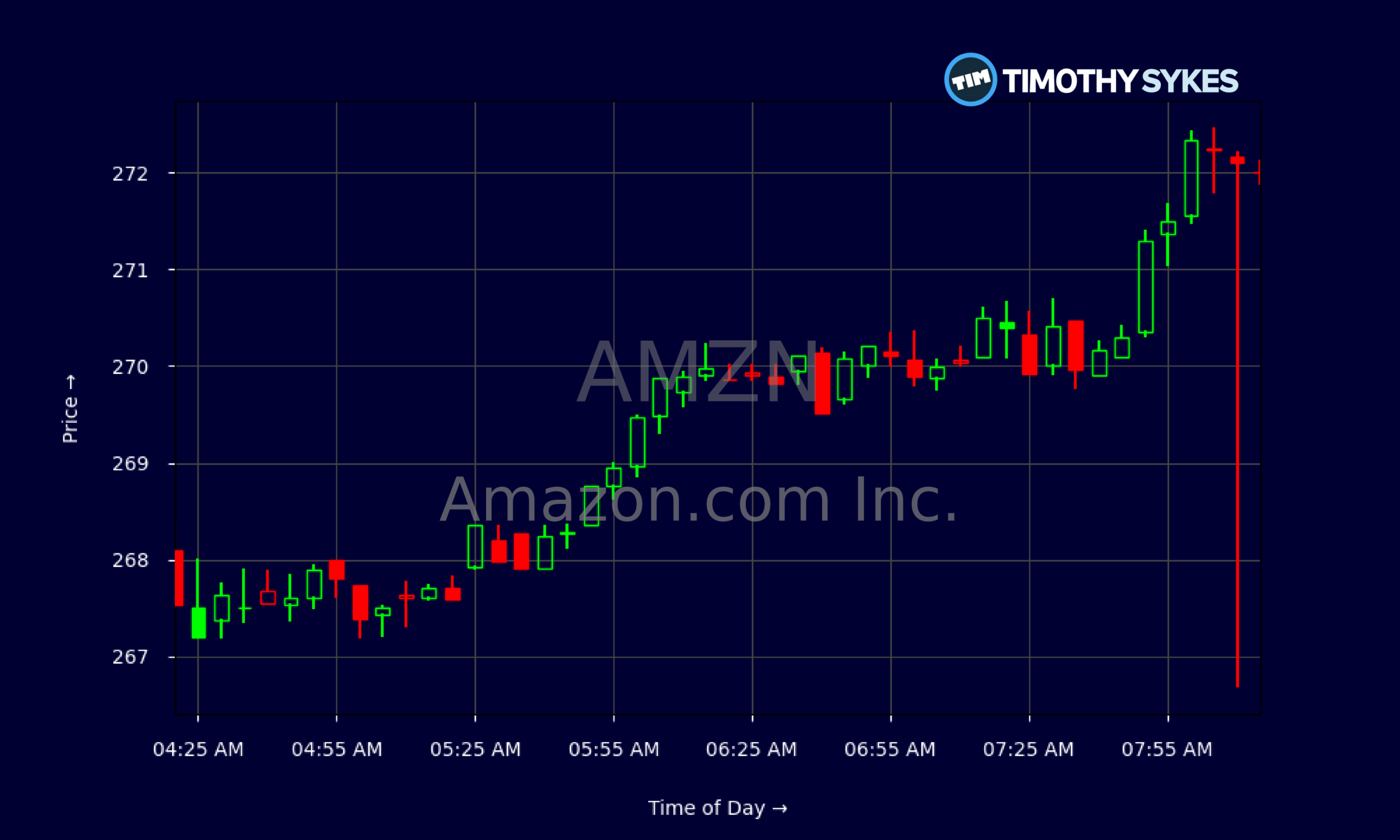
Live Update At 08:19:38 EST: On Thursday, November 05, 2026 Amazon.com Inc. stock [NASDAQ: AMZN] is trending up by 2.2%! Discover the key drivers behind this movement as well as our expert analysis in the detailed breakdown below.
Quick Financial Overview
AMZN is trading like a name where big money wants long-term AI exposure, even if the cash flow is noisy quarter to quarter. After earnings, the stock dipped briefly, but the bigger picture is strength. The recent daily chart shows AMZN bouncing from roughly $240 on 2026/10/30 to about $266 on 2026/11/04, a strong multi-day push that reclaimed and extended prior highs.
Intraday, the 5‑minute tape around $268–$272 shows tight consolidation with controlled pullbacks, not panic selling. That kind of grind higher usually signals steady institutional accumulation rather than hot-money spikes. For active traders, AMZN is acting like a liquid trend name, with clean intraday levels.
More Breaking News
Fundamentals back up that price action. The company posted trailing‑twelve‑month revenue of about $716.9B with a fat 50.8% gross margin and 23% EBIT margin. Net margin above 17% and a P/E near 21.1 suggest AMZN is priced as a profitable mega‑cap, not a speculative story stock. Debt looks manageable with total‑debt‑to‑equity at 0.23 and strong interest coverage over 76x. In simple terms: AMZN is throwing off solid earnings, levering its assets well, and the chart is confirming that traders respect the story.
Why Traders Are Watching AMZN’s AWS And AI Push
The real fuel under AMZN right now is AWS and AI. Q3 2026 revenue came in at $201.9B, up 12% year over year, but the headline for traders is the record 13.9% operating margin. That is the highest in Amazon’s history, and it is being driven by a re-accelerating AWS machine. AWS sales grew 39% year over year to a roughly $184B run-rate with about 39% operating margin. In trading terms, the high-margin segment is doing the heavy lifting.
More detail from AMZN’s filings backs this up. AWS net sales climbed from $33.0B to $45.98B year over year, while operating income jumped from $11.43B to $17.77B. That is textbook operating leverage: each new dollar of AWS revenue is dropping more profit to the bottom line. CEO Andy Jassy says AWS growth has re‑accelerated to 39.3% for the sixth straight quarter, supported by a $578B backlog. For traders, that backlog acts like a visible pipeline of future revenue.
The kicker is AI. Jassy noted AWS cloud capacity for 2026 is sold out, 2027 is largely booked, and a big chunk of 2028 is already committed. AMZN plans about $220B in 2026 capex, mostly for data centers, servers, and networking to support Bedrock and AI workloads. That spending has flipped free cash flow negative — roughly ‑$34.8B in free cash flow against $42.4B in operating cash this quarter — but the demand signal is loud.
Inside AWS, Bedrock is exploding, with Fortune 500 spending up nearly 7x and token volume ~17x year over year, making it the fastest-growing multi‑billion‑dollar service in AWS history. At the same time, AMZN’s custom Graviton and Trainium chips are growing triple digits, with revenue commitments more than 20x and over $2B in customer savings in Q3 alone. That kind of cost advantage usually creates sticky customers and supports premium pricing.
Wall Street is leaning into this narrative. UBS raised its AMZN price target to $352, while Freedom Broker lifted theirs to $330, both reiterating Buy ratings and framing AWS as a possible $1T business later this decade. For momentum traders, that kind of analyst backdrop often turns dips after earnings into opportunities instead of breakdowns.
Conclusion
For active traders, AMZN is a classic case of short‑term cash burn in exchange for long‑term scale. The company is spending about $220B this year on AI‑heavy infrastructure, which has pushed free cash flow negative, but that spend is backed by a sold‑out AWS pipeline into 2028 and a $578B backlog. On top of that, the core business just printed a 13.9% operating margin and a 23% EBIT margin — hardly a weak base.
The trading edge comes from understanding how this story fits with the chart. AMZN has pushed from the low $240s to the mid‑$260s in a matter of days while consolidating tightly intraday around $270. That tells you dip buyers are real and funds are willing to hold through volatility as long as AWS keeps printing 30–40% growth and expanding margins. Newer growth levers — Bedrock, Graviton, Trainium, and even grocery promotions like the $25 Thanksgiving meal that deepens Prime engagement — all stack onto that AWS core.
Traders still need to respect risk. A slowdown in AI demand, a capex misstep, or macro shock can unwind even the strongest trend. That is why, in the words of Tim Sykes, “Risk management isn’t optional — it’s your only real edge.” As millionaire penny stock trader and teacher Tim Sykes says, “Consistency is key in trading; don’t let emotions dictate your trades.” AMZN’s story is powerful, but the game is the same: study the numbers, watch the levels, and cut losses fast when the thesis cracks. This analysis is for educational and research purposes only, not investment advice.
This is stock news, not investment advice. Timothy Sykes News delivers real-time stock market news focused on key catalysts driving short-term price movements. Our content is tailored for active traders and investors seeking to capitalize on rapid price fluctuations, particularly in volatile sectors like penny stocks. Readers come to us for detailed coverage on earnings reports, mergers, FDA approvals, new contracts, and unusual trading volumes that can trigger significant short-term price action. Some users utilize our news to explain sudden stock movements, while others rely on it for diligent research into potential investment opportunities.
Dive deeper into the world of trading with Timothy Sykes, renowned for his expertise in penny stocks. Explore his top picks and discover the strategies that have propelled him to success with these articles:
- Penny Stocks Trading Guide
- Best Penny Stocks Under $1 to Buy Today
- Top 8 Penny Stocks to Watch on Robinhood
Once you’ve got some stocks on watch, elevate your trading game with StocksToTrade the ultimate platform for traders. With specialized tools for swing and day trading, StocksToTrade will guide you through the market’s twists and turns.
Dig into StocksToTrade’s watchlists here:




Leave a reply