
Virax Biolabs Group Limited stocks have been trading up by 10.83 percent amid heightened interest from recent diagnostic technology developments.
Key Takeaways
- Virax Biolabs, via its China subsidiary, signed three new non-exclusive distribution agreements in mainland China for its ImmuneSelect immune profiling products.
- The new distribution agreements target key biotech hubs across mainland China and expand on Virax Biolabs’ initial China sales.
- These China deals complement an existing Southeast Asia supply arrangement with Fosun Diagnostics, broadening the regional footprint for ImmuneSelect.
- The agreements advance Virax Biolabs’ distributor-led commercial strategy while preserving a capital-light business model focused on research-use immune profiling products.
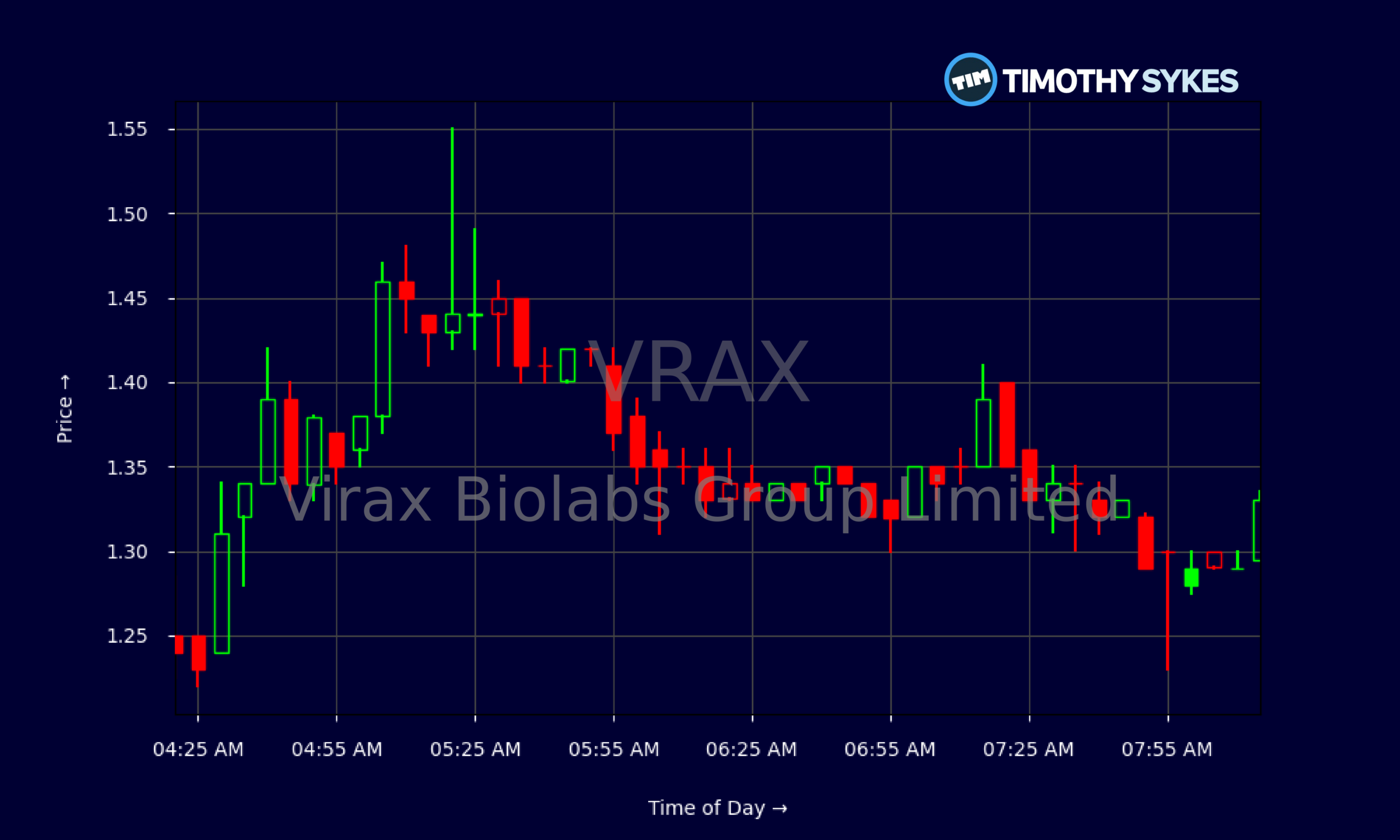
Live Update At 08:19:20 EST: On Thursday, November 05, 2026 Virax Biolabs Group Limited stock [NASDAQ: VRAX] is trending up by 10.83%! Discover the key drivers behind this movement as well as our expert analysis in the detailed breakdown below.
Quick Financial Overview
VRAX is trading in true micro-cap territory, and that shows up clearly in its numbers. Virax Biolabs generated only about $12,423 in revenue over the last reported period, yet the market is valuing those sales at a steep price-to-sales ratio near 202. That tells traders VRAX is a story and expectation play, not a fundamentals monster.
The balance sheet is surprisingly clean for a tiny biotech. Virax Biolabs holds roughly $6.4M in cash out of $8.3M in total assets, with total liabilities under $1.0M. VRAX shows stockholders’ equity of about $7.6M and a low long‑term debt load around $0.3M, so dilution and burn rate matter more than interest payments.
Book value per share sits near $5.63 while VRAX trades around the low‑$1 range, implying the stock sits at roughly one‑third of stated book. Management effectiveness metrics like ROIC around -70.96% underline how early and unproven the commercial engine still is.
More Breaking News
On the chart, VRAX has faded from the mid‑$1.80s on 2026/10/12 to the $1.20 area on 2026/11/04. That steady downtrend tells traders to respect overhead supply but also watch for news‑driven bounces.
Why Traders Are Watching VRAX After China Deals
VRAX just dropped the kind of news that gets small-cap biotech traders to sit up: real commercial expansion, without heavy spending. Virax Biolabs, through its China subsidiary, signed three new non‑exclusive distribution agreements in mainland China for its ImmuneSelect research-use immune profiling products. For a company with tiny reported revenue, any route to more volume matters.
The details are important. These VRAX agreements hit key biotech hubs across China, where research labs and diagnostic players cluster. Instead of building an in‑house sales army, Virax Biolabs is sticking to a distributor-led, capital-light model. That keeps fixed costs low and lets local partners do the heavy lifting on the ground. For traders, that structure means any pickup in orders can flow through without a matching spike in operating expenses.
VRAX is also layering this China push on top of an existing Southeast Asia supply arrangement with Fosun Diagnostics. That’s a second signal Virax Biolabs is thinking regionally, not just chasing one‑off deals. As ImmuneSelect placements grow across Asia, even modest orders could move the needle relative to the company’s tiny current revenue base.
From a trading standpoint, though, the tape hasn’t fully rewarded the story yet. VRAX has slid from $1.85 down toward $1.20 over the past few weeks, even as these distribution headlines hit. Intraday data show the stock chopping between roughly $1.24 and $1.57, with quick spikes and equally quick failures.
That combination—strong news, weak price—often creates opportunity for nimble traders. If VRAX starts holding higher lows on volume, headline readers may chase, giving day traders range to work with. If the stock fails to bounce meaningfully, it can stay a slow‑bleed biotech where news gets faded. The key is to track how VRAX reacts on each new update around ImmuneSelect traction.
Conclusion
VRAX is a classic low-float biotech with a big gap between story and numbers. On paper, Virax Biolabs has plenty of cash, modest liabilities, and a book value far above the current share price. In practice, revenue is tiny and returns are sharply negative, which keeps long‑term fundamentals in question and volatility front and center for traders.
The new China distribution agreements are the latest piece of the bullish narrative. Virax Biolabs is extending ImmuneSelect across major biotech hubs in mainland China and reinforcing its Southeast Asia presence with Fosun Diagnostics, all while staying capital-light. If those channels start to deliver recurring orders, VRAX’s revenue line will finally have something to show for years of groundwork.
For traders, the job now is simple but not easy: watch the chart, the volume, and the news flow. Treat VRAX as a trading vehicle, not a blind long-term hold. The downtrend from the $1.80s to the low‑$1s demands risk control, but strong headlines give this name real squeeze potential if shorts crowd in.
Tim Sykes has hammered this mindset for years: “Trading isn’t about predicting the future. It’s about preparing for every outcome and cutting losses quickly when you’re wrong.” As millionaire penny stock trader and teacher Tim Sykes, says, “It’s better to go home at zero than to go home in the red.”. VRAX fits that playbook perfectly right now—high risk, real catalysts, and plenty of room for both spikes and slam‑downs. This article is for educational and research purposes only and is not investment advice.
This is stock news, not investment advice. Timothy Sykes News delivers real-time stock market news focused on key catalysts driving short-term price movements. Our content is tailored for active traders and investors seeking to capitalize on rapid price fluctuations, particularly in volatile sectors like penny stocks. Readers come to us for detailed coverage on earnings reports, mergers, FDA approvals, new contracts, and unusual trading volumes that can trigger significant short-term price action. Some users utilize our news to explain sudden stock movements, while others rely on it for diligent research into potential investment opportunities.
Dive deeper into the world of trading with Timothy Sykes, renowned for his expertise in penny stocks. Explore his top picks and discover the strategies that have propelled him to success with these articles:
- Penny Stocks Trading Guide
- Best Penny Stocks Under $1 to Buy Today
- Top 8 Penny Stocks to Watch on Robinhood
Once you’ve got some stocks on watch, elevate your trading game with StocksToTrade the ultimate platform for traders. With specialized tools for swing and day trading, StocksToTrade will guide you through the market’s twists and turns.
Dig into StocksToTrade’s watchlists here:





Leave a reply