

Unity Software Inc. stocks have been trading up by 14.79 percent amid strong optimism around its expanding real-time 3D platform.
Key Takeaways
- Unity is partnering with Google to launch an AI-powered game creation platform, using Google’s Playground and the upcoming Unity Spark tool to turn text prompts into playable games on the Unity runtime.
- Raymond James upgraded Unity Software (U) to Outperform with a $54 target, tying its call to strength in the Grow segment and the strategic Google AI and distribution partnership.
- Multiple firms — Jefferies, Wedbush, Morgan Stanley, BTIG, Citi, and UBS — have raised targets or reaffirmed positive stances on U, leaning on accelerating Unity Vector ad momentum.
- A new Unity–PvX deal adds non‑dilutive user acquisition financing for eligible studios, marrying PvX capital with Unity Vector targeting to help teams scale without giving up equity.
- Q3 2026 earnings are set for 2026/11/05, with Citi putting U on a 30‑day “upside catalyst watch” ahead of the print.
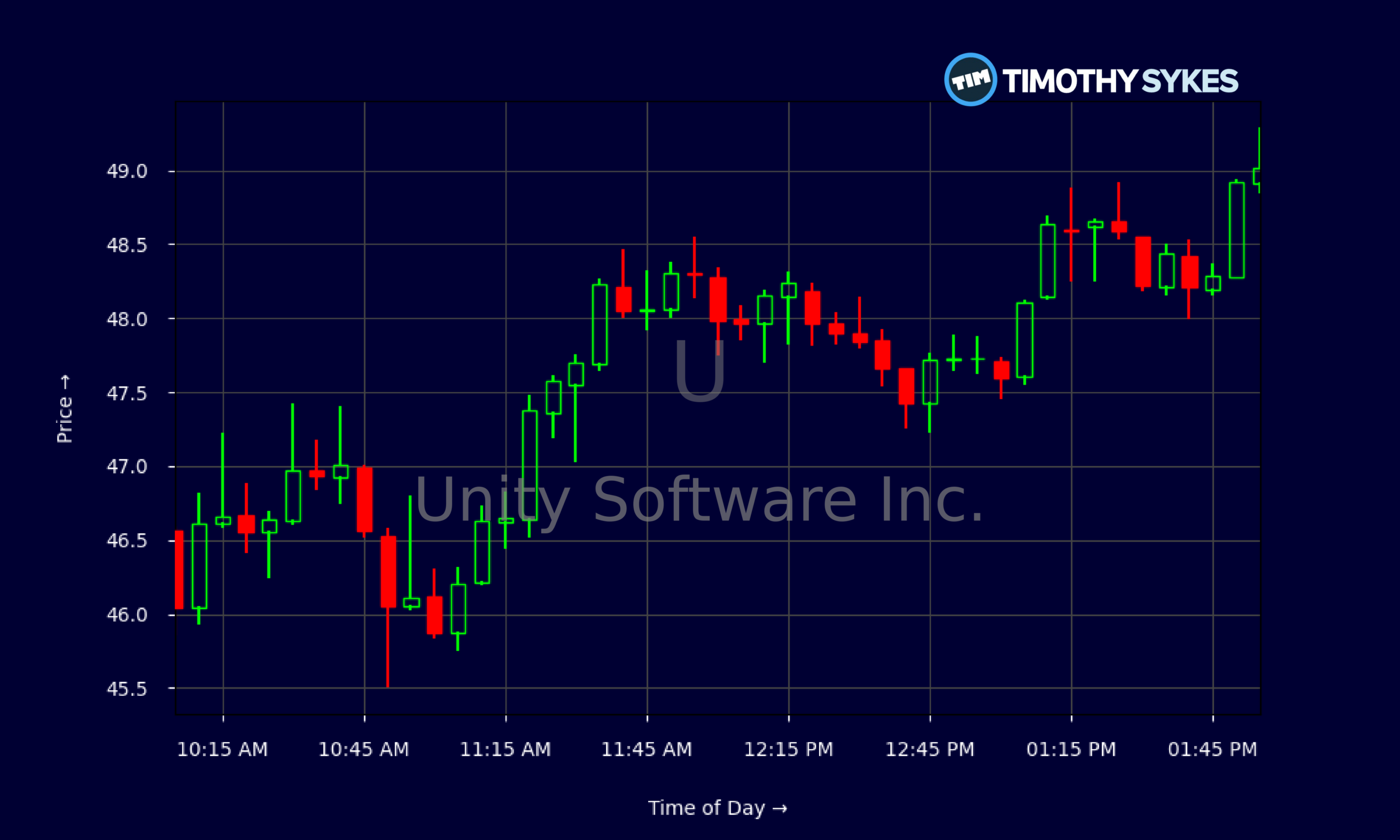
Live Update At 14:02:58 EST: On Thursday, November 05, 2026 Unity Software Inc. stock [NYSE: U] is trending up by 14.79%! Discover the key drivers behind this movement as well as our expert analysis in the detailed breakdown below.
Quick Financial Overview
Unity Software has been trading like a momentum name again. Over the recent stretch, U climbed from the low $40s to close near $48.79, with a sharp two‑day surge from $39.67 on 2026/11/04 to the current level. That is a big percentage move in a short window, showing aggressive dip buying and short‑covering.
On the intraday tape, U has been grinding higher through the day after an early flush, holding higher lows around $47 and pushing into the high $48s. For short‑term traders, that intraday staircase pattern usually signals strong demand on every dip.
More Breaking News
Fundamentally, Unity is still a work‑in‑progress story. Revenue over the last year sits around $1.85B, with a hefty 64.9% gross margin but negative operating margins — EBIT margin is about ‑27.8%, and net margins are near ‑29%. U loses money on paper, yet throws off cash: free cash flow last quarter was roughly $202M, with operating cash flow over $205M. That positive cash profile, plus a current ratio around 2.0 and more than $2.3B in cash, gives Unity room to keep building out its AI and ad platforms. Traders watching U should treat it as a high‑growth, still‑unprofitable tech name where sentiment and execution matter more than traditional earnings multiples.
Why Traders Are Watching Unity Right Now
Unity Software is suddenly back in the spotlight, and for once it is not because of controversy. The headline mover is U’s strategic partnership with Google to build an AI‑driven game creation and publishing platform. At the core is Google’s Playground and a new Unity Spark experience layered on top of the Unity runtime.
For traders, the key is what this does to Unity’s funnel. The company wants anyone — even non‑coders — to be able to type natural‑language prompts and spin up playable games. That is a powerful story: more creators flowing into the Unity ecosystem, more content, and ultimately more ads, services, and runtime revenue. Unity and Google are not pitching this as a toy either. Unity Spark is designed to support professional‑grade tools, high‑fidelity 3D, plus community features like leaderboards and matchmaking. That speaks to real game launches, not just prototypes.
The market is reacting. One report flagged U shares up more than 3% pre‑market on the Google news. Analysts have rushed to catch up. Raymond James upgraded Unity Software to Outperform with a $54 target, explicitly tying the call to the Grow segment and how the Google AI and distribution tie‑up strengthens Unity’s monetization flywheel. Jefferies bumped its U target to $54 after ad‑buyer surveys pointed to stronger growth expectations for the Unity Vector ad business, now modeled to reach $1.69B in 2027 revenue, up 45% year over year.
Wedbush, Morgan Stanley, and BTIG all raised targets into the mid‑$50s or low‑$50s, repeatedly citing accelerating adoption of Unity Vector and improved standing in gaming DSPs. Wedbush even highlighted that Unity Vector is moving from test budgets to fully funded user‑acquisition channels, with bigger allocations expected to show up in Q4 and 2027 numbers. That is the kind of inflection ad‑tech traders hunt for.
Layered on top, Unity’s partnership with PvX adds a clever twist: non‑dilutive user‑acquisition financing for growth‑stage studios in the Unity ecosystem. PvX brings capital and UA‑evaluation tools; Unity brings Vector reach and targeting. If this works, more studios scale on U’s rails, boosting ad spend without Unity having to write equity checks.
Conclusion
Unity Software now sits at an interesting crossroads. On one side, the hard numbers remind traders that U is still loss‑making, with negative returns on equity and assets, and a price‑to‑sales ratio over 10 that bakes in plenty of hope. On the other side, the tape and the news flow both lean bullish. The stock has ripped from the high $30s toward the high $40s, the Google AI partnership promises a wider creator base, and Unity Vector is earning louder praise from the Street.
The consensus tone around U has shifted meaningfully. Citi has the name on a 30‑day “upside catalyst watch” ahead of Q3 2026 results on 2026/11/05. UBS is more cautious with a Neutral stance and a modest target lift to $49, yet even it notes that the average Wall Street target near $51 sits well above a roughly $40 handle cited in recent commentary. Meanwhile, Raymond James, Morgan Stanley, Wedbush, Jefferies, and BTIG are clustering U targets in the low‑to‑mid $50s, suggesting a perceived upside band but also higher expectations the company must now meet.
For active traders, Unity is turning back into a catalyst‑driven battleground stock: AI hype, ad‑tech execution, and an upcoming earnings print all colliding in a tight window. That is exactly the type of setup Tim Sykes’ community studies — news, charts, catalysts, and risk. As millionaire penny stock trader and teacher Tim Sykes, says, “Be patient, don’t force trades, and let the perfect setups come to you.”. As Tim likes to say, “The market doesn’t owe you anything — you’ve got to study the patterns, take the meat of the move, and always, always cut losses quickly.” Unity Software gives plenty of action, but discipline will decide who keeps their gains.
This is stock news, not investment advice. Timothy Sykes News delivers real-time stock market news focused on key catalysts driving short-term price movements. Our content is tailored for active traders and investors seeking to capitalize on rapid price fluctuations, particularly in volatile sectors like penny stocks. Readers come to us for detailed coverage on earnings reports, mergers, FDA approvals, new contracts, and unusual trading volumes that can trigger significant short-term price action. Some users utilize our news to explain sudden stock movements, while others rely on it for diligent research into potential investment opportunities.
Dive deeper into the world of trading with Timothy Sykes, renowned for his expertise in penny stocks. Explore his top picks and discover the strategies that have propelled him to success with these articles:
- Penny Stocks Trading Guide
- Best Penny Stocks Under $1 to Buy Today
- Top 8 Penny Stocks to Watch on Robinhood
Once you’ve got some stocks on watch, elevate your trading game with StocksToTrade the ultimate platform for traders. With specialized tools for swing and day trading, StocksToTrade will guide you through the market’s twists and turns.
Dig into StocksToTrade’s watchlists here:





Leave a reply