

Duolingo Inc. stocks have been trading up by 36.25 percent after strong user-growth headlines fueled bullish investor sentiment.
Key Takeaways
- Q3 2026 revenue hit $309M, ahead of roughly $303M expectations, while EPS of $0.54 missed the $0.57 consensus by a small margin.
- Daily active users jumped 29% year over year to 54.9M, with DUOL management pointing to broad-based growth, record engagement, and strong retention.
- Q4 revenue guidance of $322M versus Wall Street’s $314.55M and FY26 guidance of $1.22B vs. $1.21B signal confidence in Duolingo’s growth path.
- Morgan Stanley and Goldman Sachs raised DUOL price targets to $140 and $135 but kept cautious ratings, flagging monetization as the swing factor.
- A securities class action challenges Duolingo’s monetization tactics and AI content use, adding headline risk on top of otherwise strong fundamentals.
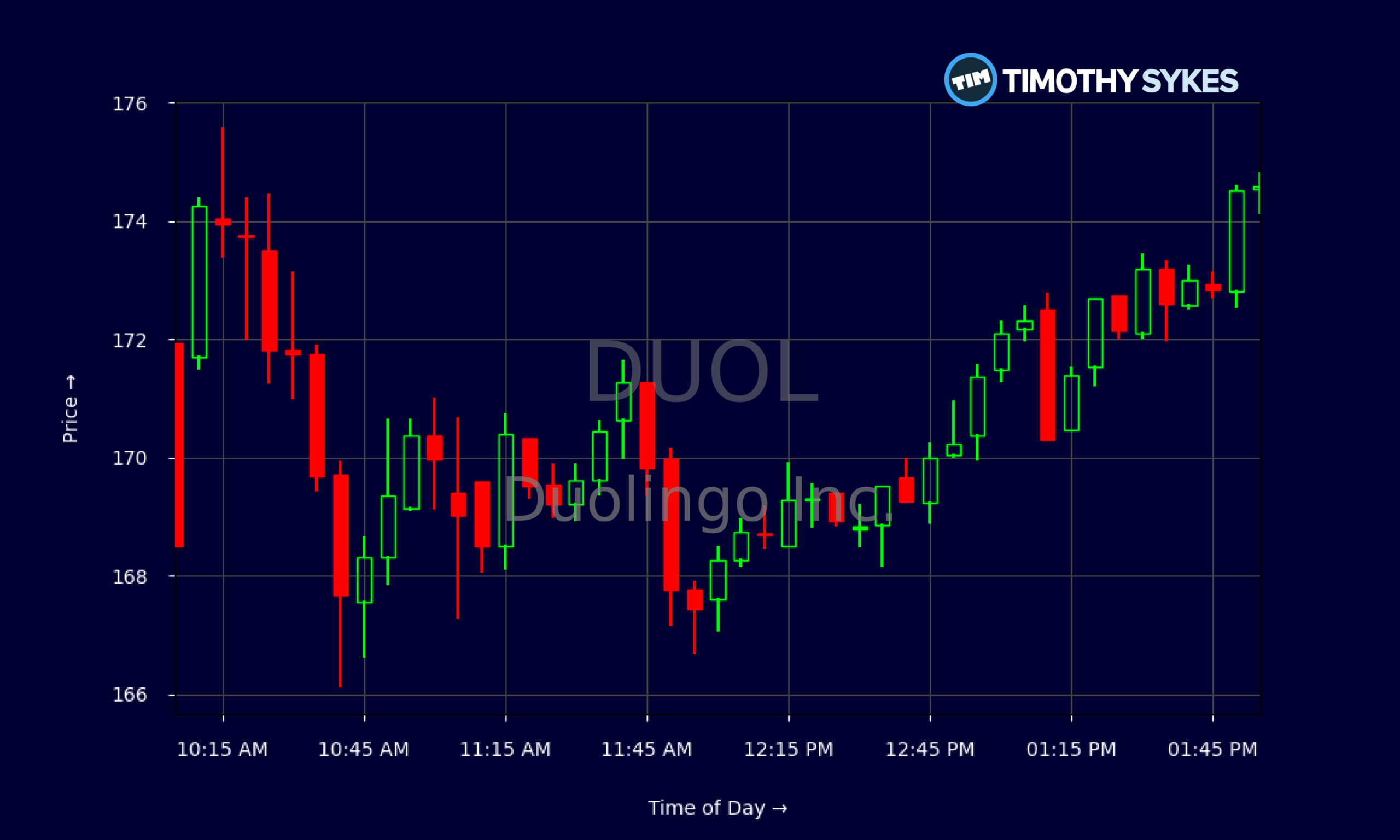
Live Update At 14:02:16 EST: On Wednesday, November 04, 2026 Duolingo Inc. stock [NASDAQ: DUOL] is trending up by 36.25%! Discover the key drivers behind this movement as well as our expert analysis in the detailed breakdown below.
Quick Financial Overview
DUOL’s tape tells you this was an earnings breakout. The stock closed at $128 on 2026/11/03, then ripped to $174.60 on 2026/11/04 after the Q3 2026 report. That is a massive one‑day re‑rating for Duolingo, and traders who study gaps and momentum will notice the clear character change in the chart.
Over the prior weeks, DUOL chopped in the $135–$145 area with a brief dip to the low $130s. The earnings gap pushed price through every nearby resistance level in one move. Intraday, the 5‑minute chart shows a strong trend day: Duolingo opened around $160, shook out weak hands early, then ground higher with higher lows all session, finishing near the highs. That is classic trend‑up behavior.
More Breaking News
Under the hood, DUOL is not a story stock with no numbers. Duolingo’s trailing revenue is about $1.04B, growing more than 37% per year over three years. Gross margin sits around 72.7%, and DUOL now posts solid profitability with roughly 16.1% EBIT margin and positive free cash flow. A price‑to‑sales near 6.1 and P/E around 17.7 are not cheap, but for a high‑growth, high‑margin name with minimal debt and a strong balance sheet, traders will justify a premium as long as Duolingo keeps delivering beats and clean guidance.
Why Traders Are Watching DUOL Momentum
DUOL’s Q3 2026 numbers gave momentum traders exactly what they look for: accelerating growth plus bullish guidance. Duolingo reported daily active user growth of 29% year over year, reaching 54.9M DAUs. That is not a niche app anymore; that is a global platform with scale. Management said the growth is broad‑based across regions and subjects, which matters because it reduces the risk that one geography or product category is doing all the heavy lifting.
On the financial side, Duolingo put up Q3 revenue of $309M, ahead of estimates near $303M. The small EPS miss — $0.54 versus $0.57 — points to heavier spending, but the market often forgives that when a growth name shows strong top‑line momentum. For active traders, the key is the reaction, not perfection in every metric. DUOL’s post‑earnings surge tells you which line item the market cared about: revenue growth and user scale.
Forward‑looking guidance backed that up. Duolingo guided Q4 revenue to $322M, well above the Street’s $314.55M, and laid out FY26 revenue expectations of $1.22B versus $1.21B. The beat is modest, but it shows management is willing to guide ahead of consensus, not hide behind conservative numbers.
Wall Street is paying attention. Morgan Stanley bumped its DUOL price target from $125 to $140, while Goldman Sachs raised from $114 to $135. Both kept non‑bullish ratings, calling out monetization as the big question. Translation for traders: the Street respects Duolingo’s DAU engine and earnings power, but it is not ready to chase blindly. That tension often creates tradable volatility as new data comes in.
At the same time, there is a shadow over the story. A securities class action and shareholder investigation allege that Duolingo’s monetization strategy — more ads, more upsells, and heavy use of rapidly generated AI content — may hurt product quality and sustainable growth. Management, for its part, insists Duolingo is focused on better teaching quality and a gradual shift to higher bookings without harming the free user experience. That clash between legal claims and corporate messaging is exactly the kind of overhang that keeps DUOL’s story dynamic rather than one‑sided.
Conclusion
For active traders, DUOL now sits at the crossroads of strong fundamentals and elevated expectations. Duolingo has proved it can grow users, grow revenue, and throw off cash. The latest Q3 2026 report — revenue beat, 29% DAU growth, and guidance ahead of consensus — explains why the stock just exploded from the $120s to the mid‑$170s in a single day. That type of move rarely happens in a vacuum.
But the job now gets harder. With Morgan Stanley and Goldman Sachs raising price targets yet staying cautious, the message is clear: the easy re‑rating from “good app” to “serious business” may be done. Further upside for DUOL depends on showing that Duolingo can squeeze more dollars out of its massive user base without breaking the app’s addicting, friendly feel. The ongoing securities class action around monetization and AI content adds another layer of uncertainty and potential headline swings.
This is where trading discipline matters. Duolingo is a real growth story, but that does not mean traders should marry the stock. As Tim Sykes likes to say, “Trade the ticker, not the company.” As millionaire penny stock trader and teacher Tim Sykes, says, “It’s better to go home at zero than to go home in the red.”. For DUOL, that means respecting the momentum, watching how price reacts to each new data point, and always being willing to cut losses fast if the story on the chart stops matching the story in the numbers. This article is for educational and research purposes only and is not investment advice.
This is stock news, not investment advice. Timothy Sykes News delivers real-time stock market news focused on key catalysts driving short-term price movements. Our content is tailored for active traders and investors seeking to capitalize on rapid price fluctuations, particularly in volatile sectors like penny stocks. Readers come to us for detailed coverage on earnings reports, mergers, FDA approvals, new contracts, and unusual trading volumes that can trigger significant short-term price action. Some users utilize our news to explain sudden stock movements, while others rely on it for diligent research into potential investment opportunities.
Dive deeper into the world of trading with Timothy Sykes, renowned for his expertise in penny stocks. Explore his top picks and discover the strategies that have propelled him to success with these articles:
- Penny Stocks Trading Guide
- Best Penny Stocks Under $1 to Buy Today
- Top 8 Penny Stocks to Watch on Robinhood
Once you’ve got some stocks on watch, elevate your trading game with StocksToTrade the ultimate platform for traders. With specialized tools for swing and day trading, StocksToTrade will guide you through the market’s twists and turns.
Dig into StocksToTrade’s watchlists here:





Leave a reply