

Rocket Companies Inc. stocks have been trading up by 5.05 percent amid bullish sentiment on strengthening U.S. housing and mortgage demand.
Key Takeaways
- Analysts at Barclays, Morgan Stanley, Keefe Bruyette, and StoneX all trimmed price targets on RKT but kept bullish ratings, signaling tempered upside rather than a bearish turn.
- Rocket Mortgage, part of Rocket Companies, will be the first major U.S. lender to adopt VantageScore 4.0 as its preferred model for eligible loans to the GSEs and VA, after tests showed more approvals and lower scoring costs.
- Keefe Bruyette says 30‑year mortgage rates near 6.95% are pressuring volumes, yet still tags Rocket Companies with an Outperform rating on servicing strength and risk/reward.
- Redfin, under the Rocket Companies umbrella, reports the strongest buyer’s market on record, with sellers outnumbering buyers by about 63% and 21% of sellers cutting asking prices.
- Redfin data show U.S. home prices still rising modestly year over year, underscoring a complex backdrop where affordability is tight but housing activity for RKT remains alive.
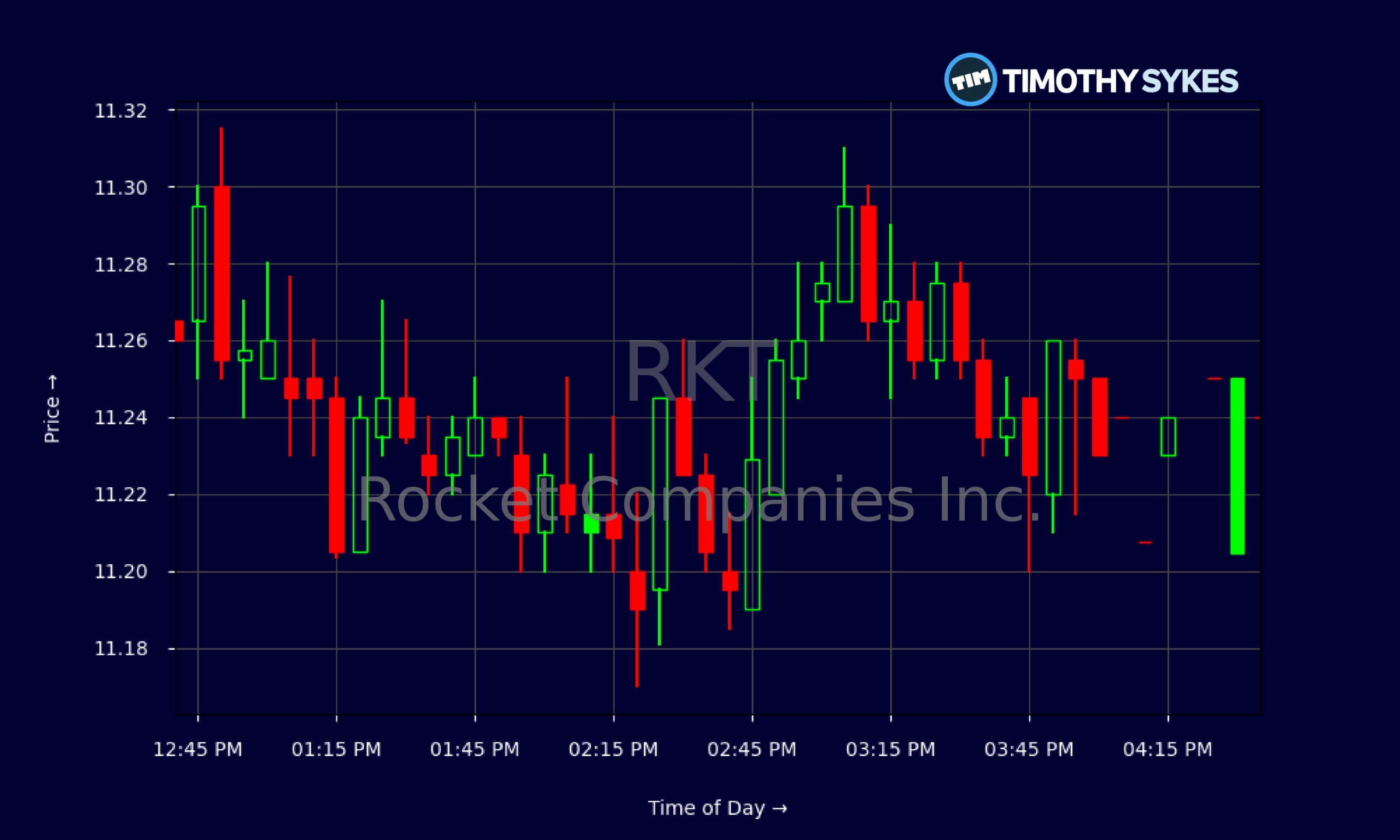
Live Update At 16:47:06 EDT: On Tuesday, October 20, 2026 Rocket Companies Inc. stock [NYSE: RKT] is trending up by 5.05%! Discover the key drivers behind this movement as well as our expert analysis in the detailed breakdown below.
Quick Financial Overview
RKT has been grinding sideways to higher in October. The stock recently bounced from the low‑$10s to close around $11.25, after trading between roughly $10.18 and $12.66 over the last few weeks. That range tells traders there is active two‑way trading, not a dead chart.
Intraday, RKT showed tight action, with most 5‑minute candles pinned between $11.20 and $11.30 late in the session. That kind of narrow band often signals consolidation after earlier volatility. For day traders, it means scalps, not home runs, until a clear breakout above the recent $11.90–$12.00 zone or a breakdown through $10.70.
On the fundamentals, Rocket Companies booked about $2.41B in quarterly revenue and $230M in net income, translating to a slim profit margin near 5%. The price/earnings ratio near 52.2 and price‑to‑sales around 3.6 show traders are still paying growth‑style multiples for RKT despite choppy housing conditions.
More Breaking News
Debt is significant, with long‑term borrowings above $27B and a debt‑to‑equity ratio around 1.16. That leverage makes the rate backdrop critical. But RKT also carries more than $3.1B in cash and sizeable mortgage assets, giving it room to endure a slow cycle while traders watch for operating leverage when volumes return.
Why Traders Are Watching RKT Now
RKT is sitting in the crosshairs of two big stories: a brutal rate environment and an aggressive push into product and data innovation.
On the macro side, Keefe Bruyette flags 30‑year mortgage rates near 6.95%. That level crushes purchase and refi volumes and usually wrecks mortgage originators. Yet the firm still calls Rocket Companies Outperform, pointing to its servicing‑heavy mix as a buffer. Servicing income can stay steady, even when new loan volume dries up, which helps explain why traders have not abandoned RKT.
Street research has recalibrated but stayed constructive. Barclays cut its RKT price target from $17 to $15 while keeping an Overweight rating, citing solid consumer health and a still‑favorable lending outlook longer term. Morgan Stanley moved from $19 to $16, again with Overweight, warning about sticky inflation and higher rates into 2027 but still liking Rocket Companies near term. Keefe Bruyette trimmed from $19 to $17, and StoneX dropped from $19 to $16 and kept a Buy, even as it nudged Q3 revenue and EBITDA expectations toward the low end of guidance. The pattern is clear for traders: lower targets, same bullish stance.
At the same time, Rocket Mortgage, the core engine inside RKT, is leaning hard into innovation. It will be the first major U.S. lender to make VantageScore 4.0 its preferred credit model for eligible loans sold to Fannie Mae, Freddie Mac, and the VA. Internal tests showed more approvals, better pricing for many borrowers, and lower scoring costs for Rocket Companies. Higher‑risk and non‑conforming deals will still use FICO, so RKT is tweaking the system, not blowing up its risk controls. For traders, that looks like a calculated edge that can grow market share once the rate pressure eases.
Redfin, now owned by Rocket Companies, adds another layer. Its data describe the strongest buyer’s market since at least 2013: sellers outnumber buyers by about 63%, roughly 21% of sellers cut prices in late September, and mortgage rates remain above 7%. Yet home prices are still up about 0.25% month over month and 3.7% year over year in August. That tells RKT traders this is not a collapse; it is a volume and affordability squeeze. In that environment, an integrated platform like RKT—combining Rocket Mortgage and Redfin’s brokerage and data—can fight for share among the fewer but more powerful, qualified buyers.
Conclusion
For active traders, RKT is a classic cyclical story wrapped in tech‑style innovation. The chart shows consolidation in the low‑$11s after failing to hold above $12.60, suggesting the next big trade comes on a break of either resistance near $12 or support around $10.50. With a high P/E and heavy leverage, Rocket Companies still trades on belief that the cycle eventually turns in its favor.
Analysts clearly share that view. Barclays, Morgan Stanley, Keefe Bruyette, and StoneX all slashed price targets but kept bullish ratings. They see pressure from higher mortgage rates and softer originations, yet they are not calling for a structural collapse in RKT. Instead, they are baking in slower upside while Rocket Companies invests in tools like VantageScore 4.0 and leans on Redfin’s data to sharpen its edge.
The Redfin reports under the Rocket Companies umbrella point to a housing market that is wounded but far from dead—buyer demand is weak, but listings are high, prices still grind higher, and negotiated deals continue. That is the kind of messy backdrop where disciplined traders can find opportunity in RKT’s volatility. In this kind of choppy environment, emotional entries and exits can be costly, which is why it’s crucial for traders to focus on process and wait for high‑probability patterns instead of chasing every move.
As Tim Sykes loves to repeat, “Patterns repeat because human nature doesn’t change.” As millionaire penny stock trader and teacher Tim Sykes, says, “Be patient, don’t force trades, and let the perfect setups come to you.”. For RKT, the pattern is familiar: rates spike, mortgage names get hit, the strong players survive, and when the cycle finally breaks, traders who studied the story—not just the ticker—are ready to move. This article is for educational and research purposes only and is not investment advice.
This is stock news, not investment advice. Timothy Sykes News delivers real-time stock market news focused on key catalysts driving short-term price movements. Our content is tailored for active traders and investors seeking to capitalize on rapid price fluctuations, particularly in volatile sectors like penny stocks. Readers come to us for detailed coverage on earnings reports, mergers, FDA approvals, new contracts, and unusual trading volumes that can trigger significant short-term price action. Some users utilize our news to explain sudden stock movements, while others rely on it for diligent research into potential investment opportunities.
Dive deeper into the world of trading with Timothy Sykes, renowned for his expertise in penny stocks. Explore his top picks and discover the strategies that have propelled him to success with these articles:
- Penny Stocks Trading Guide
- Best Penny Stocks Under $1 to Buy Today
- Top 8 Penny Stocks to Watch on Robinhood
Once you’ve got some stocks on watch, elevate your trading game with StocksToTrade the ultimate platform for traders. With specialized tools for swing and day trading, StocksToTrade will guide you through the market’s twists and turns.
Dig into StocksToTrade’s watchlists here:





Leave a reply