

Sunrun Inc. stocks have been trading up by 9.14 percent amid upbeat sentiment around accelerating residential solar adoption.
Key Takeaways Traders Need To Watch
- Record-home battery dispatches in California show Sunrun’s virtual power plant is now delivering hundreds of megawatts to the grid during heat waves, putting utility‑scale credibility on the table.
- An expanded SPAN partnership links Sunrun’s residential solar‑plus‑battery systems to XFRA distributed data center nodes, tying RUN directly into AI‑driven edge computing demand.
- Several major Wall Street firms have cut RUN price targets but kept Buy, Positive, Overweight, or Outperform ratings, signaling cautious but constructive sentiment.
- Rising power needs from data centers and electrification, plus potential tandem solar panel adoption, are emerging as key long‑term tailwinds highlighted by analysts.
- Q3 2026 earnings are scheduled for 2026/11/04 after the close, setting up a near‑term trading catalyst for RUN.
Live Update At 12:32:49 EDT: On Tuesday, October 20, 2026 Sunrun Inc. stock [NASDAQ: RUN] is trending up by 9.14%! Discover the key drivers behind this movement as well as our expert analysis in the detailed breakdown below.
Quick Financial Overview
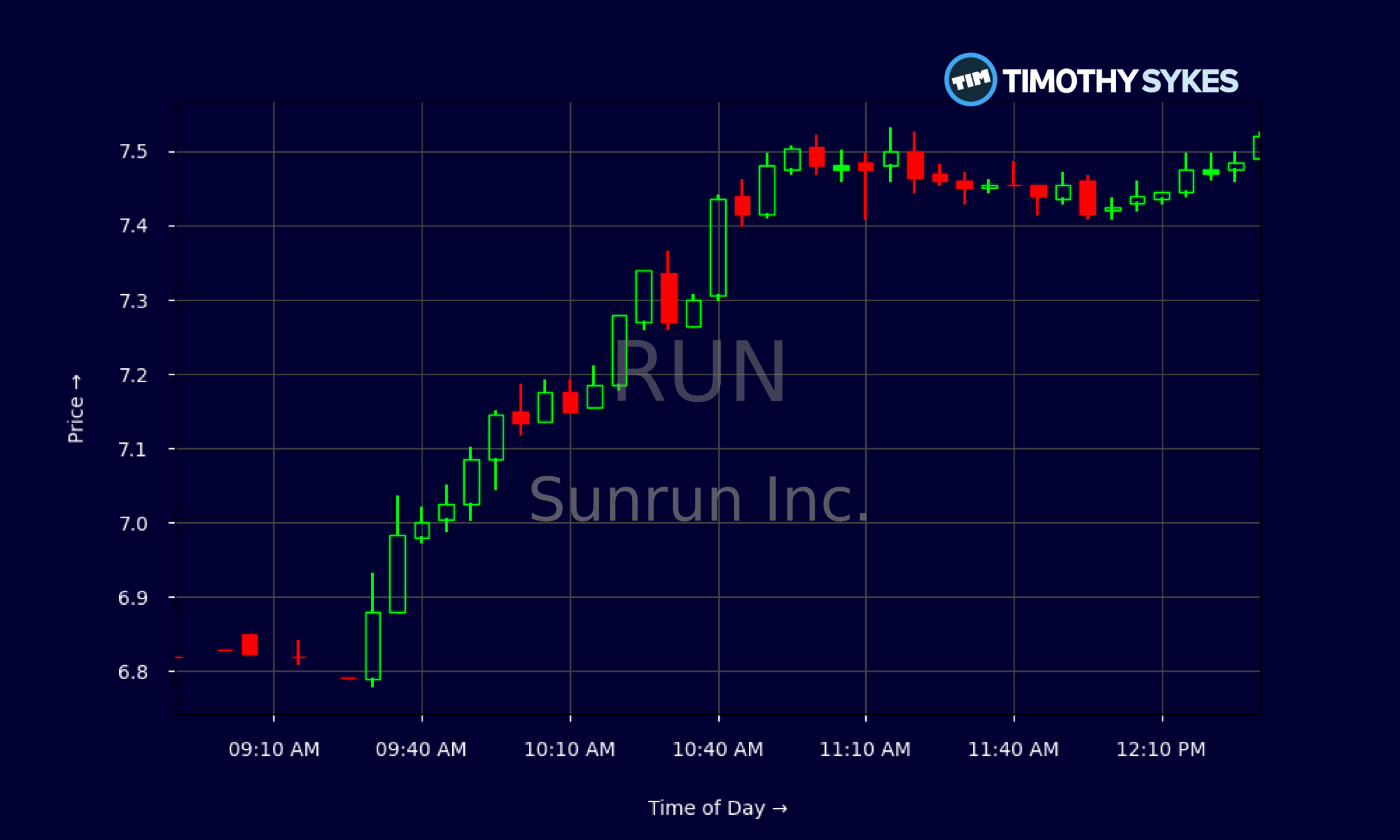
RUN has been grinding in a tight range, closing at $7.52 after trading between $6.78 and $7.53 on the latest day. Over the past few weeks, Sunrun has largely chopped between about $7.20 and $8.10, with repeated fades on pushes over $8. That tells traders the market is not ready to re‑rate RUN yet, but it is also refusing to break the stock down.
Intraday, the 5‑minute chart shows a classic morning dip and steady climb. RUN opened near $6.88, shook out weak hands under $7, then trended higher through midday toward the $7.50s. Volume‑weighted price action sits right in that $7.30–$7.50 pocket, a key intraday battleground for short‑term trading.
More Breaking News
Fundamentally, Sunrun is a strange mix: revenue is roughly $2.96B with a fat 50.9% gross margin, yet operating cash flow is negative and free cash flow in the latest quarter sat around -$620M. Debt is meaningful but not extreme, with total debt to equity at 0.19 and a current ratio of 1.4. For traders, RUN screens as a beaten‑down growth name with real assets, solid grid‑services potential, and choppy financials that keep sentiment volatile.
Why Traders Are Watching RUN Right Now
Sunrun is finally proving that its residential fleet is more than just rooftop hardware. During a California heat wave, RUN’s home batteries helped deliver part of a record 580 MW of distributed peak power to the grid. Follow‑up dispatches jumped to 669 MW and then 745 MW. That is not a science project — that is grid‑scale.
In parallel, Tesla and Sunrun reported over 580 MW dispatched during a three‑hour window, plus another 140+ MW the next day. Both stocks traded higher in premarket after that release. For active traders, this confirms that the market is paying attention when Sunrun shows real virtual power plant scale, not just guidance slides.
The SPAN story pushes RUN into another hot lane: AI infrastructure. Sunrun is expanding its partnership with SPAN so its residential solar‑plus‑battery systems can power SPAN’s XFRA distributed data center nodes in new communities, starting in Texas and other markets. Those nodes support AI‑focused edge computing, effectively turning Sunrun neighborhoods into mini power hubs for data.
That aligns RUN with surging data‑center and AI power demand, a core theme analysts keep flagging. Several firms — Goldman Sachs, Citi, JPMorgan, Susquehanna, and RBC — have cut price targets on Sunrun but kept bullish ratings. They cite macro headwinds and policy uncertainty, including potential Section 232 tariffs, yet still lean positive on orders, pipeline, and long‑term demand.
At the same time, The New York Times highlighted tandem solar panels that may deliver roughly 25% more energy than conventional modules. Sunrun sits on the list of solar‑exposed names that could benefit as this tech rolls out. Higher efficiency means more output per roof and better project economics, a structural plus for RUN over time.
Conclusion
RUN sits at an interesting crossroads. On the tape, Sunrun is trading like a coiled spring around the $7–$8 zone, with every breakout attempt getting sold and every breakdown attracting dip buyers. On the business side, RUN is stacking real proof points: record California battery dispatches, growing grid‑services programs, and new links to utilities and hyperscalers.
The SPAN partnership gives Sunrun exposure to AI‑driven distributed data centers, something Wall Street loves to pay attention to when it sees consistent execution. Meanwhile, analysts from Goldman Sachs, Citi, JPMorgan, Susquehanna, and RBC have all trimmed price targets but kept Buy‑style ratings. That tells traders expectations are reset, not gone.
The next big checkpoint is Q3 2026 earnings on 2026/11/04. Traders will be watching RUN for hard numbers on grid‑services revenue, SPAN traction, and any commentary on tariffs and tandem panel adoption. Until then, Sunrun is a classic watch‑list name for active traders: real catalysts, real volatility, and plenty of noise to fade. In this kind of choppy, catalyst‑driven tape, discipline matters more than predictions. As millionaire penny stock trader and teacher Tim Sykes, says, “Be patient, don’t force trades, and let the perfect setups come to you.”
As Tim Sykes likes to say, “Volatility is opportunity if you’re prepared — study the pattern, wait for the setup, and always, always cut losses quickly.” RUN fits that playbook right now.
This is stock news, not investment advice. Timothy Sykes News delivers real-time stock market news focused on key catalysts driving short-term price movements. Our content is tailored for active traders and investors seeking to capitalize on rapid price fluctuations, particularly in volatile sectors like penny stocks. Readers come to us for detailed coverage on earnings reports, mergers, FDA approvals, new contracts, and unusual trading volumes that can trigger significant short-term price action. Some users utilize our news to explain sudden stock movements, while others rely on it for diligent research into potential investment opportunities.
Dive deeper into the world of trading with Timothy Sykes, renowned for his expertise in penny stocks. Explore his top picks and discover the strategies that have propelled him to success with these articles:
- Penny Stocks Trading Guide
- Best Penny Stocks Under $1 to Buy Today
- Top 8 Penny Stocks to Watch on Robinhood
Once you’ve got some stocks on watch, elevate your trading game with StocksToTrade the ultimate platform for traders. With specialized tools for swing and day trading, StocksToTrade will guide you through the market’s twists and turns.
Dig into StocksToTrade’s watchlists here:





Leave a reply