
Applied Digital Corp. stocks have been trading up by 6.98 percent amid upbeat sentiment over its expanding AI data-center capabilities.
Key Takeaways For APLD Traders
- Q1 EPS came in at $0.01 versus a ($0.30) loss expected, with $341.9M in revenue driven by a 225% surge in services and GPU sales tied to the ChronoScale AI offering.
- Revenue jumped from $80.9M to $341.9M year over year, and APLD’s adjusted loss narrowed sharply, putting the name firmly on AI‑infrastructure radar screens.
- The Polaris Forge 1 AI Factory campus now has 250MW of operational critical IT load within a fully leased 400MW plan, after Phase 2 of Building 2 went Ready for Service.
- Management guided Q3 revenue to $9.8M–$10M with gross margins above 70%, signaling durable demand from existing and new AI customers.
- Wells Fargo, Morgan Stanley, and Needham all lifted or reaffirmed targets on Applied Digital, while flagging that some Q1 upside was one‑time and that leverage, regulation, and financing remain key risks.
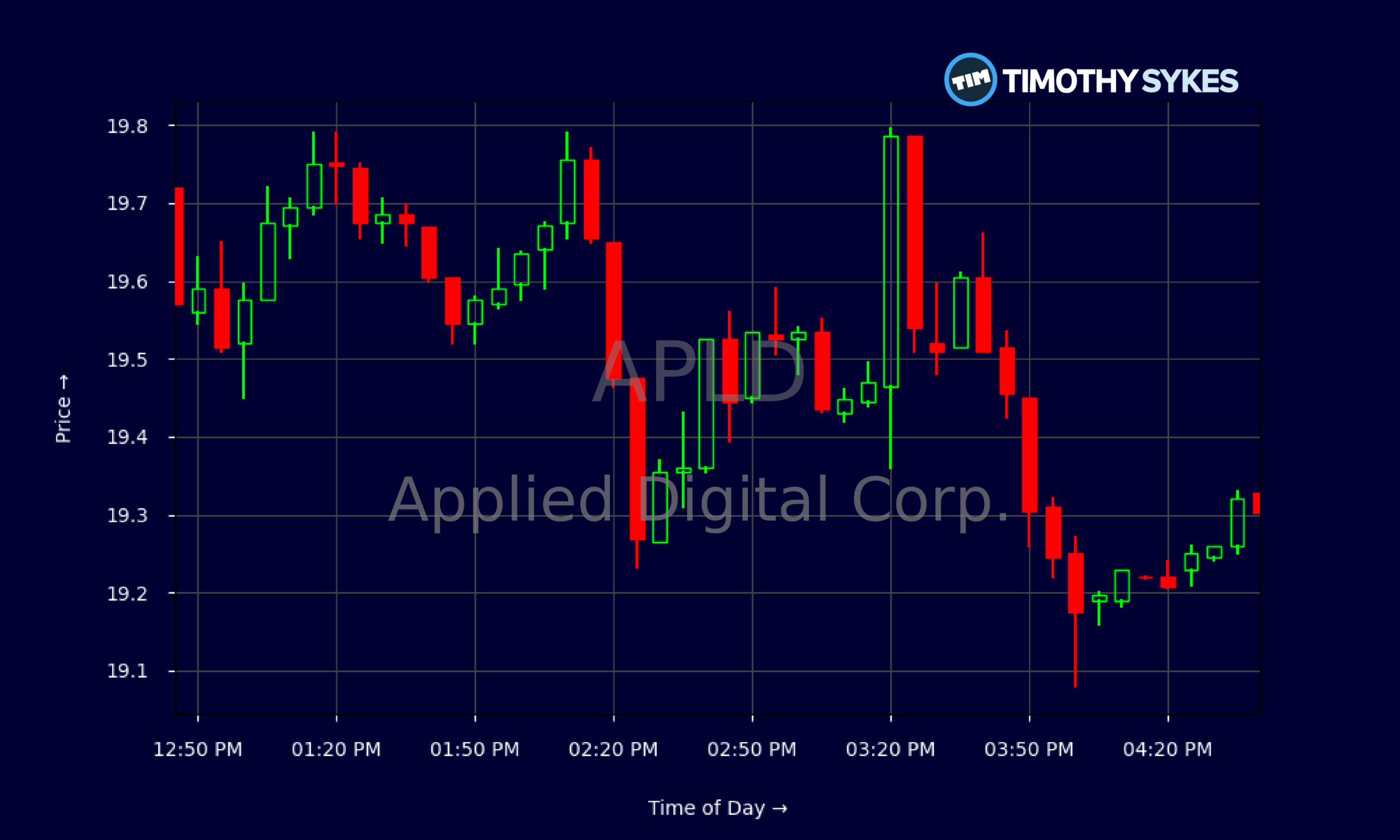
Live Update At 16:46:51 EDT: On Monday, October 19, 2026 Applied Digital Corp. stock [NASDAQ: APLD] is trending up by 6.98%! Discover the key drivers behind this movement as well as our expert analysis in the detailed breakdown below.
Quick Financial Overview
Applied Digital Corp. just posted the kind of numbers that grab every momentum trader’s screen. APLD delivered Q1 EPS of $0.01, crushing expectations for a ($0.30) loss, on revenue of $341.9M versus roughly $120M–$125M expected. That revenue was also up from $80.9M a year earlier, a huge jump tied to AI “factory” build‑outs, tenant fit‑out services, and GPU hardware tied to its ChronoScale platform.
On the flip side, the income statement still shows a GAAP net loss of about $184.1M, weighed down by heavy financing costs, preferred stock dividends, and stock‑based compensation. The balance sheet is big and aggressive: roughly $6.3B of long‑term debt against $2.95B of cash and short‑term investments, plus significant property and equipment for its data centers.
More Breaking News
For traders, the chart says “high‑beta trend with a pullback.” APLD has slid from the $25–$27 area in late 2026/09 down toward $19.25 on 2026/10/19. Intraday tape on the latest session shows tight 5‑minute candles between about $19.15 and $20.10, with fading into the close, suggesting consolidation rather than panic. In short, fundamentals are exploding higher, but the stock is digesting a big prior run under heavy volatility.
Why Traders Are Zeroed In On APLD Right Now
APLD is turning into a pure‑play on the AI infrastructure land grab, and the latest news cycle makes that clear. Earnings are the headline: Applied Digital’s fiscal Q1 2027 results showed revenue rocketing to $341.9M from $80.9M, with adjusted loss per share trimmed to $0.01. That is a serious expectations reset for a name that the Street thought would still be deep in the red.
The driver is its “AI Factory” strategy. Applied Digital has been building and leasing high‑power data center campuses for tier‑one hyperscalers. Management says it now has about $36B of contracted revenue over base lease terms, potentially rising toward $86B if renewals are included. For traders, that kind of contracted backlog gives a real floor to the growth story, even if GAAP earnings are messy today.
On the ground, APLD just brought the second phase of Building 2 at its Polaris Forge 1 campus to Ready for Service, adding 75MW and bringing operational critical IT load to 250MW within a fully leased 400MW plan. That shows Applied Digital executing, not just signing press‑release deals. At the same time, the company secured access to up to 1GW of potential power in Finland for its first international AI campus, with initial power targeted from 2028 and structures designed to limit upfront capital exposure.
The sell side is responding. Wells Fargo pushed its APLD target to $55 with an Overweight rating, pointing to strong execution on a 1.4GW build‑out and upcoming catalysts around Meta‑linked leases and 250MW of higher‑yield capacity. Morgan Stanley nudged its target to $41 and stayed Equal Weight, citing higher pipeline value but tougher credit conditions. Needham cut its target to $70 from $83 yet kept a Buy, calling out one‑time fit‑out revenue and rising regulatory and financing risk. Net‑net, Applied Digital is still a growth darling, but traders are being paid to respect the leverage and the macro.
Conclusion
For active traders, APLD sits where aggressive growth and real risk collide. Applied Digital is expanding fast, raising $1.59B in secured notes, building out huge AI campuses in North Dakota and the U.S. South, and now planting its first international flag in Finland. The company’s own guidance for Q3 revenue of $9.8M–$10M and gross margins north of 70% backs the idea that demand from hyperscale AI customers is still running hot.
At the same time, the financials show why Applied Digital trades like a momentum name, not a sleepy dividend payer. GAAP losses are large, returns on capital are deeply negative today, and the balance sheet carries heavy debt. An APLD director recently sold 31,250 shares, though he still holds over 100,000, and the company has even joined other issuers in pushing back on unauthorized tokenized trading of its stock. These are all data points traders should track, not ignore.
The price action reflects this tug‑of‑war. APLD has cooled from the mid‑$20s into the high teens, even as retail chatter and Wallstreetbets buzz keep it in the spotlight. For those studying the setup, the key is to treat Applied Digital like any volatile growth play: focus on levels, volume, and catalysts, and never marry the story. As millionaire penny stock trader and teacher Tim Sykes, says, “Preparation plus patience leads to big profits.”. As Tim Sykes likes to remind traders, “The market doesn’t care about your opinion, only your discipline — patterns repeat, but you must cut losses quickly and never fall in love with a stock like APLD.”
This is stock news, not investment advice. Timothy Sykes News delivers real-time stock market news focused on key catalysts driving short-term price movements. Our content is tailored for active traders and investors seeking to capitalize on rapid price fluctuations, particularly in volatile sectors like penny stocks. Readers come to us for detailed coverage on earnings reports, mergers, FDA approvals, new contracts, and unusual trading volumes that can trigger significant short-term price action. Some users utilize our news to explain sudden stock movements, while others rely on it for diligent research into potential investment opportunities.
Dive deeper into the world of trading with Timothy Sykes, renowned for his expertise in penny stocks. Explore his top picks and discover the strategies that have propelled him to success with these articles:
- Penny Stocks Trading Guide
- Best Penny Stocks Under $1 to Buy Today
- Top 8 Penny Stocks to Watch on Robinhood
Once you’ve got some stocks on watch, elevate your trading game with StocksToTrade the ultimate platform for traders. With specialized tools for swing and day trading, StocksToTrade will guide you through the market’s twists and turns.
Dig into StocksToTrade’s watchlists here:




Leave a reply