

MARA Holdings Inc. stocks have been trading down by -7.86 percent amid sharply negative sentiment from the most recent headline.
Key Takeaways
- Morgan Stanley cut its price target on Mara Holdings to $10 from $11 and kept an Underweight rating, signaling renewed skepticism around MARA in a tougher AI-linked credit backdrop.
- An insider or large holder filed a Form 144 to sell restricted shares of Marathon Digital Holdings, a move many short-term traders read as a sign of internal caution.
- MARA has been sliding from the low-$11s to the mid-$6s this month, showing sustained selling pressure and weak follow-through on bounces.
- Financials highlight heavy losses, negative cash flow, and high leverage, keeping MARA firmly in speculative territory for active traders.
Live Update At 12:32:22 EDT: On Friday, October 30, 2026 MARA Holdings Inc. stock [NASDAQ: MARA] is trending down by -7.86%! Discover the key drivers behind this movement as well as our expert analysis in the detailed breakdown below.
Quick Financial Overview
MARA has been trading like a textbook downtrend. At the start of the period, MARA shares were near $11.20. Now they’re printing around $6.60, a drop of roughly 40% in just a few weeks. Each bounce toward $8–$9 has been met with selling, showing that MARA remains a trader’s stock, not a steady compounder.
On the fundamentals, MARA generated about $907.1M in revenue over the last year, but that topline strength hasn’t translated into profits. Profit margins are deeply negative, with EBIT margin near -447% and profit margin around -430%. That tells traders MARA is still burning serious cash to run its business.
The latest quarterly report shows a net loss of about $609.7M and operating cash flow of roughly -$223.8M. Free cash flow was about -$238.5M. MARA does hold $421.3M in cash, but it’s also carrying roughly $1.93B in long-term debt and total liabilities near $2.59B. A current ratio under 1.0 and a quick ratio around 0.7 flag liquidity pressure.
More Breaking News
For traders, MARA is a high-volatility, high-risk play driven more by sentiment and themes—like AI and digital infrastructure—than by clean fundamentals.
Why Traders Are Watching MARA Now
MARA is on watch right now because the news flow lines up perfectly with what the chart has been screaming: big money is cautious. Morgan Stanley just cut its price target on Mara Holdings from $11 to $10 and reiterated an Underweight rating. That is not a minor tweak. When a major Wall Street firm lowers its target while staying bearish, it tells traders that institutional desks aren’t convinced MARA can fully ride the AI trade under current credit conditions.
The note cited a reassessment of pipeline site values in a shifting credit environment tied to AI. Translation for traders: the infrastructure and projects MARA is counting on may be worth less, or harder to finance, than the market hoped. In a higher-rate world, debt-heavy models get less love, and MARA’s balance sheet already shows leverage and negative returns on equity.
Layer on the Form 144 filing from an insider or large holder at Marathon Digital Holdings, and the message gets louder. MARA traders know that when someone with size and access plans to sell restricted shares under SEC Rule 144, it often signals they see better uses for their capital at current prices. That doesn’t always mean disaster, but in a weak chart it reinforces the downside bias.
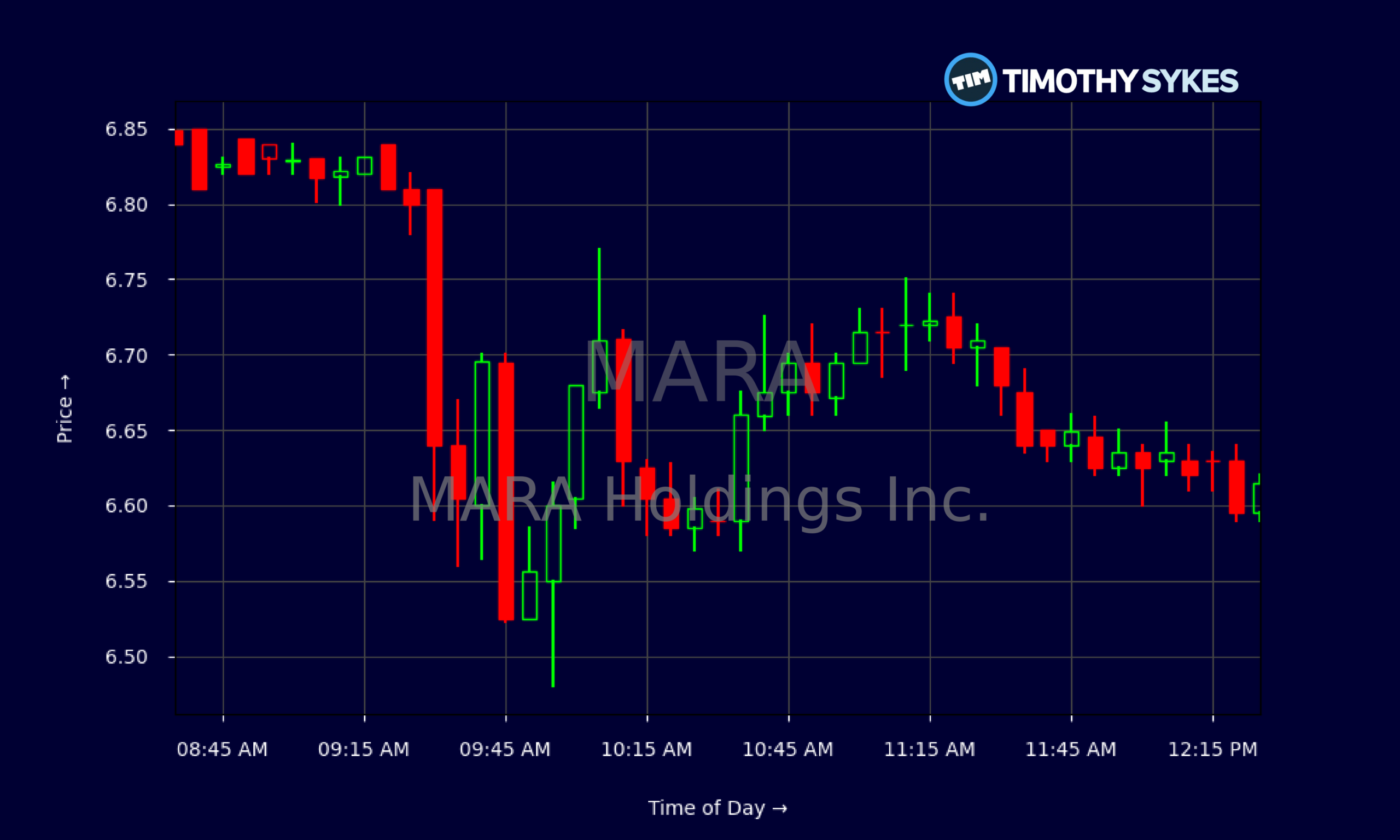
Intraday, MARA’s 5‑minute action around $6.60 shows tight, choppy ranges with no strong trend reclaim. That’s classic consolidation after a selloff—but without a clear catalyst, it can also be a pause before the next leg lower. For short-term MARA traders, this mix of bearish news, heavy losses, and range-bound intraday action screams “trade the volatility, not the hype.”
Conclusion
Right now, MARA sits at the intersection of hype and hard reality. The AI-linked narrative and infrastructure angle give Mara Holdings a story traders want to believe in, but the numbers say the path is steep. Large net losses, negative free cash flow, and meaningful debt load keep MARA firmly in speculation territory. The latest downtrend from above $11 to the mid-$6s shows that the market is actively repricing that risk.
Morgan Stanley’s price-target cut on MARA to $10, paired with its Underweight stance, underlines that big institutions are not chasing this name. Add the Form 144 from an insider or large holder at Marathon Digital Holdings, and MARA traders get a second caution flag from inside the house. Together, these signals explain why rallies in MARA have been sold and why the stock is struggling to hold levels.
For active traders, none of this means MARA is untradeable. It means you treat MARA like what it is—a volatile, news-driven ticker that rewards preparation and punishes hope. As Tim Sykes loves to remind his community, “Trade like a sniper, not a machine gun—wait for the best setups, cut losses quickly, and never fall in love with a stock.” As millionaire penny stock trader and teacher Tim Sykes, says, “It’s not about how much money you make; it’s about how much money you keep.”. MARA remains a prime example of why that mindset matters, especially when Wall Street and insiders both lean cautious.
This is stock news, not investment advice. Timothy Sykes News delivers real-time stock market news focused on key catalysts driving short-term price movements. Our content is tailored for active traders and investors seeking to capitalize on rapid price fluctuations, particularly in volatile sectors like penny stocks. Readers come to us for detailed coverage on earnings reports, mergers, FDA approvals, new contracts, and unusual trading volumes that can trigger significant short-term price action. Some users utilize our news to explain sudden stock movements, while others rely on it for diligent research into potential investment opportunities.
Dive deeper into the world of trading with Timothy Sykes, renowned for his expertise in penny stocks. Explore his top picks and discover the strategies that have propelled him to success with these articles:
- Penny Stocks Trading Guide
- Best Penny Stocks Under $1 to Buy Today
- Top 8 Penny Stocks to Watch on Robinhood
Once you’ve got some stocks on watch, elevate your trading game with StocksToTrade the ultimate platform for traders. With specialized tools for swing and day trading, StocksToTrade will guide you through the market’s twists and turns.
Dig into StocksToTrade’s watchlists here:





Leave a reply