

Carvana Co. stocks have been trading up by 15.95 percent after upbeat demand outlook and improved profitability reassured investors.
Key Takeaways Traders Need To Know
- Q3 revenue hit $8.04B for CVNA, above roughly $7.7B consensus, with adjusted EBITDA rising to $800M from $637M a year earlier.
- Management guided FY26 adjusted EBITDA to the high end of its $2.7B–$3B range and sees retail units climbing again in Q4.
- Major Wall Street firms kept Overweight or Outperform ratings on CVNA despite modest price‑target trims tied mainly to higher interest rates.
- Expansion of inspection capacity in Orlando and same‑day delivery in Jacksonville shows CVNA still building out its operational moat.
- A renewed Rush Soccer sponsorship and $200,000 youth scholarship fund extend the Carvana brand into growing youth and sports demographics.
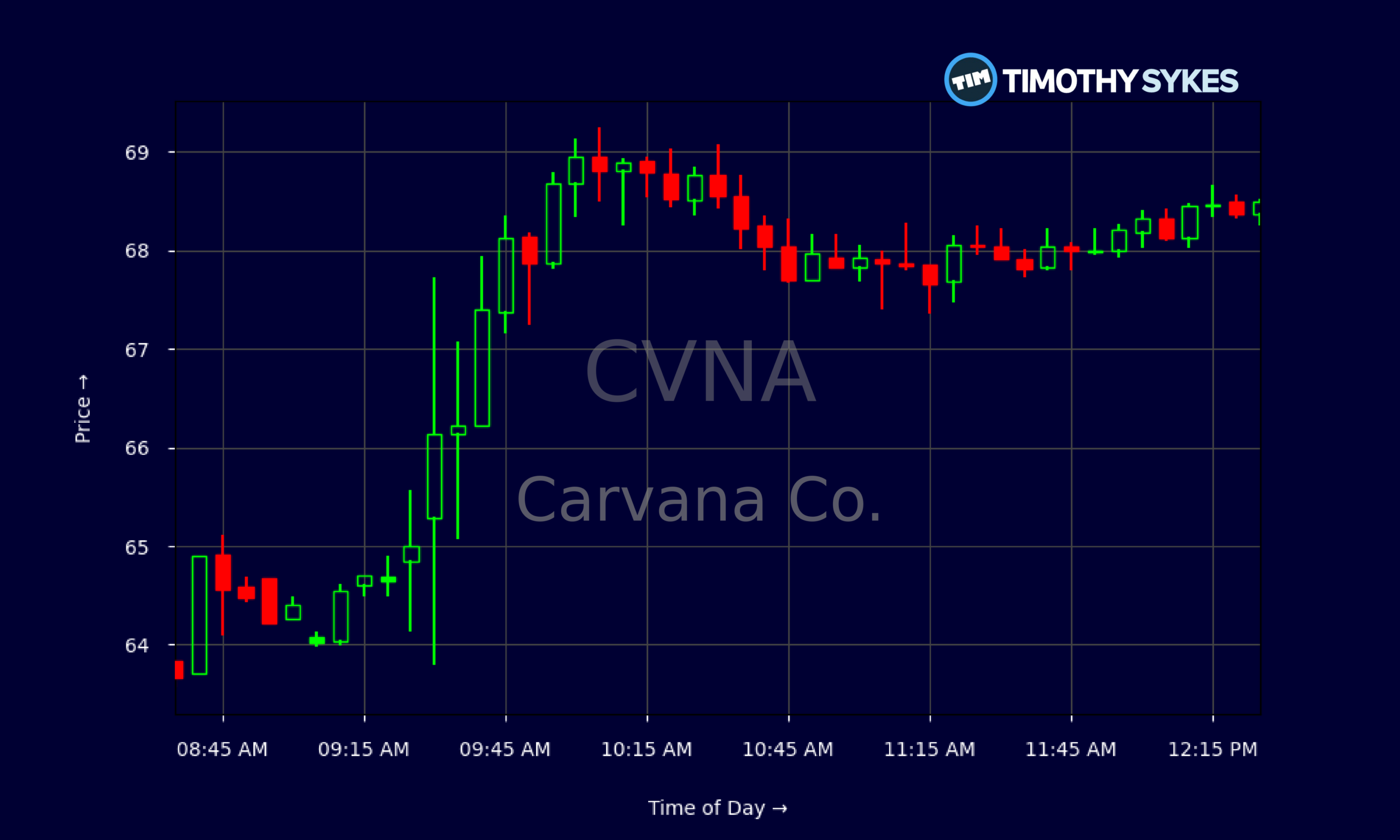
Live Update At 12:32:14 EDT: On Thursday, October 29, 2026 Carvana Co. stock [NYSE: CVNA] is trending up by 15.95%! Discover the key drivers behind this movement as well as our expert analysis in the detailed breakdown below.
Quick Financial Overview
Carvana (CVNA) is backing up its story with numbers. Q3 revenue reached $8.04B, ahead of roughly $7.7B Street expectations, and adjusted EBITDA climbed to $800M from $637M a year earlier. That tells traders CVNA is scaling fast while squeezing more profit out of every car.
On the bottom line, CVNA printed Q3 EPS of $0.39, just below the $0.44 consensus. So profitability is positive, but not a clean beat. Income statement data show gross profit of about $1.52B on $8.04B of total revenue, a roughly 19% gross margin that lines up with the 19.4% margin in the key ratios. For a high‑growth online auto dealer still fine‑tuning costs, that margin profile stands out.
Balance sheet numbers show around $15.2B in total assets and $9.5B in total liabilities, with leverage metrics like total debt‑to‑equity at 1.4 and long‑term debt of about $5.3B. That debt is meaningful, and interest coverage at 0.3 reminds traders that CVNA is still sensitive to rate moves.
More Breaking News
On the tape, CVNA has pushed from a recent low near $55.92 on 2026/10/26 to about $68.47 by 2026/10/29, a strong multi‑day trend. Intraday, the 5‑minute chart shows tight action around $68 with higher lows building through the morning. For momentum traders, that combination of fundamental beats and bullish price action is exactly what draws attention.
Why Traders Are Watching CVNA After Earnings
CVNA’s Q3 print gave the bull camp fresh fuel. The company beat on revenue at $8.04B and delivered $800M in adjusted EBITDA, well ahead of last year’s $637M. Management hammered on improved unit economics, faster delivery, and better loan rates. That’s the kind of operating leverage story traders love in a high‑beta name.
Guidance tightened the narrative. Carvana now expects FY26 adjusted EBITDA at the high end of its prior $2.7B–$3B range and is calling for sequential growth in retail units in Q4. When a name like CVNA talks about both higher profitability and more units, that often acts as a sentiment catalyst. It tells the market the growth engine is still running hot.
The earnings day wasn’t picture‑perfect. EPS of $0.39 missed the $0.44 consensus even as revenue topped estimates. For traders, that creates a classic battleground: do you trade the revenue and EBITDA strength, or focus on the small EPS miss? So far, CVNA’s uptrend off the mid‑$50s suggests the market is prioritizing scale and cash generation.
Wall Street is largely backing that view. JPMorgan keeps CVNA as a top pick. Morgan Stanley, Wells Fargo, Stephens, Barclays, and Oppenheimer all sit in the Overweight/Outperform camp, even after trimming price targets to reflect higher rate benchmarks and some gross profit per unit pressure. Average targets in the low‑$80s still imply upside from current prices, which many short‑term traders use as fuel for momentum setups.
Away from the spreadsheet, the company is still building. CVNA is adding an Inspection and Reconditioning Center at its ADESA Orlando facility, boosting throughput and enabling more same‑day delivery in Central Florida while creating around 100 jobs. It is also rolling out same‑day delivery and pickup in Jacksonville, supported by its logistics and inspection network. Those moves matter: more reconditioning capacity and faster delivery typically translate into more cars sold and happier customers, which can keep that revenue line pushing higher.
Conclusion
For active traders, CVNA now sits at the crossroads of growth and scrutiny. The stock has ripped from the mid‑$50s to the high‑$60s as the market digests a powerful Q3 revenue beat, a big jump in adjusted EBITDA, and guidance pointing to the high end of $2.7B–$3B in FY26 EBITDA. That is not the profile of a company in retreat.
At the same time, the numbers remind everyone this is still a high‑octane story. EPS missed by a few cents, leverage remains notable, and several banks have clipped price targets, even while staying bullish overall. Higher rates and gross profit per unit pressure are real headwinds. CVNA needs continued execution on costs, sourcing, and financing to keep this run intact.
Operationally, Carvana is pressing the gas. The Orlando Inspection and Reconditioning Center expansion, the Jacksonville same‑day rollout, and branding moves like the Rush Soccer sponsorship and $200,000 youth scholarship fund show CVNA playing offense both in infrastructure and in mind share. Add in its positioning as a key online threat to traditional players like CarMax, and traders get why the Street still labels the name a structural winner.
The key, as always in this market, is discipline. As Tim Sykes likes to say, “Volatile runners are great teachers — study the pattern, respect the risk, and never fall in love with the story.” As millionaire penny stock trader and teacher Tim Sykes says, “You must adapt to the market; the market will not adapt to you.”. CVNA is giving traders a live case study in that rule right now. This coverage is for educational and research purposes only and is not investment advice.
This is stock news, not investment advice. Timothy Sykes News delivers real-time stock market news focused on key catalysts driving short-term price movements. Our content is tailored for active traders and investors seeking to capitalize on rapid price fluctuations, particularly in volatile sectors like penny stocks. Readers come to us for detailed coverage on earnings reports, mergers, FDA approvals, new contracts, and unusual trading volumes that can trigger significant short-term price action. Some users utilize our news to explain sudden stock movements, while others rely on it for diligent research into potential investment opportunities.
Dive deeper into the world of trading with Timothy Sykes, renowned for his expertise in penny stocks. Explore his top picks and discover the strategies that have propelled him to success with these articles:
- Penny Stocks Trading Guide
- Best Penny Stocks Under $1 to Buy Today
- Top 8 Penny Stocks to Watch on Robinhood
Once you’ve got some stocks on watch, elevate your trading game with StocksToTrade the ultimate platform for traders. With specialized tools for swing and day trading, StocksToTrade will guide you through the market’s twists and turns.
Dig into StocksToTrade’s watchlists here:





Leave a reply