

Comcast Corporation Common Stock jumped as strong broadband subscriber growth lifted investor optimism, and stocks have been trading up by 4.5 percent.
Key Takeaways Traders Need To Know
- Q3 beat on both EPS and revenue, with CMCSA delivering $1.07 adjusted EPS on $29.3B revenue and strong free cash flow despite year‑over‑year declines and theme park headwinds.
- Management flagged a Q4 restructuring charge above $1B and significant job cuts as Comcast reshapes cable, broadband, and wireless ahead of the 2027 NBCUniversal spin.
- Universal Ads rolled out embedded TV/CTV buying across partner platforms, while Xfinity and Comcast Business kept pushing multi‑gig broadband builds across Texas, Virginia, New Hampshire, Indiana, and rural California.
- Wall Street trimmed CMCSA price targets but generally maintained Buy or Neutral views, reflecting solid content and media strength against ongoing broadband subscriber pressure.
- Comcast reaffirmed a $0.33 quarterly cash dividend payable 2027/01/27, signaling continued focus on shareholder returns even as the restructuring ramps.
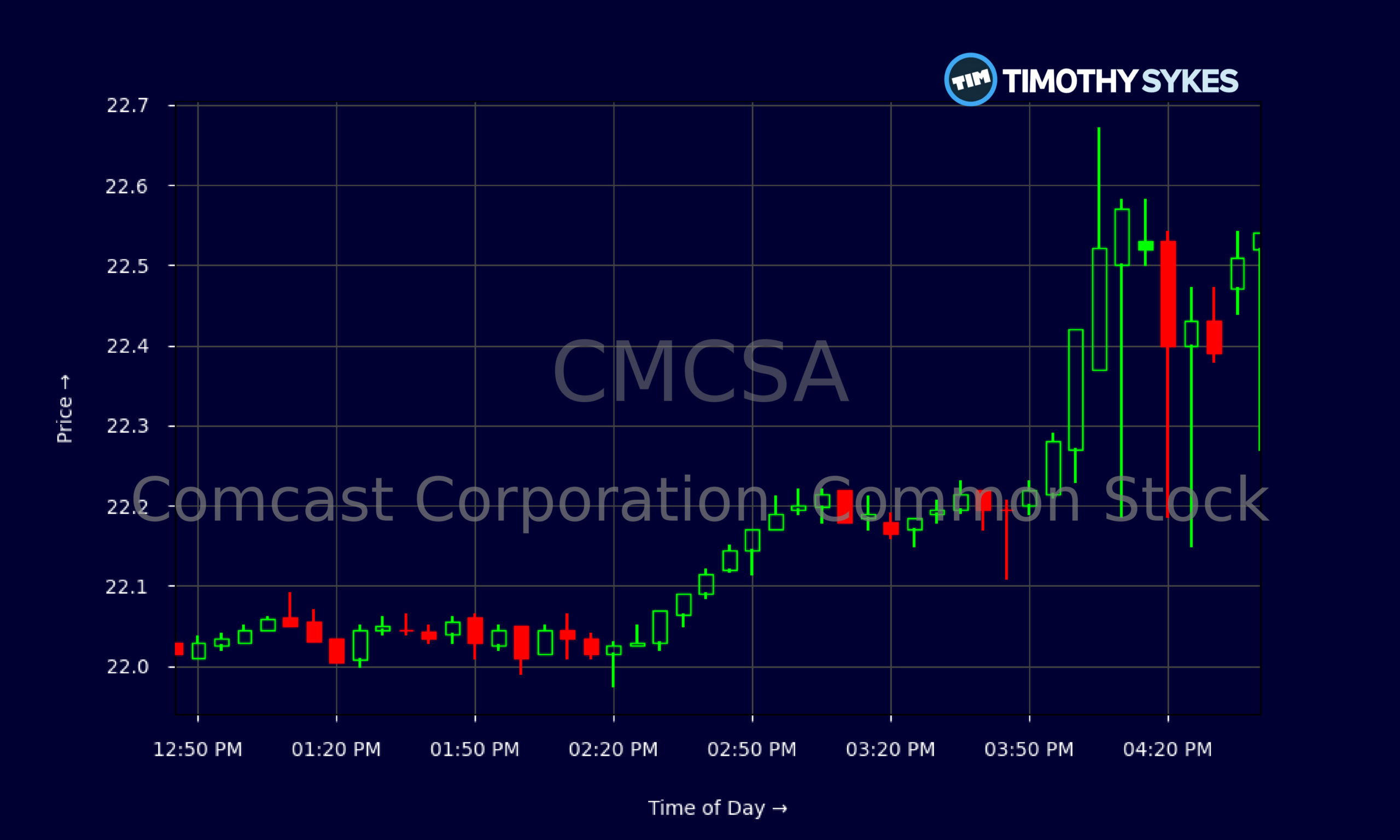
Live Update At 16:47:31 EDT: On Thursday, October 29, 2026 Comcast Corporation Common Stock stock [NASDAQ: CMCSA] is trending up by 4.5%! Discover the key drivers behind this movement as well as our expert analysis in the detailed breakdown below.
Quick Financial Overview
CMCSA has been quietly grinding higher through October. The daily chart shows Comcast stock climbing from around $20.68 in mid‑month to about $22.27 on 2026/10/29. That is a steady, stair‑step trend, not a parabolic spike, which matters for traders hunting sustainable moves rather than one‑day wonders.
Intraday, CMCSA spent most of the latest session grinding between $21.90 and $22.20 before squeezing into the close near $22.50. That late‑day push tells you dip buyers are active and shorts are not in full control. For range traders, CMCSA is respecting support near $21.80–$22.00 and bumping its head around $22.60. A clean break above that zone with volume would be the next technical trigger to watch.
More Breaking News
Fundamentally, Comcast throws off serious cash. Q3 revenue came in at $29.30B, ahead of expectations, with adjusted EPS at $1.07 versus $0.99 consensus. The trailing P/E around 6.6 and price‑to‑sales under 1 put CMCSA in value territory relative to its own history. Profit margins near 9% and EBITDA margin above 27% show a mature, cash‑rich machine. The leverage is real, but so is the cash flow, with about $7.9B in operating cash and $4.2B in free cash flow last quarter alone.
Why Traders Are Watching CMCSA’s Transformation Story
CMCSA is not trading like a hot momentum small cap, but the story underneath the tape is exactly what active traders love: a clean earnings beat, a big restructuring, and a coming spin. Comcast beat on the top and bottom line in Q3, posting $29.3B in revenue and $1.07 in adjusted EPS, while also delivering strong free cash flow. Content did the heavy lifting. Peacock booked its second straight profitable quarter, and Universal hit a record global box office, balancing softer areas like theme parks and domestic broadband.
At the same time, CMCSA is preparing to carve out NBCUniversal and Sky and run the broadband‑connectivity business as a separate animal. That means more than $1B in Q4 restructuring charges and substantial job cuts across cable TV, broadband, and wireless. For traders, this is classic “break it to fix it” price action fuel. Near term, those charges can cap rallies as models reset. Longer term, a leaner, more focused CMCSA could see margin expansion and a cleaner narrative.
Wall Street’s reaction mirrors that tug‑of‑war. Citi, TD Cowen, Goldman Sachs, and Freedom Broker all nudged CMCSA price targets lower, citing broadband subscriber losses and transformation uncertainty. Yet Citi and TD Cowen stayed with Buy ratings, backing Comcast’s cash generation and media strength. Goldman and Freedom sit on the fence with Neutral/Hold, arguing the connectivity drag may limit upside. That mixed backdrop sets up CMCSA as a battleground value name where each new data point on broadband trends or restructuring progress can spark tradable swings.
Conclusion
For active traders, CMCSA is not just another sleepy cable stock anymore. It is a restructuring play wrapped around a cash‑rich media and broadband platform. The company just printed a clean Q3 beat, pushed adjusted EPS above expectations, and proved again that content and experiences — Universal, Peacock, theme parks despite near‑term bumps — are carrying more weight in the Comcast story. At the same time, the board backed that confidence with a steady $0.33 quarterly dividend and a dividend rate that translates into a yield north of 6%, based on current CMCSA levels.
But the real action for CMCSA will come from execution. Management is taking a big swing with the NBCUniversal spin setup, more than $1B in transformation charges, and significant job cuts across core operations. Add in heavy capex for multi‑gig Xfinity builds in places like Texas, Virginia, Indiana, New Hampshire, and rural California, and you get a name where headlines matter as much as quarterly numbers.
Traders who follow Tim Sykes’ playbook know the drill: “The market doesn’t reward hopes, it rewards preparation and discipline.” As millionaire penny stock trader and teacher Tim Sykes says, “Small gains add up over time; focus on building wealth gradually, not chasing jackpots.”. CMCSA fits that lens. Track the chart levels, watch how price reacts to each restructuring update, and stay data‑driven. This is educational and research material, not advice to buy or sell, but CMCSA is clearly a ticker that belongs on watchlists while this transformation wave plays out.
This is stock news, not investment advice. Timothy Sykes News delivers real-time stock market news focused on key catalysts driving short-term price movements. Our content is tailored for active traders and investors seeking to capitalize on rapid price fluctuations, particularly in volatile sectors like penny stocks. Readers come to us for detailed coverage on earnings reports, mergers, FDA approvals, new contracts, and unusual trading volumes that can trigger significant short-term price action. Some users utilize our news to explain sudden stock movements, while others rely on it for diligent research into potential investment opportunities.
Dive deeper into the world of trading with Timothy Sykes, renowned for his expertise in penny stocks. Explore his top picks and discover the strategies that have propelled him to success with these articles:
- Penny Stocks Trading Guide
- Best Penny Stocks Under $1 to Buy Today
- Top 8 Penny Stocks to Watch on Robinhood
Once you’ve got some stocks on watch, elevate your trading game with StocksToTrade the ultimate platform for traders. With specialized tools for swing and day trading, StocksToTrade will guide you through the market’s twists and turns.
Dig into StocksToTrade’s watchlists here:





Leave a reply