

FTAI Aviation Ltd. stocks have been trading up by 7.82 percent following strong earnings and upbeat growth guidance.
Key Takeaways For FTAI Traders
- Net income jumped 26.8% quarter over quarter and Adjusted EBITDA rose 14.8%, as Aerospace Products delivered 76% revenue and 57% EBITDA growth with a 31% margin and guidance reaffirmed for 2026–2027.
- A multi‑year Maintenance, Repair and Exchange deal with United Airlines expands FTAI Aviation’s CFM56‑7B engine footprint and is structured to scale over time.
- Management doubled the share repurchase plan to $1.0B, launched a $500M accelerated share repurchase, and kept a $0.50 quarterly dividend, underscoring confidence and aggressive capital returns.
- Street coverage of FTAI stays upbeat, with multiple Outperform/Overweight ratings and targets spanning roughly $250–$385 despite some recent trims.
- The Mod‑1 power turbine passed key tests with 100+ units contracted for 2027–2028, while Strategic Capital in Aviation Leasing and SCI’s new vehicle add long‑run growth visibility.
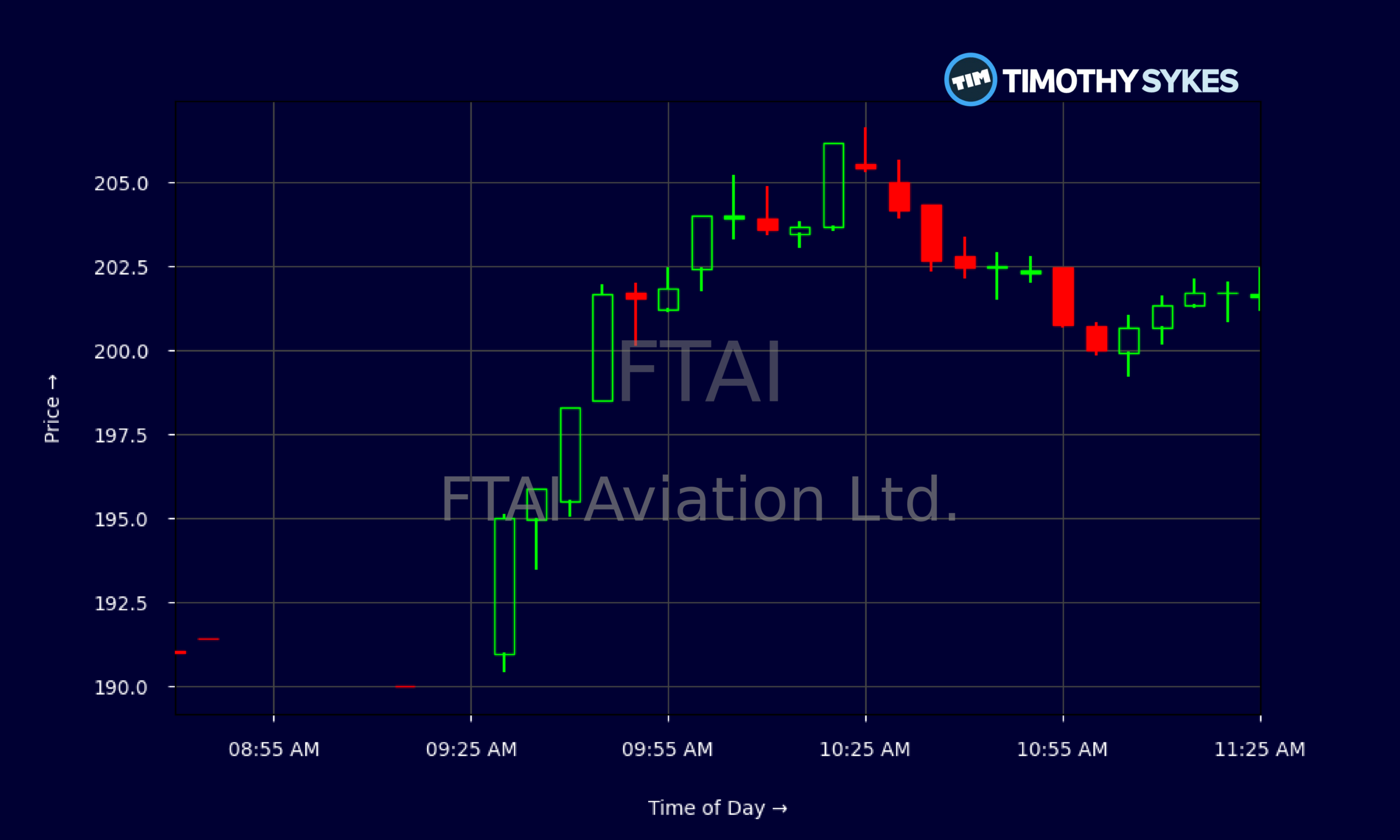
Live Update At 11:32:35 EST: On Monday, November 02, 2026 FTAI Aviation Ltd. stock [NASDAQ: FTAI] is trending up by 7.82%! Discover the key drivers behind this movement as well as our expert analysis in the detailed breakdown below.
Quick Financial Overview
FTAI Aviation has been trading like a momentum name, but the numbers show there is real fuel behind the move. On the tape, FTAI has run from a close near $171 in early 2026/10/08 to above $200 by 2026/11/02, with recent sessions showing higher highs and strong closes. The latest daily candle at $202.30 capped a multiday grind up from the mid‑$150s, telling traders this is an up‑trending chart with shallow pullbacks getting bought.
Intraday, FTAI has been holding above the open and building higher lows through the morning, a classic trend‑day structure. That intraday action confirms demand above $195 and shows dip buyers stepping in quickly.
More Breaking News
Under the hood, FTAI Aviation generated roughly $2.51B in revenue with fat 85.5% gross margins and a 31.5% EBITDA margin. Return on equity is eye‑popping, but it’s built on heavy leverage: total‑debt‑to‑equity sits near 8.6 and long‑term debt‑to‑capital is about 90%. The stock trades at a rich 37x earnings and about 5.6x sales, so the market is pricing FTAI for continued growth. A modest 1.1% dividend yield and active buybacks round out a story where capital returns support the tape, but traders need to respect the premium valuation and leverage.
Why Traders Are Locked In On FTAI Right Now
For active traders, FTAI Aviation checks three big boxes right now: accelerating fundamentals, confirmed multi‑year contracts, and aggressive capital returns. Q3 2026 was strong across the board. Net income climbed 26.8% versus the prior quarter, and consolidated Adjusted EBITDA grew 14.8%. The real engine is the Aerospace Products segment, where revenue surged 76% year over year and EBITDA jumped 57% at a 31% margin. Management then reaffirmed 2026–2027 EBITDA guidance and talked up visibility into 2027, which helps justify FTAI’s high multiples.
At the same time, FTAI Aviation locked in a multi‑year Maintenance, Repair and Exchange agreement with United Airlines covering CFM56‑7B engines. Instead of just doing traditional shop visits, FTAI will supply ready‑to‑use engines ahead of removals and take United’s unserviceable units into its own inventory. For traders, that means recurring volume on one of the world’s most common narrow‑body engine types and a growing pool of assets to feed through FTAI’s MRO and parts ecosystem. It is a flywheel, not a one‑off contract.
Layer on the Mod‑1 power turbine, which has passed key tests and already has more than 100 units contracted for 2027–2028, and the growth runway looks long. Strategic Capital within Aviation Leasing is scaling, and SCI’s new vehicle has started deploying capital. Those pieces make FTAI Aviation more than just a cyclical aircraft lessor story; they anchor a multi‑year growth narrative that momentum traders tend to chase while the trend is intact.
On the capital‑markets side, FTAI Aviation’s board doubled the share repurchase authorization to $1.0B, including a $500M accelerated share repurchase with RBC in Q4 2026. The company has already bought back about $80M of stock at an average price of $178.73, and roughly $420M remains available through 2027 after the ASR. When management is this willing to retire stock near current levels and keep paying a $0.50 quarterly dividend, traders see a strong bid under the share price.
Analysts are largely in the same camp. Macquarie initiated coverage on FTAI with an Outperform rating and a $305 target, tying the name to a multi‑year aerospace and defense up‑cycle and next‑gen technologies. RBC currently sits in the mid‑$200s with an Outperform, while Morgan Stanley still runs an Overweight at $310 even after trimming from $360. Street consensus sits firmly around Buy with mean targets in the mid‑$300s, well above recent prices. Even when targets get nudged down, the thesis remains intact: FTAI Aviation is growing fast, monetizing key platforms like Mod‑1, and using scale and contracts like the United deal to keep that growth rolling.
For traders watching the tape, that backdrop has already translated into action. FTAI shares recently popped 7.3% in a single session to $169.53 with no fresh headline, a sign that positioning and sentiment alone can spark big moves. With earnings delivering a modest EPS beat, huge year‑over‑year revenue growth to about $977.7M for the quarter, and the stock trading up nearly 5% premarket on the print, the market is clearly responding to the growth path rather than nitpicking a slight revenue shortfall.
Conclusion
FTAI Aviation is acting like a name in price discovery after a big fundamental step‑up. Earnings growth is real, margins in Aerospace Products are strong, and management is comfortable enough with future cash flows to authorize a $1.0B buyback and a continuing dividend. The long‑dated Mod‑1 turbine contracts and the United Airlines Maintenance, Repair and Exchange program give FTAI a pipeline that stretches well into 2027–2028, while Strategic Capital and SCI’s vehicle add extra optionality.
For short‑term traders, the message is simple: this is a trend stock with catalysts. A steep run from the $150s to above $200 invites volatility, but the combination of Street Buy ratings, sizeable upside targets, and an ASR in the background creates a powerful supply‑demand setup. The leverage and rich valuation mean this is not a sleepy dividend play; it is a momentum name that rewards those who manage risk well.
Tim Sykes likes to say, “Discipline and preparation beat hope every single time.” As millionaire penny stock trader and teacher Tim Sykes says, “You must adapt to the market; the market will not adapt to you.”. FTAI Aviation is a perfect example of where that mindset matters. The story is strong right now, but traders still need to study the chart, track the news flow on earnings, buybacks, and the United deal, and be ready to cut losses fast if the trend breaks. This article is for educational and research purposes only and should be used as one more data point in a trader’s own process, not as trading advice.
This is stock news, not investment advice. Timothy Sykes News delivers real-time stock market news focused on key catalysts driving short-term price movements. Our content is tailored for active traders and investors seeking to capitalize on rapid price fluctuations, particularly in volatile sectors like penny stocks. Readers come to us for detailed coverage on earnings reports, mergers, FDA approvals, new contracts, and unusual trading volumes that can trigger significant short-term price action. Some users utilize our news to explain sudden stock movements, while others rely on it for diligent research into potential investment opportunities.
Dive deeper into the world of trading with Timothy Sykes, renowned for his expertise in penny stocks. Explore his top picks and discover the strategies that have propelled him to success with these articles:
- Penny Stocks Trading Guide
- Best Penny Stocks Under $1 to Buy Today
- Top 8 Penny Stocks to Watch on Robinhood
Once you’ve got some stocks on watch, elevate your trading game with StocksToTrade the ultimate platform for traders. With specialized tools for swing and day trading, StocksToTrade will guide you through the market’s twists and turns.
Dig into StocksToTrade’s watchlists here:





Leave a reply