

GoDaddy Inc. stocks have been trading up by 8.51 percent amid strong investor optimism over its expanding digital services.
What Traders Need To Know
- Q3 2026 EPS and revenue came in above expectations, and management raised full-year 2026 guidance toward the top of its prior range, confirming strong execution.
- Full-year 2026 revenue is now guided to $5.22B–$5.26B, modestly above the prior range and slightly ahead of about $5.24B Street consensus.
- AI product GoDaddy Airo is a key driver of expanding profitability, free cash flow, and disciplined capital returns, moving the story beyond basic domains.
- A shareholder investigation tied to alleged misrepresentation of a “high-intent” strategy and discounting on one-year .com domains remains an overhang after a past 14% drop.
- Holiday marketing guides and the nationwide “Ink Your Link” campaign show an aggressive push to embed Airo and small-business tools into seasonal commerce.
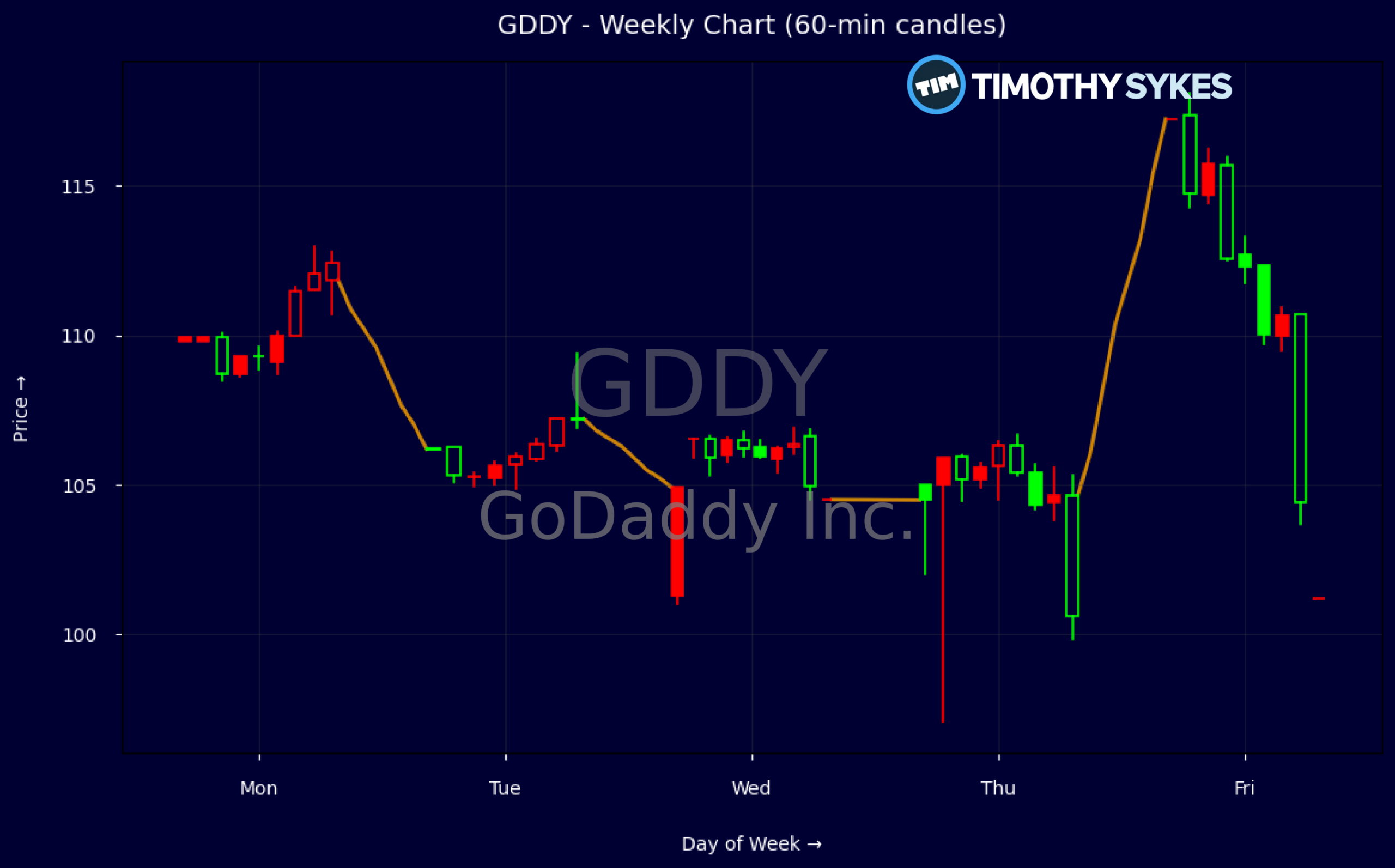
Weekly Update Oct 26 – Oct 30, 2026: On Friday, October 30, 2026 GoDaddy Inc. stock [NYSE: GDDY] is trending up by 8.51%! Discover the key drivers behind this movement as well as our expert analysis in the detailed breakdown below.
Technology industry expert:
Analyst sentiment – positive
GoDaddy sits in a strong competitive position as a scaled SMB web presence and commerce platform with improving fundamentals. High gross margin (82%) and EBIT margin (~26%) plus robust ROIC (>23%) underscore an efficient, asset-light model, while revenue growth in the mid‑single digits reflects a mature but steady franchise. Free cash flow conversion is excellent (FCF multiple ~7x), enabling aggressive buybacks, but leverage is elevated (debt/equity >500%, negative working capital, minimal book value), leaving limited balance-sheet flexibility.
Technically, the dominant trend is bullish with sharp post-earnings momentum: the stock broke from the low‑100s to 117.24 on a gap move, confirming higher highs on strong volume and a clear shift in sentiment. Intraday 5‑minute candles show sustained dip-buying and shallow pullbacks, consistent with institutional accumulation. First actionable level is support at $105, the breakout zone from the recent range; above that, traders can buy pullbacks toward $110 with a tight stop just below $105.
Recent news is overwhelmingly positive: Q3 beat on EPS and revenue, guidance nudged to the high end of the range, and strong traction from AI-powered Airo differentiate GoDaddy versus broader Tech and Software & IT Services peers that are growing faster but often at weaker cash-flow yields. Marketing initiatives (“Ink Your Link,” holiday Airo push) should support seasonal demand. Class-action noise is manageable. Base case: re-rating toward 18–19x EPS, implying a 6–12 month target of $125–135, with resistance near $120.
More Breaking News
Quick Financial Overview
GoDaddy Inc. (GDDY) just followed a clean earnings beat with a powerful price reaction. Weekly data show the stock trading down near $101 early in the week, then ripping to about $117 on 2026/10/30, a sharp upside break that tells you traders are repricing the name off the Q3 numbers. Intraday, the tape confirms steady accumulation: price grinds from the low $110s late morning to the high $110s and holds gains into the close around $117, with dip buys consistently showing up on each small pullback.
Under the hood, GoDaddy Inc. is running a high-margin model. Gross margin sits near 82.2%, with EBIT margin around 25.7% and EBITDA margin 27.5%. Over the last three years, revenue has grown about 7% annually, to roughly $4.95B. This is not a hyper-growth story; it is a steady compounder leaning on expanding margins, AI leverage, and cash generation. The latest quarter delivered total revenue of about $1.3B, operating income near $351M, and net income around $240M, underscoring solid profitability.
Valuation-wise, GDDY screens as a cash-flow play. A price-to-sales multiple near 2.6 and price-to-free-cash around 7.1, alongside a P/E near 15.5, reflect a market that sees durable earnings but not bubble-like multiples. Free cash flow in the latest report was roughly $437M, with operating cash flow of about $443M. Management is returning capital via aggressive buybacks, shown by about $544M in stock repurchases in the period. The flip side is leverage: total debt-to-equity above 573 and a current ratio of only 0.6 mean this is a balance sheet you respect, not ignore, even with interest coverage around 9.3.
Conclusion
GoDaddy Inc. comes out of this earnings print looking like a controlled momentum story rather than a speculative flyer. The chart shows a clean earnings breakout, with GDDY surging from a sub-$105 handle to the high teens and holding that level into the close, which is exactly how you want to see a beat trade. On the fundamental side, revenue growth is steady, margins are strong, and free cash flow is heavy, all while 2026 guidance nudges to the high end of the $5.22B–$5.26B range.
At the same time, traders cannot ignore risk. The shareholder investigation tied to prior discounting practice is a live overhang that can trigger negative headlines. High leverage and a thin equity base show up in extreme ratios like price-to-book, reminding you that execution and cash generation have to stay strong. The heavy focus on Airo, holiday marketing guides, and the “Ink Your Link” campaign all point to GoDaddy Inc. leaning hard into AI and brand to defend and grow its franchise.
For short-term traders, the key questions are simple: does GDDY hold above the post-earnings breakout zone, and do follow-through buyers show up on normal pullbacks? The earnings beat, raised guidance, and AI traction all support dips being bought as long as the broader market cooperates and no new legal shocks emerge. This is where risk management and trade selection matter most; as millionaire penny stock trader and teacher Tim Sykes, says, “The goal is not to win every trade but to protect your capital and keep moving forward.” As I tell my students, “When a stock breaks out on real numbers and real cash flow, you respect the move first and argue about the story later.” This is educational analysis only, but GDDY now sits firmly on the active watchlist.
This is stock news, not investment advice. Timothy Sykes News delivers real-time stock market news focused on key catalysts driving short-term price movements. Our content is tailored for active traders and investors seeking to capitalize on rapid price fluctuations, particularly in volatile sectors like penny stocks. Readers come to us for detailed coverage on earnings reports, mergers, FDA approvals, new contracts, and unusual trading volumes that can trigger significant short-term price action. Some users utilize our news to explain sudden stock movements, while others rely on it for diligent research into potential investment opportunities.
Dive deeper into the world of trading with Timothy Sykes, renowned for his expertise in penny stocks. Explore his top picks and discover the strategies that have propelled him to success with these articles:
- Penny Stocks Trading Guide
- Best Penny Stocks Under $1 to Buy Today
- Top 8 Penny Stocks to Watch on Robinhood
Once you’ve got some stocks on watch, elevate your trading game with StocksToTrade the ultimate platform for traders. With specialized tools for swing and day trading, StocksToTrade will guide you through the market’s twists and turns.
Dig into StocksToTrade’s watchlists here:




Leave a reply