

Global Payments Inc. stocks have been trading up by 10.75 percent following upbeat earnings and robust digital payments growth.
Key Takeaways
- Multiple banks upgraded GPN to bullish ratings with targets from $98 to $115, implying sizable upside from recent prices in the mid-$80s to mid-$90s.
- Oppenheimer and Bank of America see Worldpay synergies and derisked 2026 earnings as core drivers, backing GPN with $114–$115 price targets.
- KeyBanc calls the risk/reward on GPN attractive, flagging a potential valuation re-rating over the next 6–12 months.
- Truist stays cautious with an $86 target, citing Europe softness and higher rates heading into Q3.
- Global Payments will post Q3 2026 results on 2026/11/05, a key catalyst traders will track via the company webcast.
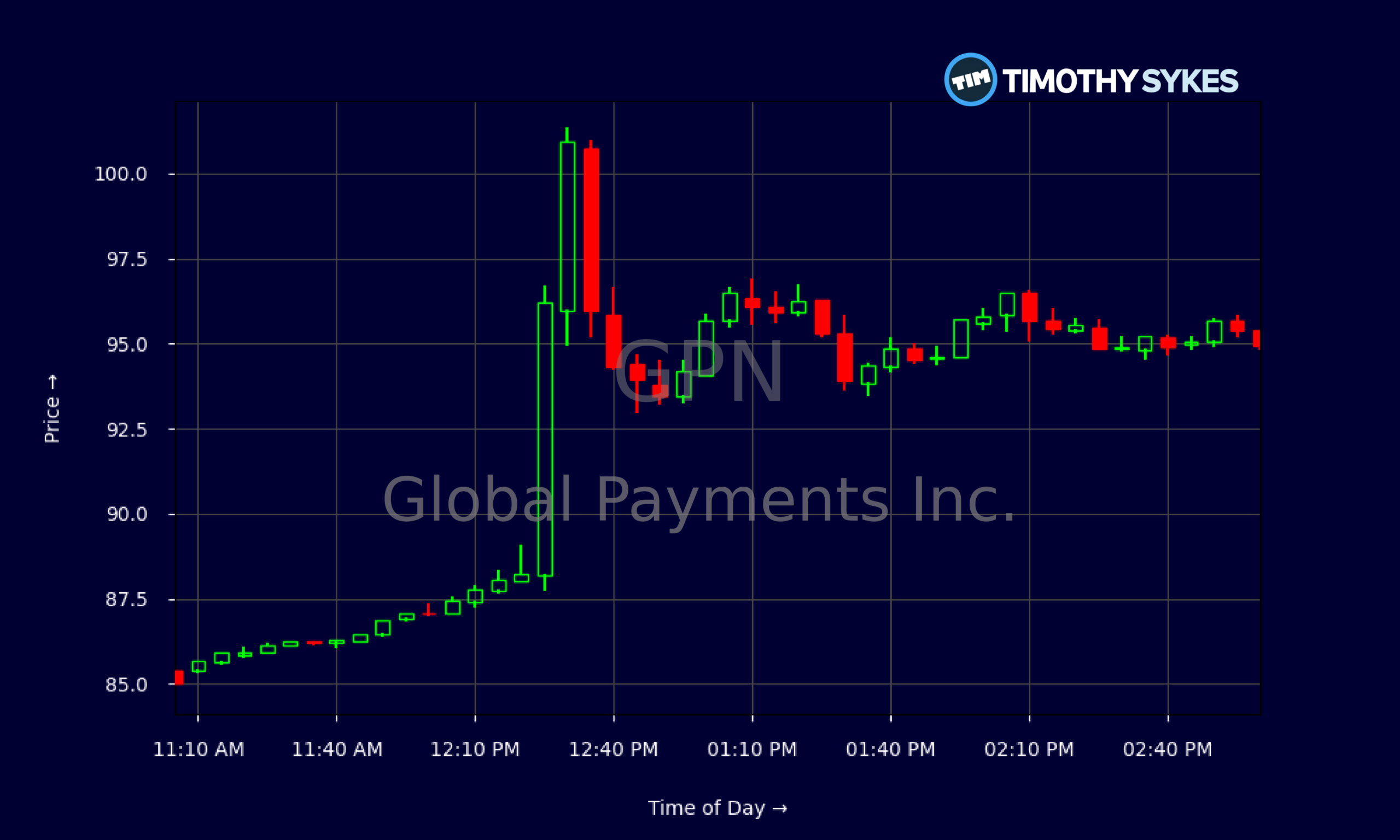
Live Update At 15:03:02 EDT: On Friday, October 30, 2026 Global Payments Inc. stock [NYSE: GPN] is trending up by 10.75%! Discover the key drivers behind this movement as well as our expert analysis in the detailed breakdown below.
Quick Financial Overview
GPN has quietly shifted from grind mode to breakout mode on the chart. Over the last few weeks, Global Payments climbed from a low near $78 on 2026/10/05 to a close around $94.94 on 2026/10/30. That’s a strong, steady trend higher, not a random spike. The daily candles show a stair-step pattern of higher lows and higher highs, the kind of structure momentum traders like to see.
Intraday, GPN opened near $86 on the latest session and ripped to an intraday high above $101 before settling just under $95. That wide range tells you real money is repositioning. Volatility is expanding as new buyers chase the analyst-driven narrative.
Fundamentally, Global Payments is a cash engine. Revenue runs around $7.7B annually with a massive 93% gross margin, typical for scaled payment networks. EBITDA margin near 33% shows GPN still throws off healthy operating cash even after expenses. Free cash flow last quarter was about $427M, versus roughly $662M in operating cash flow, despite heavy one-time items and capital spending.
More Breaking News
The balance sheet carries leverage, but not nosebleed levels. Debt-to-equity around 1.0 and interest coverage near 22 times mean GPN can handle its obligations while still returning cash. For traders, that mix of improving price action, solid cash generation, and upcoming earnings on 2026/11/05 sets the stage for more volatility — and opportunity.
Why Traders Are Watching GPN Into Earnings
Wall Street has turned GPN into a live case study in re-rating trades. At the time several reports were issued, Global Payments shares hovered around $82, while the FactSet mean price target sat near $104–$105. That’s a double-digit gap between where the market priced GPN and where the Street thinks fair value lands.
Oppenheimer fired the opening shot, upgrading Global Payments to Outperform with a $115 target. Their call leans on derisked 2026 earnings and a big expected jump in 2027 free cash flow as one-time costs fade and operating leverage kicks in. For traders, that’s code for, “This business can start printing more cash without needing wild revenue growth.”
Bank of America added fuel by reinstating coverage on GPN with a Buy rating and a $114 target. Their focus is the Worldpay acquisition. They see about $600M in cost and revenue synergies, which, if realized, support the view that Global Payments paid a smart price and can squeeze real value out of the deal.
KeyBanc joined in with an upgrade to Overweight and a $105 target, calling risk/reward attractive and flagging organic growth improvement heading into FY27. Put together, GPN is being positioned by several big banks as a “catch-up” name — a lagging stock with improving fundamentals that traders watch for breakouts.
There is a bear side. Truist cut its target to $86 and stuck with a Hold, pointing to a mixed setup in payments and fintech: strong U.S. macro but weak European consumers and higher interest rates. That note reminds traders that Global Payments still has to execute into a choppy global backdrop, especially as Q3 numbers drop on 2026/11/05.
Conclusion
Global Payments now sits at the crossroads of price momentum and shifting Wall Street expectations. GPN’s recent surge from the upper $70s to the mid-$90s lines up almost perfectly with the wave of analyst upgrades and target hikes. Oppenheimer’s $115 call, Bank of America’s $114 target, KeyBanc’s $105 level, and even Goldman’s lift to $98 all point in the same direction — they see more upside than downside from here.
At the same time, the Truist cut to $86 is a clear reminder that this is not a straight-line story. Global Payments still faces rate pressure and softer European consumer trends, and those macro headwinds can show up fast on the chart if Q3 disappoints. That 2026/11/05 earnings release and webcast will be the next big check-in on whether the Worldpay synergies, Genius traction, and free cash flow ramp are on schedule.
For active traders, GPN is now a textbook “catalyst plus consensus gap” setup — strong technical breakout, heavy institutional focus, and a clear date on the calendar. As millionaire penny stock trader and teacher Tim Sykes says, “Small gains add up over time; focus on building wealth gradually, not chasing jackpots.”. As Tim Sykes likes to say, “The market rewards preparation, not prediction.” Global Payments is giving traders a window to prepare: study the run-up, map key levels around $90, $100, and the prior $82 area, and be ready to react when the earnings headlines hit. This is educational and research material only, but the GPN tape is where discipline and planning will matter most.
This is stock news, not investment advice. Timothy Sykes News delivers real-time stock market news focused on key catalysts driving short-term price movements. Our content is tailored for active traders and investors seeking to capitalize on rapid price fluctuations, particularly in volatile sectors like penny stocks. Readers come to us for detailed coverage on earnings reports, mergers, FDA approvals, new contracts, and unusual trading volumes that can trigger significant short-term price action. Some users utilize our news to explain sudden stock movements, while others rely on it for diligent research into potential investment opportunities.
Dive deeper into the world of trading with Timothy Sykes, renowned for his expertise in penny stocks. Explore his top picks and discover the strategies that have propelled him to success with these articles:
- Penny Stocks Trading Guide
- Best Penny Stocks Under $1 to Buy Today
- Top 8 Penny Stocks to Watch on Robinhood
Once you’ve got some stocks on watch, elevate your trading game with StocksToTrade the ultimate platform for traders. With specialized tools for swing and day trading, StocksToTrade will guide you through the market’s twists and turns.
Dig into StocksToTrade’s watchlists here:





Leave a reply