

Genmab A/S stocks have been trading up by 28.9 percent on upbeat sentiment around its latest oncology partnership.
Key Takeaways For GMAB Traders
- Phase 3 RAINFOL-02 trial of Rina-S in platinum-resistant ovarian cancer hit progression-free and overall survival endpoints with strong risk reductions and no new safety issues.
- Updated Phase 2 petosemtamab colorectal cancer data showed 75% first-line and 67% second-line response rates, including 81% in first-line left-sided tumors, de-risking global Phase 3 trials.
- Petosemtamab plus pembrolizumab in head and neck cancer delivered 28.2-month median overall survival, 63% response rate, 19% complete responses, and durable benefit over 24 months.
- Genmab and Incyte launched a KRAS G12D-mutated colorectal cancer combo trial, extending petosemtamab into genetically defined solid tumors.
- JPMorgan, Bank of America, and TD Cowen all raised targets on Genmab after the Rina-S and petosemtamab data, while GMAB climbed about 6.8% on the initial ovarian readout.
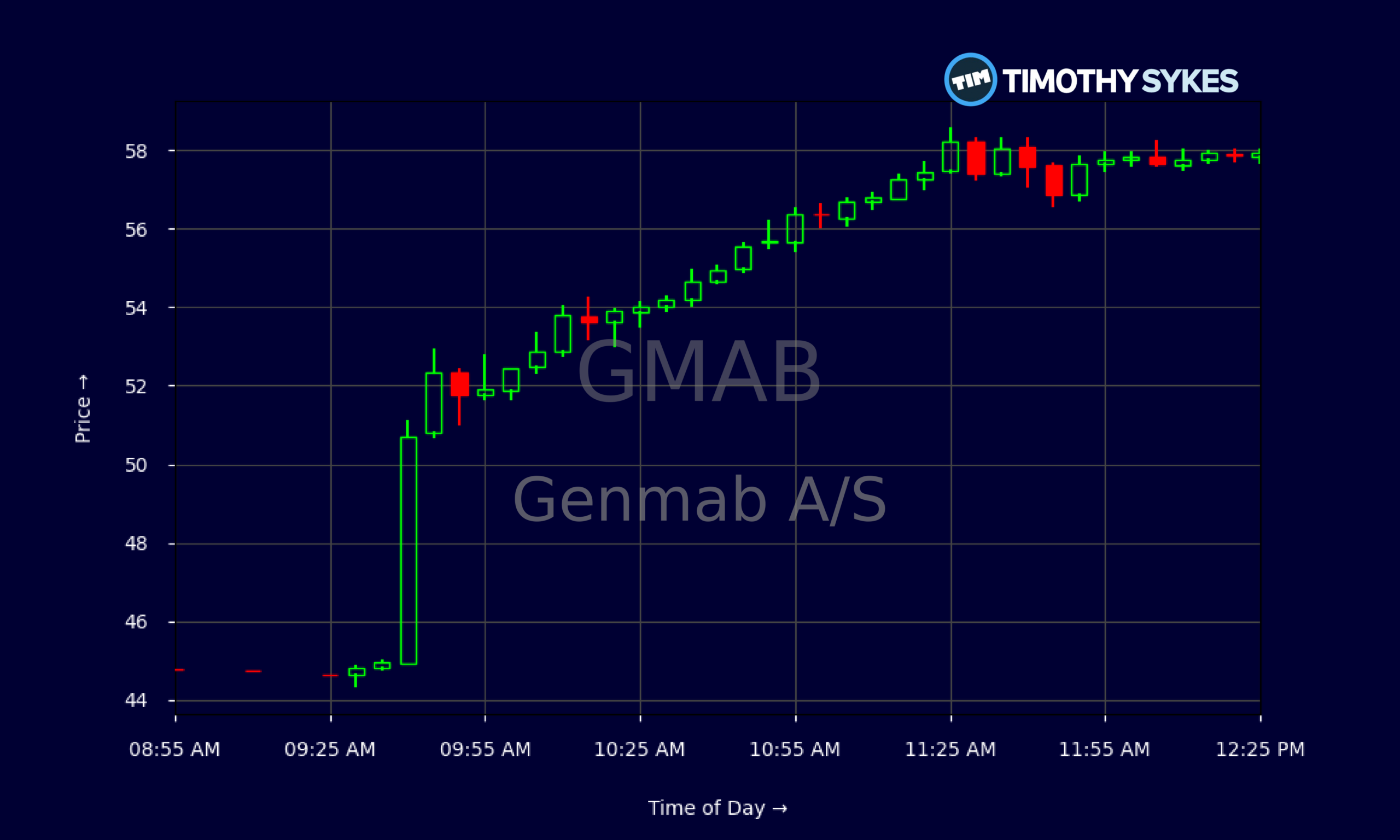
Live Update At 12:32:33 EDT: On Wednesday, October 28, 2026 Genmab A/S stock [NASDAQ: GMAB] is trending up by 28.9%! Discover the key drivers behind this movement as well as our expert analysis in the detailed breakdown below.
Quick Financial Overview
GMAB has been trading like a biotech that just flipped a major catalyst. On 2026/10/23, Genmab A/S closed at $43.79. By 2026/10/27, GMAB was still stuck around $44.67. Then the real move hit. On 2026/10/28, GMAB opened at $44.63 and ripped to an intraday high of $58.54, closing at $57.59. That is a huge multi-day breakout from the $35–$40 base it held earlier in the month.
Intraday, the tape shows clean trend behavior. GMAB exploded off the open from the mid-$40s, reclaimed $50 by 09:40, and never really looked back. Dips into the mid-$50s kept getting bought, with higher lows and a close just under $58. That is classic momentum action.
More Breaking News
Fundamentals explain why traders are crowding in. Genmab reports roughly $21.53B in revenue with a fat pre-tax margin of 55.7%. The flip side: GMAB trades at a rich 155.11 P/E and about 40.07x sales, with an enterprise value near $25.35B. Return on equity of 6.9% and return on assets of 5.74% are solid, but not explosive. For traders, that combo says one thing: the market is paying up for the pipeline, not the current earnings, and catalysts like Rina-S and petosemtamab now drive the chart.
Why Traders Are Watching GMAB
Genmab A/S just delivered the kind of catalyst stack that can re-rate a biotech for years. The core trigger for GMAB was the Phase 3 RAINFOL-02 win for Rina-S in platinum-resistant ovarian cancer. This is a setting with high unmet need and few good options. Rina-S beat standard chemotherapy on both progression-free survival and overall survival, with large risk reductions in disease progression or death and no new safety problems. For a Phase 3 oncology trial, that is about as clean as it gets.
Traders saw it instantly. After the Rina-S data dropped, GMAB jumped about $4 to $41.61, roughly a 6.8% move, even before the bigger breakout we’re now seeing on the chart. The market was effectively saying: this is not just “good data” — this is a potential new standard of care and a real revenue engine.
Wall Street is backing that view. JPMorgan upgraded Genmab to Overweight and sharply raised its price target, calling Rina-S’s efficacy “unprecedented” and boosting long-term expectations for petosemtamab, with peak sales now modeled at $5B. Bank of America pushed its target to DKK 3,200 from DKK 2,850, and TD Cowen lifted its U.S. target to $52 from $43, both maintaining Buy ratings. For GMAB, that’s broad, coordinated analyst support off one catalyst cluster.
But this isn’t a one-drug story. Genmab’s bispecific antibody petosemtamab is building serious momentum. In metastatic colorectal cancer, updated Phase 2 data showed objective response rates of 75% in first line and 67% in second line, and a striking 81% in first-line left-sided tumors, with durable, mostly confirmed responses. That kind of hit rate de-risks the ongoing global Phase 3 program and adds another late-stage pillar under GMAB.
At the same time, petosemtamab plus pembrolizumab in first-line PD-L1+ head and neck squamous cell carcinoma produced a 28.2-month median overall survival, 63% overall response rate, and a 19% complete response rate, with more than half of responders still in response at 24 months. That is not a marginal benefit; that is a potential backbone regimen in the making.
GMAB is also extending petosemtamab through a collaboration with Incyte. The companies are launching a Phase 1/2 trial in KRAS G12D-mutated metastatic colorectal cancer that will combine petosemtamab with Incyte’s KRAS G12D inhibitor INCB161734 and standard chemotherapy. Genmab will run and co-fund the study, Incyte will supply the KRAS drug, and the design supports a broader strategy to use petosemtamab as a platform across multiple solid tumors.
Put this together and GMAB now trades as a pipeline momentum name with multiple shots on goal, not a single-bet biotech.
Conclusion
For active traders, GMAB has just shifted from slow grinder to high-beta catalyst play. The price action — a surge from the mid-$40s to the high-$50s on heavy buying — lines up with the news flow: a Phase 3 win for Rina-S in a tough ovarian cancer setting, powerful Phase 2 data for petosemtamab in colorectal and head and neck cancers, and a new KRAS combo program with Incyte. Genmab A/S is showing the kind of stacked data cycle that can keep volatility and liquidity elevated.
At the same time, the valuation reminds everyone this is a high-expectation story. Genmab’s rich P/E and price-to-sales ratios mean GMAB is priced for future success, not just what is already on the income statement. That cuts both ways. Positive readouts and analyst upgrades from JPMorgan, Bank of America, and TD Cowen are pushing Genmab A/S higher now, but any stumble in Rina-S approvals or petosemtamab Phase 3 outcomes would matter.
For traders focused on patterns, catalysts, and discipline, this is exactly the kind of setup Tim Sykes talks about when he says, “Volatility is opportunity, but only if you respect risk and cut losses quickly.” As millionaire penny stock trader and teacher Tim Sykes, says, “It’s better to go home at zero than to go home in the red.”. GMAB’s story today is all about powerful data, strong momentum, and a market willing to reward success — as long as the pipeline continues to deliver. This article is for educational and research purposes only and is not investment advice.
This is stock news, not investment advice. Timothy Sykes News delivers real-time stock market news focused on key catalysts driving short-term price movements. Our content is tailored for active traders and investors seeking to capitalize on rapid price fluctuations, particularly in volatile sectors like penny stocks. Readers come to us for detailed coverage on earnings reports, mergers, FDA approvals, new contracts, and unusual trading volumes that can trigger significant short-term price action. Some users utilize our news to explain sudden stock movements, while others rely on it for diligent research into potential investment opportunities.
Dive deeper into the world of trading with Timothy Sykes, renowned for his expertise in penny stocks. Explore his top picks and discover the strategies that have propelled him to success with these articles:
- Penny Stocks Trading Guide
- Best Penny Stocks Under $1 to Buy Today
- Top 8 Penny Stocks to Watch on Robinhood
Once you’ve got some stocks on watch, elevate your trading game with StocksToTrade the ultimate platform for traders. With specialized tools for swing and day trading, StocksToTrade will guide you through the market’s twists and turns.
Dig into StocksToTrade’s watchlists here:





Leave a reply