

BIO-key International Inc. stocks have been trading up by 19.56 percent after upbeat coverage highlighting its biometric security growth potential.
Key Takeaways
- Strategic Gulf partnership positions BIO-key International’s identity platform for deployment across UAE and Saudi Arabia government and enterprise accounts.
- New Middle East government security agency win extends BKYI’s footprint in high-stakes cyber and identity projects.
- Shares of BKYI spiked up to 191% premarket and 78% intraday on heavy trading after the latest security agency contract.
- A seventh Gulf-region customer for PortalGuard IAM signals sustained traction, backed by integration partner VaporVM.
- Appointment of Stephen Morrow to lead PortalGuard aims to speed adoption of BIO-key’s passwordless, phishing‑resistant biometrics amid rising AI-driven threats.
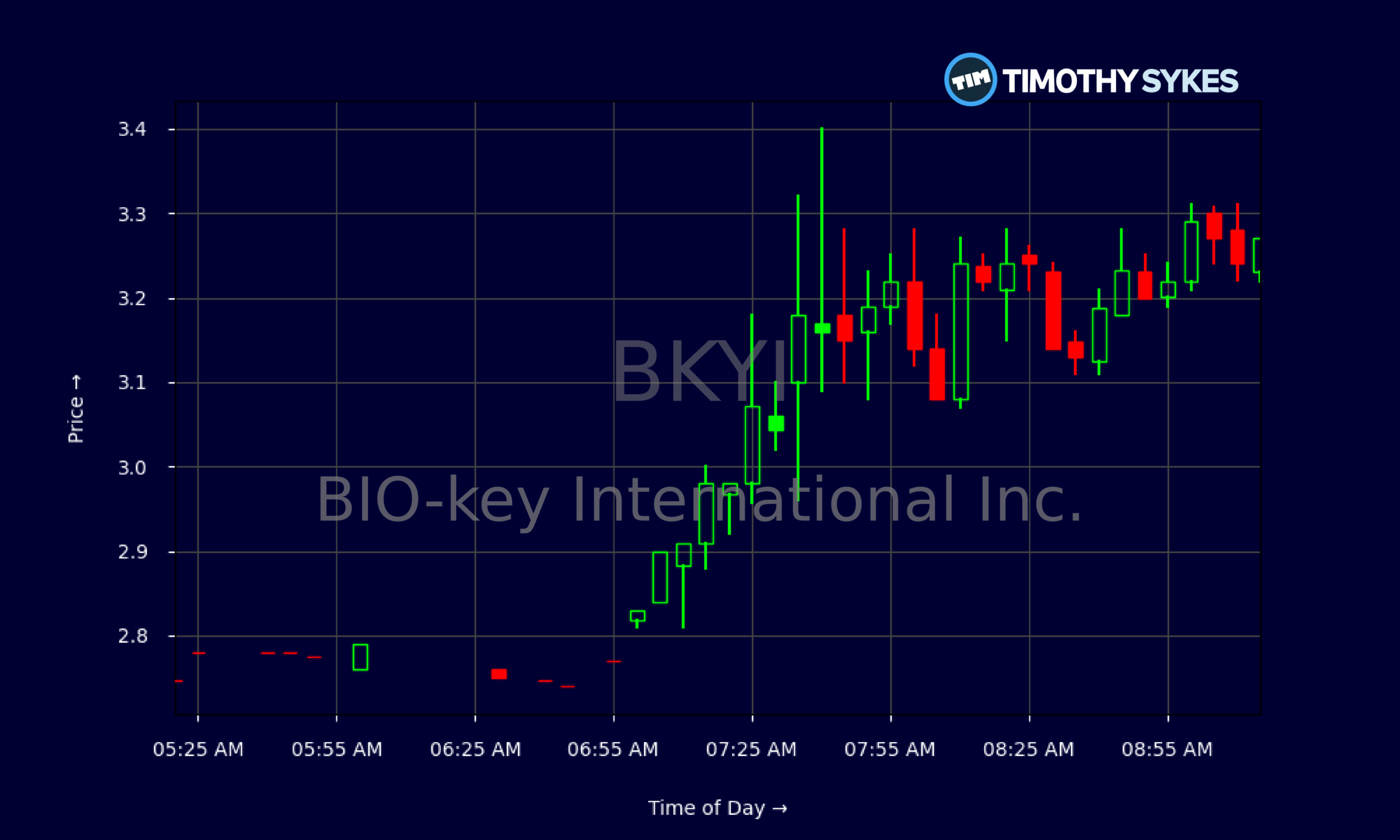
Live Update At 09:18:57 EDT: On Wednesday, October 28, 2026 BIO-key International Inc. stock [NASDAQ: BKYI] is trending up by 19.56%! Discover the key drivers behind this movement as well as our expert analysis in the detailed breakdown below.
Quick Financial Overview
BKYI is trading like a classic speculative micro-cap, with the chart and fundamentals telling two very different stories. On the one hand, BIO-key International just rode a violent upside move. The stock ripped from the mid‑$1s in early October to intraday highs above $4 on news-driven spikes, before pulling back into the mid‑$2s to low‑$3s. That’s a rollercoaster, not a slow grind.
Looking at the recent daily candles, BKYI shows repeated gap-ups and long wicks, a clear sign of aggressive momentum trading and profit taking. The latest 5‑minute data around $3.20–$3.30 shows tight premarket consolidation after prior volatility, suggesting short-term traders are feeling out a new balance zone.
Under the hood, BIO-key International is still a deeply unprofitable cybersecurity name. Over the last quarter, revenue was about $1.92M, but the company posted a net loss of roughly $0.58M and EBITDA around -$0.43M. Margins are ugly: EBIT margin near -89% and profit margin around -90%, even with an 81% gross margin, tell you operating costs are heavy relative to sales.
More Breaking News
BKYI carries modest debt, a current ratio near 1.3, and price-to-sales around 0.42, which is low for a security tech play. For traders, that mix—weak earnings, tight liquidity, low valuation, and explosive news reactions—sets up a high-risk, high-volatility trading vehicle driven more by headlines than by steady fundamentals.
Why Traders Are Watching BKYI
BKYI has suddenly become a textbook news catalyst name. BIO-key International grabbed traders’ attention when it signed a new Middle East government security agency customer for its multi-factor authentication and single sign-on platform. That single headline lit up the tape: shares of BKYI jumped as much as 191% premarket and were still up around 78% intraday on sharply elevated volume.
For a tiny cybersecurity company, landing a security agency in the Gulf is not a vanity win. Government security agencies in the region typically require hardened, compliant identity systems and tend to stick with vendors once integrated. Traders see that as validation for BKYI’s technology and a possible door-opener to more agencies and financial institutions.
The story does not stop there. BIO-key International has now secured a stream of Middle East government customers, including another undisclosed institution deploying its PortalGuard IAM and biometric authentication suite. That latest deal marked its seventh new Gulf-region customer in six months, backed by regional partner VaporVM. Seven customers in half a year tells traders this is not a one-off press release cycle; it’s a developing trend.
Then there’s the strategic partnership. BKYI and Dubai-based Al Majlis Group agreed to jointly market and deploy BIO-key’s biometric identity security and IAM platform across the UAE and Saudi Arabia, initially targeting priority accounts. In trading terms, that partnership headline triggered a roughly 70% intraday surge on massive volume, signaling that the market is assigning real speculative value to BKYI’s Gulf expansion.
Add in the leadership move: BIO-key International named cybersecurity veteran Stephen Morrow as President of the PortalGuard IAM platform. That signals the company is trying to professionalize its go-to-market engine and capture rising demand for passwordless, phishing-resistant, Identity-Bound Biometrics, especially as AI-driven identity attacks increase. For active traders tracking BKYI, these combined catalysts explain why the ticker now sits on so many watchlists for potential continuation, secondary spikes, or sharp pullbacks.
Conclusion
BKYI is a small stock trading on big headlines. BIO-key International has lined up a series of Middle East government contracts, spanning security agencies and broader institutions, plus a strategic Al Majlis partnership that targets high-value accounts in the UAE and Saudi Arabia. Those wins pushed BKYI shares into parabolic territory, with moves of 70%–190% around news days and intense short-term trading in the $2–$4 range.
At the same time, the financials remind traders that BIO-key International is still in turnaround mode. The company’s revenue base is small, losses are large, and free cash flow is deeply negative. Even with strong gross margins and modest leverage, BKYI must translate these Gulf-region contracts into recurring revenue and scale if it wants the chart to align with a sustainable business story.
For day and swing traders, BKYI now fits the classic catalyst-driven pattern that the Sykes community studies: thin float, hot sector (cybersecurity and biometrics), real news, and extreme volatility. That combination can offer opportunity but also brutal downside if momentum unwinds.
The key is discipline. As Tim Sykes often says, “The market doesn’t reward hope, it rewards preparation and risk management.” As millionaire penny stock trader and teacher Tim Sykes says, “You must adapt to the market; the market will not adapt to you.”. For anyone tracking BKYI, that means treating the ticker as a trading vehicle, not a long-term promise—studying the chart, respecting the news flow, and always having a clear plan to cut losses fast. This analysis is for educational and research purposes only and should never be taken as trading advice.
This is stock news, not investment advice. Timothy Sykes News delivers real-time stock market news focused on key catalysts driving short-term price movements. Our content is tailored for active traders and investors seeking to capitalize on rapid price fluctuations, particularly in volatile sectors like penny stocks. Readers come to us for detailed coverage on earnings reports, mergers, FDA approvals, new contracts, and unusual trading volumes that can trigger significant short-term price action. Some users utilize our news to explain sudden stock movements, while others rely on it for diligent research into potential investment opportunities.
Dive deeper into the world of trading with Timothy Sykes, renowned for his expertise in penny stocks. Explore his top picks and discover the strategies that have propelled him to success with these articles:
- Penny Stocks Trading Guide
- Best Penny Stocks Under $1 to Buy Today
- Top 8 Penny Stocks to Watch on Robinhood
Once you’ve got some stocks on watch, elevate your trading game with StocksToTrade the ultimate platform for traders. With specialized tools for swing and day trading, StocksToTrade will guide you through the market’s twists and turns.
Dig into StocksToTrade’s watchlists here:





Leave a reply