
Celestica Inc. stocks have been trading up by 11.97 percent after upbeat earnings and optimistic AI-driven demand outlook.
Key Takeaways For CLS Traders
- Q3 2026 revenue jumped 83% to $5.83B, with adjusted EPS up 109% to $3.30 and a record 8.5% adjusted operating margin, all topping Street expectations.
- Management lifted 2026 guidance, now targeting $21B in revenue and $11.55 in adjusted EPS, resetting earnings expectations higher for CLS.
- For Q4, the company sees $6.28B–$6.58B in revenue, adjusted EPS of $3.37–$3.57, and an 8.7% adjusted operating margin, signaling sustained near‑term strength.
- Celestica’s aggressive 2027 plan calls for about $40B in revenue, a 9% adjusted operating margin, and $21.50 EPS, funded by $1.5B–$2B in AI‑driven capex.
- A recent $3.45B equity raise boosts liquidity for CLS, while management still plans a new NCIB buyback despite lower near‑term free cash flow from growth spending.
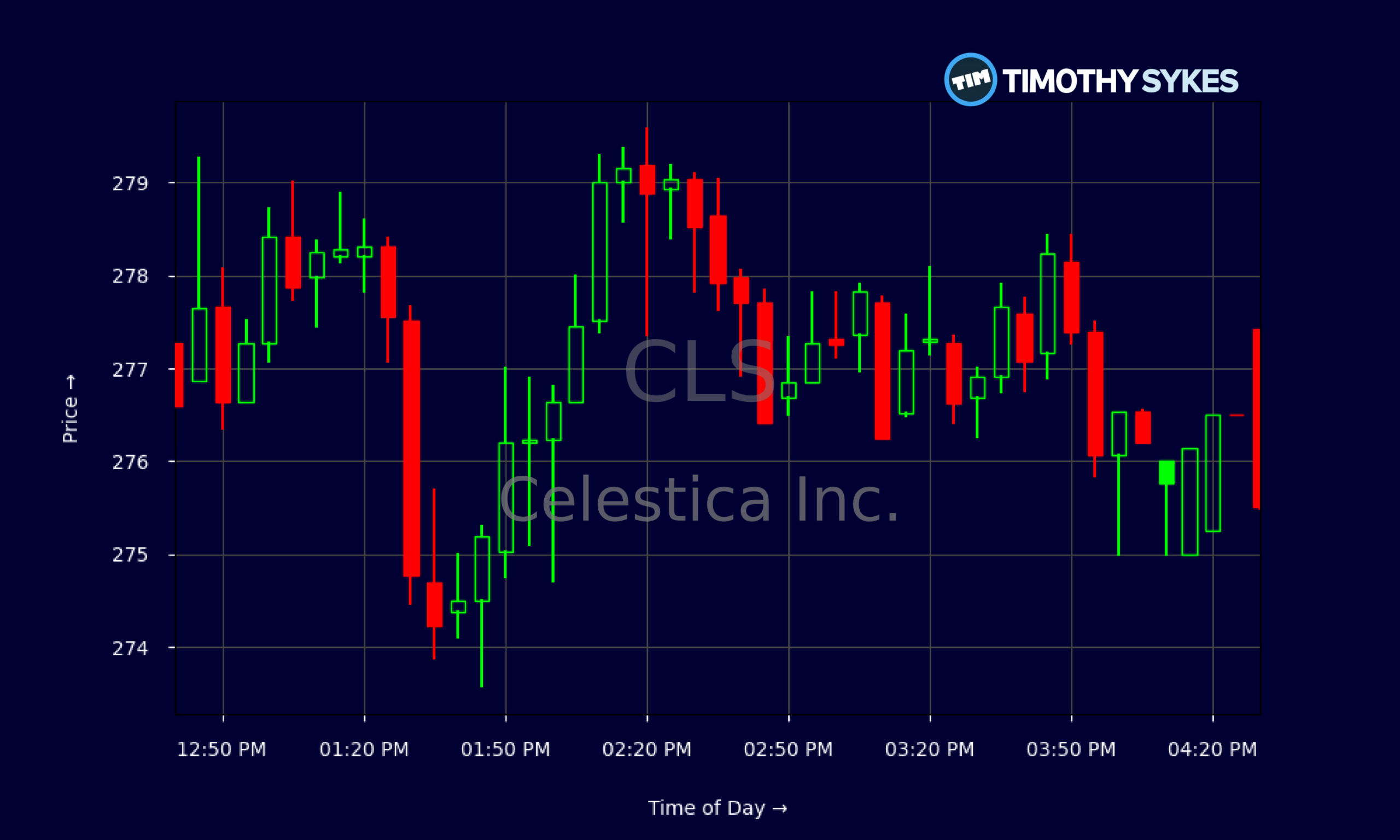
Live Update At 16:46:44 EDT: On Tuesday, October 27, 2026 Celestica Inc. stock [NYSE: CLS] is trending up by 11.97%! Discover the key drivers behind this movement as well as our expert analysis in the detailed breakdown below.
Quick Financial Overview
CLS is trading like a classic momentum story wrapped in a real business. After a huge run earlier this month above $380, Celestica has pulled back hard to around $276 on 2026/10/27. That’s a deep correction, but not a broken chart. Think of it as a rollercoaster that just dropped from the peak and is now trying to build a new base.
Daily candles show a series of lower highs from $389 to the mid‑$260s, then today’s bounce back toward $280. Intraday, CLS held the low $270s multiple times and struggled to break above the high $270s. That’s a tight intraday range after big volatility, which often means a bigger move is coming.
More Breaking News
Fundamentally, Celestica’s revenue sits near $12.39B over the trailing period, with strong profitability — EBIT margin around 8.8% and profit margin above 7%. Returns on equity above 50% scream efficiency. At roughly 2.75x price‑to‑sales and a rich 17.29x price‑to‑book, traders are clearly paying up for growth. For CLS, the game now is simple: either the AI story keeps delivering, or this valuation compresses fast. Active traders should track how price responds to these new numbers, not just the headlines.
Why Traders Are Watching CLS After This AI Supercharge
CLS is front and center on traders’ screens because management just laid out one of the boldest roadmaps in the hardware and manufacturing space. Celestica isn’t talking about a small bump from AI; it is guiding to nearly doubling revenue again by 2027. The company now targets about $40B in revenue, roughly 90% growth versus current levels, paired with a record 9% adjusted operating margin and $21.50 in adjusted EPS.
Those targets are tied directly to hyperscaler and frontier AI lab demand. In plain English, CLS is helping build the physical backbone of AI data centers — racks, servers, subsystems, and infrastructure that giants need yesterday. When that kind of customer pulls hard, suppliers like Celestica can ramp fast, but execution risk also rises. Traders watching CLS need to respect that both upside and downside swings can be violent.
The near‑term numbers back the story. Q3 2026 revenue jumped 83% year over year to $5.83B, while adjusted EPS surged 109% to $3.30, all beating FactSet consensus. Celestica delivered an 8.5% adjusted operating margin, a record for the company and a clear signal of operating leverage kicking in. For Q4, guidance stays strong: $6.28B–$6.58B in revenue, adjusted EPS between $3.37 and $3.57, and an 8.7% adjusted operating margin. That tells traders Q3 was not a one‑off spike.
CLS also reset its 2026 bar higher, guiding revenue to $21B versus prior consensus of $20.62B and adjusted EPS to $11.55 versus $11.21. Street models will have to chase these numbers up, often a tailwind for active trading as upgrades and revisions hit the tape.
Conclusion
Under the hood, CLS is making big, aggressive bets. Celestica raised 2026 revenue and EPS guidance while openly trimming free cash flow expectations because it plans to pour more money into growth. The company is targeting $1.5B–$2B in capex to catch the AI infrastructure wave, funded in part by a recent $3.45B equity raise that thickened the balance sheet and lifted cash to about $3.96B. That raise brings dilution, but management is also talking about a new NCIB share buyback, signaling confidence in the long‑term trajectory.
Key ratios back that confidence: returns on assets and equity are strong, leverage is moderate with total debt‑to‑equity of 0.33, and interest coverage near 25x suggests no immediate balance‑sheet stress. For traders, that means the main battle in CLS is sentiment and execution, not survival.
From a trading standpoint, CLS now trades like a high‑expectation AI leader. The pullback from the $380s to the $260s–$270s range sets up a classic battleground: breakout traders will stalk a push back through recent resistance, while skeptics will look for failed bounces to short. As Tim Sykes always says, “Patterns repeat, but you have to do the work to recognize them and manage your risk.” As millionaire penny stock trader and teacher Tim Sykes, says, “You must adapt to the market; the market will not adapt to you.”. For CLS, the work now is tracking how price reacts to each earnings print, AI headline, and capex update — and being ready to cut losses fast if the story cracks.
This is stock news, not investment advice. Timothy Sykes News delivers real-time stock market news focused on key catalysts driving short-term price movements. Our content is tailored for active traders and investors seeking to capitalize on rapid price fluctuations, particularly in volatile sectors like penny stocks. Readers come to us for detailed coverage on earnings reports, mergers, FDA approvals, new contracts, and unusual trading volumes that can trigger significant short-term price action. Some users utilize our news to explain sudden stock movements, while others rely on it for diligent research into potential investment opportunities.
Dive deeper into the world of trading with Timothy Sykes, renowned for his expertise in penny stocks. Explore his top picks and discover the strategies that have propelled him to success with these articles:
- Penny Stocks Trading Guide
- Best Penny Stocks Under $1 to Buy Today
- Top 8 Penny Stocks to Watch on Robinhood
Once you’ve got some stocks on watch, elevate your trading game with StocksToTrade the ultimate platform for traders. With specialized tools for swing and day trading, StocksToTrade will guide you through the market’s twists and turns.
Dig into StocksToTrade’s watchlists here:





Leave a reply