

TeraWulf Inc. faces heightened selling pressure as regulatory and operational concerns dominate sentiment, with stocks trading down by -7.18 percent.
Key Takeaways
- Neocloud and GPU data-center operators such as Nebius, IREN, Applied Digital, TeraWulf, and CoreWeave saw share gains.
- Elon Musk warned that debt markets have “almost entirely shut off” to AI data centers that lack significant non-AI revenue.
- Morgan Stanley flagged financing and capacity-deployment uncertainty for CoreWeave, underscoring broader sector concerns around funding AI data center build-outs.
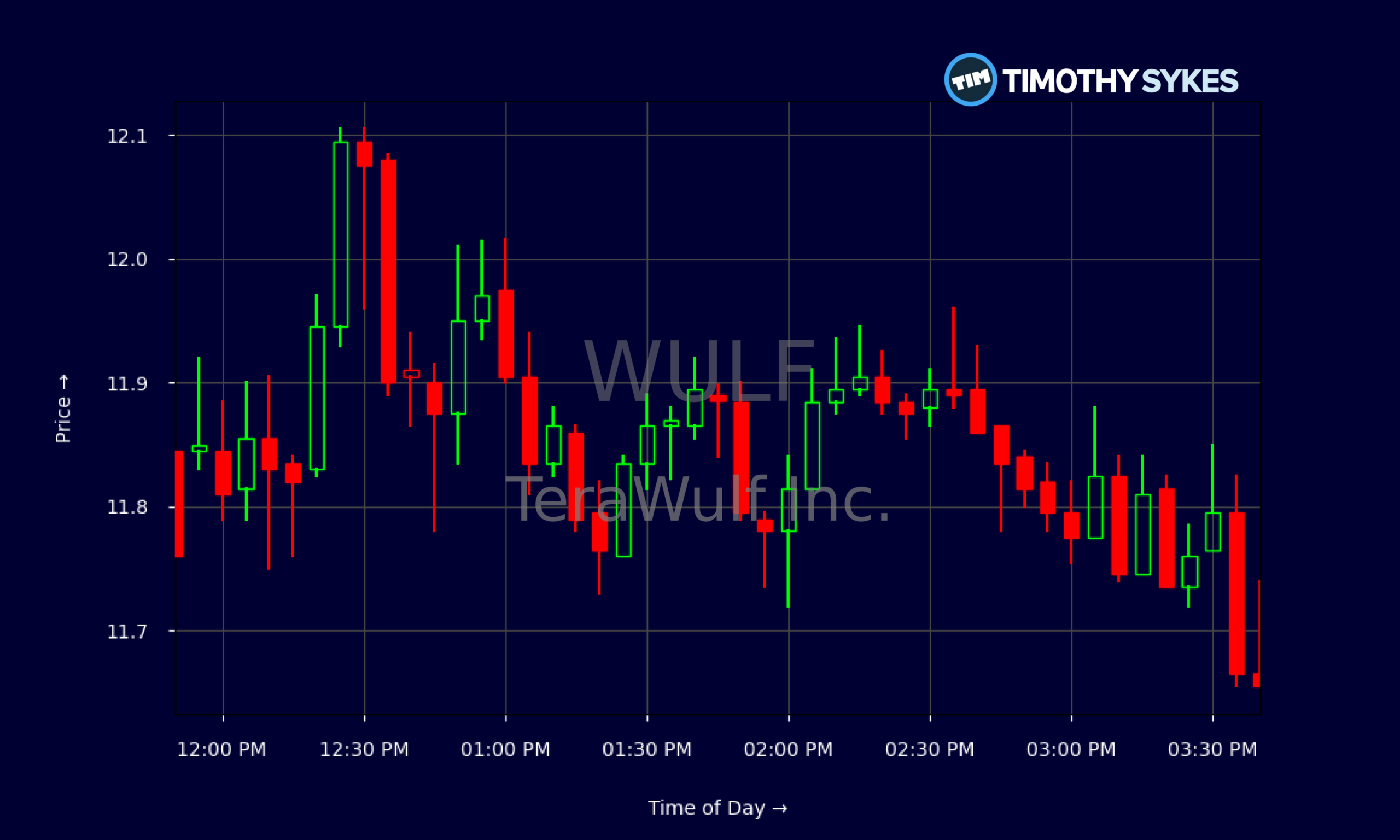
Live Update At 15:47:10 EST: On Wednesday, November 04, 2026 TeraWulf Inc. stock [NASDAQ: WULF] is trending down by -7.18%! Discover the key drivers behind this movement as well as our expert analysis in the detailed breakdown below.
Quick Financial Overview
TeraWulf Inc. (WULF) is trading like a classic high-beta AI infrastructure play. Recent daily candles show WULF swinging between the low $11s and mid-$13s, with the latest close around $11.62 after an intraday high near $12.97. That’s a sharp reversal from the morning spike and tells traders this name is still a momentum rollercoaster, not a sleepy utility.
On the 5‑minute chart, WULF opened strong near $12.80, pushed above $12.90 in early trading, then faded steadily through the day. The stock spent the afternoon grinding in a tight $11.70–$11.90 band before closing weak. For active traders, that intraday pattern screams morning spike, midday chop, and late-day exhaustion.
More Breaking News
Fundamentals show why WULF trades like a story stock. Revenue over the last period came in around $168.5M with a very high 84.3% gross margin, but the company is still deep in build-out mode. Net income from continuing operations was roughly -$940.8M, and free cash flow ran about -$992.3M. WULF also sports rich market ratios like a price-to-sales near 41.6 and price-to-book above 46, signaling the market is paying up for future AI data-center growth, not earnings today.
Why Traders Are Watching WULF And AI Data Centers
WULF has been moving with a powerful narrative: GPU-heavy data centers tied to the AI boom. The latest sector news groups TeraWulf with Neocloud, Nebius, IREN, Applied Digital, and CoreWeave, all seeing share gains as traders chase exposure to AI compute capacity. In a tape where anything AI-related still attracts hot money, WULF naturally pulls in attention.
But the same report throws cold water on the easy-growth story. Elon Musk warned that debt markets have “almost entirely shut off” to AI data centers that don’t have strong non-AI revenue streams. For a capital-hungry operator like TeraWulf, that’s not background noise. WULF’s own cash flow statement shows nearly $1.09B in recent capital expenditure on property and equipment and free cash flow almost $1B in the red. That kind of spending usually leans hard on external funding.
Morgan Stanley also flagged financing and capacity-deployment uncertainty for CoreWeave, another GPU data-center player. Traders in WULF should see that as a sector signal. If lenders back away from one big operator, they tend to scrutinize the whole group, including TeraWulf. With WULF carrying current liabilities of about $3.76B against current assets of roughly $2.81B, liquidity is tight. The current ratio around 0.8 and quick ratio near 0.7 underline that pressure.
So even as WULF rides the AI runway higher, the market is reminding traders: expansion is not free. Any hint about new funding, debt terms, or equity raises can move WULF fast in either direction.
Conclusion
For active traders, WULF sits at the crossroads of AI hype and hard financing reality. On one side, TeraWulf is clearly aligned with the hottest theme in the market: GPU-powered AI data centers. The stock’s recent share gains alongside Neocloud, IREN, Applied Digital, Nebius, and CoreWeave show that traders still want exposure to AI infrastructure. Every time WULF spikes off the open, that demand shows up on the tape.
On the other side, the fundamentals and macro backdrop demand respect. WULF is posting steep losses, burning cash to build capacity, and operating with thin liquidity. With major voices like Elon Musk saying debt markets have “almost entirely shut off” for pure AI data centers, and Morgan Stanley flagging funding uncertainty for CoreWeave, the message is simple: capital is no longer easy, even in AI. That matters for WULF’s next leg.
This is where trading discipline comes in. WULF can be a great trading vehicle, but it punishes anyone who overstays. As Tim Sykes likes to hammer home, “Cut losses quickly, because hope is not a strategy.” As millionaire penny stock trader and teacher Tim Sykes says, “Be patient, don’t force trades, and let the perfect setups come to you.”. For TeraWulf and WULF, the opportunity is in the volatility and clear trends, not in blind faith. Use the story, respect the risk, and let the price action guide your trading decisions.
This is stock news, not investment advice. Timothy Sykes News delivers real-time stock market news focused on key catalysts driving short-term price movements. Our content is tailored for active traders and investors seeking to capitalize on rapid price fluctuations, particularly in volatile sectors like penny stocks. Readers come to us for detailed coverage on earnings reports, mergers, FDA approvals, new contracts, and unusual trading volumes that can trigger significant short-term price action. Some users utilize our news to explain sudden stock movements, while others rely on it for diligent research into potential investment opportunities.
Dive deeper into the world of trading with Timothy Sykes, renowned for his expertise in penny stocks. Explore his top picks and discover the strategies that have propelled him to success with these articles:
- Penny Stocks Trading Guide
- Best Penny Stocks Under $1 to Buy Today
- Top 8 Penny Stocks to Watch on Robinhood
Once you’ve got some stocks on watch, elevate your trading game with StocksToTrade the ultimate platform for traders. With specialized tools for swing and day trading, StocksToTrade will guide you through the market’s twists and turns.
Dig into StocksToTrade’s watchlists here:





Leave a reply