

Opendoor Technologies Inc stocks have been trading up by 14.53 percent amid heightened optimism around housing market recovery and iBuying demand.
Key Takeaways
- Opendoor has appointed investor and existing shareholder Mike Alfred, founder of Alpine Fox LP and an experienced fintech/crypto entrepreneur, to its Board of Directors and Nominating and Corporate Governance Committee.
- The company plans to release its Q3 2026 earnings and host a live “Financial Open House” webcast with shareholder Q&A via Robinhood’s Say Technologies.
- Opendoor’s upcoming “Financial Open House” will stream across multiple platforms with replay access, signaling a push to deepen trader engagement and transparency.
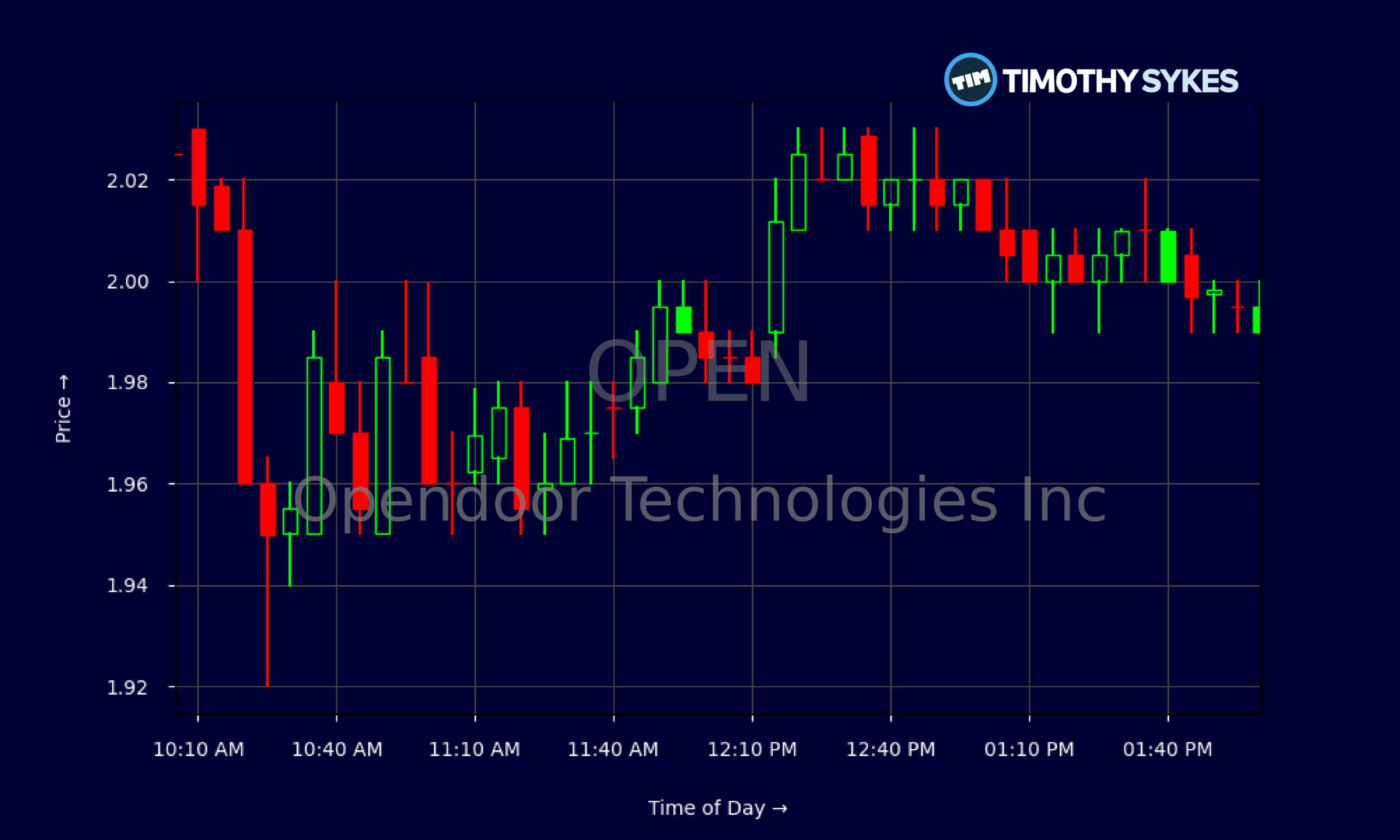
Live Update At 14:02:31 EST: On Wednesday, November 04, 2026 Opendoor Technologies Inc stock [NASDAQ: OPEN] is trending up by 14.53%! Discover the key drivers behind this movement as well as our expert analysis in the detailed breakdown below.
Quick Financial Overview
OPEN has been trading like a classic beaten-down momentum name trying to base. Over the last few weeks, Opendoor has drifted from the low $2s toward the high $1s, with recent daily closes bouncing between roughly $1.74 and $2.02. That puts OPEN near the lower end of its recent range, but not breaking down — think slow grind, not free fall.
Intraday, OPEN’s tape shows tight action around $1.95–$2.02 for much of the latest session. That kind of narrow range after earlier volatility often signals a tug-of-war between short sellers locking in gains and dip buyers quietly stepping in. For short-term traders, that $2 area is now a clear battleground level.
More Breaking News
Fundamentally, Opendoor is still a turnaround story. The company posted $4.37B in trailing revenue but with thin 8.6% gross margin and a heavy profit margin near -47%. Opendoor is burning cash, with about -$723M in recent free cash flow, yet it also sits on $896M in cash and roughly $1.88B in working capital. High leverage (total debt-to-equity about 2.15) keeps the pressure on management to execute, but the balance sheet is not on life support. For traders, OPEN remains a high-risk, high-volatility housing-tech play where headlines matter.
Why Traders Are Watching OPEN Now
OPEN is back on watch lists because the story is shifting from pure survival to how smart the next chapter looks. Opendoor just added Mike Alfred — a fintech and crypto entrepreneur who runs Alpine Fox LP and already owns stock — to its Board and its Nominating and Corporate Governance Committee. That matters. You don’t bring in a market-facing trader-type voice like Alfred unless you want sharper thinking on capital allocation, risk, and shareholder alignment.
For traders, this kind of board move often signals the company hears the market’s message. OPEN has lived through boom, bust, and painful resets in the housing cycle. Bringing in a board member with fintech and crypto experience suggests Opendoor wants to lean into data, risk management, and maybe new capital markets ideas, rather than just ride the housing tide.
At the same time, Opendoor is lining up its Q3 2026 earnings release with a “Financial Open House” webcast. Management will take questions through Robinhood’s Say Technologies, streaming across multiple platforms with replay. That is not standard old-school corporate behavior. It’s a clear pitch to the retail trading crowd that has driven huge volume in OPEN in the past.
For active traders, this sets a clean catalyst. Heading into the Q3 call, price hovering around $2 means expectations are muted. If Opendoor can show improving unit economics, tighter cost control, or constructive guidance, the combo of fresh board energy and open Q&A may light a fire under the chart. If the numbers disappoint or tone is cautious, the same setup can fuel a sharp flush. Either way, the date of that “Financial Open House” should be circled on every OPEN watchlist.
Conclusion
OPEN sits at an interesting crossroads. The chart shows a battered stock trying to stabilize near $2 after a long slide, while the fundamentals show a company with big revenue, thin margins, heavy losses, and enough cash to keep swinging. That mix is exactly what momentum-focused traders look for: clear risk, clear reward, and real news-driven catalysts.
Opendoor’s decision to appoint Mike Alfred to the Board and its governance committee tells the market management is not content to drift. It wants a more market-savvy perspective in the room as it navigates debt, housing cycles, and the path to profitability. Pair that with a highly accessible Q3 2026 “Financial Open House” and Opendoor is effectively inviting traders to judge its progress in real time.
For anyone trading OPEN, the playbook is simple but not easy: study the daily and intraday levels, respect the volatility around earnings, and let the price action confirm the story rather than guessing. As Tim Sykes likes to say, “I don’t care about the hype, I care about the chart and the catalyst.” As millionaire penny stock trader and teacher Tim Sykes says, “Small gains add up over time; focus on building wealth gradually, not chasing jackpots.”. The new director appointment and upcoming earnings Q&A give Opendoor exactly that — a fresh catalyst. The job now is to trade the reaction, not the narrative. This article is for educational and research purposes only and is not investment advice.
This is stock news, not investment advice. Timothy Sykes News delivers real-time stock market news focused on key catalysts driving short-term price movements. Our content is tailored for active traders and investors seeking to capitalize on rapid price fluctuations, particularly in volatile sectors like penny stocks. Readers come to us for detailed coverage on earnings reports, mergers, FDA approvals, new contracts, and unusual trading volumes that can trigger significant short-term price action. Some users utilize our news to explain sudden stock movements, while others rely on it for diligent research into potential investment opportunities.
Dive deeper into the world of trading with Timothy Sykes, renowned for his expertise in penny stocks. Explore his top picks and discover the strategies that have propelled him to success with these articles:
- Penny Stocks Trading Guide
- Best Penny Stocks Under $1 to Buy Today
- Top 8 Penny Stocks to Watch on Robinhood
Once you’ve got some stocks on watch, elevate your trading game with StocksToTrade the ultimate platform for traders. With specialized tools for swing and day trading, StocksToTrade will guide you through the market’s twists and turns.
Dig into StocksToTrade’s watchlists here:




Leave a reply