

Pool Corporation stocks have been trading up by 10.3 percent amid upbeat demand outlook and resilient housing-related spending.
Key Takeaways
- Goldman Sachs cut its price target on Pool Corp. from $247 to $214 but kept a Buy rating, signaling reduced upside yet ongoing confidence in POOL.
- Board expansion with Jean‑Marc Germain, ex‑Constellium CEO, adds industrial depth and supports Pool Corporation’s long‑term value focus.
- Q3 2026 earnings for Pool Corporation are slated for release before the market opens on 2026/10/22, with a webcast call later that morning.
- A new Form 3 filing shows fresh beneficial ownership in Pool Corporation, hinting at evolving insider or major‑holder dynamics around POOL.
Live Update At 12:32:30 EDT: On Thursday, October 22, 2026 Pool Corporation stock [NASDAQ: POOL] is trending up by 10.3%! Discover the key drivers behind this movement as well as our expert analysis in the detailed breakdown below.
Quick Financial Overview
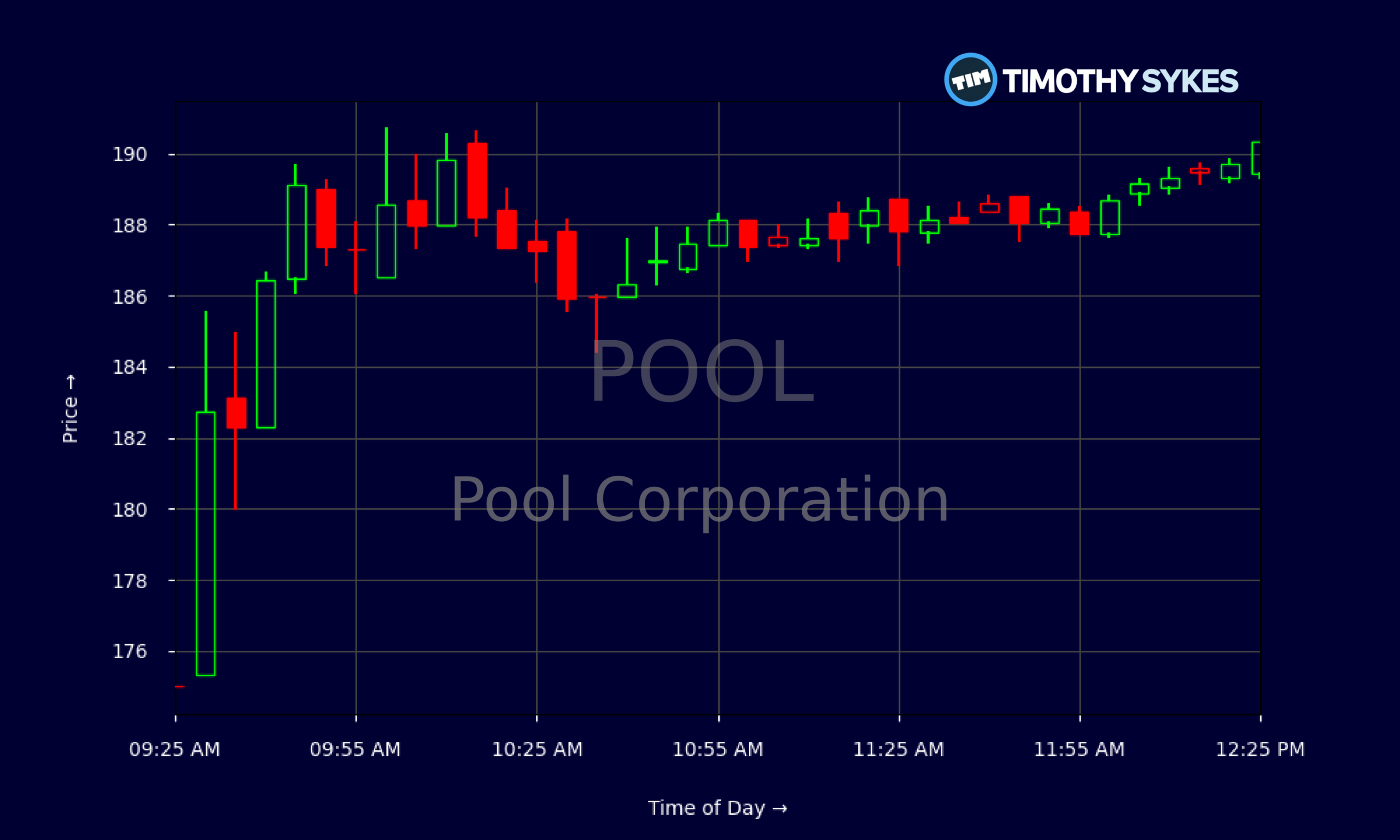
POOL has been grinding higher over the past few weeks, then exploded in the last session. From a close near $163 at the end of September, Pool Corporation has powered up to $190.195, a sharp upside move that tells you momentum traders have taken control. The latest daily candle shows a wide range, opening at $175.3 and spiking to $190.72 before settling just under the high — classic strong‑trend action.
Intraday, POOL held those gains well. Five‑minute data show dips being bought from the open, with the stock reclaiming every pullback and repeatedly testing the $190 area. That kind of intraday staircase higher often signals aggressive short‑term trading interest ahead of a catalyst.
More Breaking News
Fundamentally, Pool Corporation is no microcap story. Trailing revenue sits around $5.29B with a profit margin a bit above 7%, and an asset‑turnover ratio of 1.5 shows it uses its balance sheet efficiently. A price‑to‑sales ratio near 1.07 and a P/E around 14.7 put POOL well below its own five‑year P/E peak of 79. This tells traders the market already compressed the multiple, even as return on equity remains hefty at over 30%. Add a roughly 3% dividend yield, and POOL has the profile of a mature, cash‑producing business now back in play technically.
Why Traders Are Watching POOL Into Earnings
The news flow around POOL in recent weeks gives traders a clean narrative to work with. On 2026/10/12, Goldman Sachs trimmed its price target on Pool Corporation from $247 to $214 but kept a Buy rating. That move is important. It says big‑bank analysts are dialing back their near‑term upside expectations, yet they are not abandoning the story. For active trading, this often means sentiment is cautiously constructive rather than euphoric.
At the same time, POOL has been strengthening its leadership bench. Pool Corporation added Jean‑Marc Germain, the former CEO of Constellium SE, to its Board of Directors, taking the board to nine members. Traders should read that as a governance and strategy play. Germain brings global industrial and capital‑allocation experience — the kind of background that can shape how POOL manages its $7.93B enterprise value, its debt load, and future expansion.
The calendar catalyst is locked in. Pool Corporation will drop its Q3 2026 numbers before the open on 2026/10/22, followed by a webcast call later that morning. With POOL already ripping from the $150s–$160s to near $190, that earnings morning becomes a potential volatility event. If management’s tone lines up with Goldman’s still‑Bullish stance, traders may lean into the momentum. If guidance underwhelms, that sharp run gives plenty of room for a fast pullback.
Layered on top is the Form 3 beneficial‑ownership filing in Pool Corporation. On its own, a Form 3 is routine, but when you see new insider or significant‑holder disclosure around the same time as a board refresh and a major brokerage call, it signals that the “who” behind POOL is shifting. Short‑term traders track these changes as part of the bigger supply‑and‑demand picture, even if they are not an immediate trading trigger.
Conclusion
Put it all together, and POOL is a classic “story plus chart” setup heading into earnings. Pool Corporation’s fundamentals show a real business with solid margins, strong returns on equity, and a sizeable $5.29B revenue base. The valuation has already deflated from past highs, yet POOL still throws off enough cash to support a 3%‑ish dividend. That backdrop explains why Goldman Sachs lowered the price target but held its Buy — the firm sees less blue‑sky upside, not a broken company.
On the governance side, Pool Corporation’s move to add Jean‑Marc Germain to the board signals that management is still thinking long term, even while traders focus on the next few days. Combine that with fresh beneficial‑ownership disclosure and a defined earnings date on 2026/10/22, and you have multiple catalysts that can shake POOL loose from its current price zone.
For active traders, the message is simple: POOL is no longer a sleepy distributor stock. The recent surge from the $150s to near $190 shows money rotating back in ahead of the Q3 print. In the words of Tim Sykes, “The market rewards prepared traders, not lazy hopefuls.” As millionaire penny stock trader and teacher Tim Sykes says, “Be patient, don’t force trades, and let the perfect setups come to you.”. That means mapping your levels on POOL, knowing your risk, and treating the upcoming earnings and news flow strictly as trading opportunities — not as investment advice or long‑term guarantees.
This is stock news, not investment advice. Timothy Sykes News delivers real-time stock market news focused on key catalysts driving short-term price movements. Our content is tailored for active traders and investors seeking to capitalize on rapid price fluctuations, particularly in volatile sectors like penny stocks. Readers come to us for detailed coverage on earnings reports, mergers, FDA approvals, new contracts, and unusual trading volumes that can trigger significant short-term price action. Some users utilize our news to explain sudden stock movements, while others rely on it for diligent research into potential investment opportunities.
Dive deeper into the world of trading with Timothy Sykes, renowned for his expertise in penny stocks. Explore his top picks and discover the strategies that have propelled him to success with these articles:
- Penny Stocks Trading Guide
- Best Penny Stocks Under $1 to Buy Today
- Top 8 Penny Stocks to Watch on Robinhood
Once you’ve got some stocks on watch, elevate your trading game with StocksToTrade the ultimate platform for traders. With specialized tools for swing and day trading, StocksToTrade will guide you through the market’s twists and turns.
Dig into StocksToTrade’s watchlists here:





Leave a reply