

Rocket Companies Inc. stocks have been trading up by 7.47 percent following upbeat housing-market sentiment boosting mortgage origination expectations.
Key Takeaways
- Rocket Mortgage is rolling out VantageScore 4.0 as its preferred credit model for most agency‑eligible loans after tests showed more approvals, better pricing, and lower scoring costs.
- Major Wall Street firms cut RKT price targets into the $15–$17 range but kept positive ratings, signaling moderated upside rather than a bearish turn.
- High 30‑year mortgage rates near 6.95% are crushing originations, yet analysts still favor servicing‑heavy names like Rocket Companies for their risk/reward.
- Redfin data under RKT shows home prices still rising around 0.25% month over month and nearly 3.8% year over year, even as the market shifts toward a powerful buyer’s market.
- Rocket Companies is leaning on Redfin’s research and consumer tools to navigate a market where sellers outnumber buyers by roughly 63%, helping RKT frame a long‑term, data‑driven housing platform story.
Live Update At 12:32:50 EDT: On Thursday, October 22, 2026 Rocket Companies Inc. stock [NYSE: RKT] is trending up by 7.47%! Discover the key drivers behind this movement as well as our expert analysis in the detailed breakdown below.
Quick Financial Overview
RKT has traded in a tight but upward‑sloping band this month. The stock slipped from $12.66 on 2026/10/02 down near $10.53 on 2026/10/14, then pushed back toward $11.94 by 2026/10/22. That rebound off the $10s tells traders dip‑buyers are defending support, even as macro headwinds stay loud.
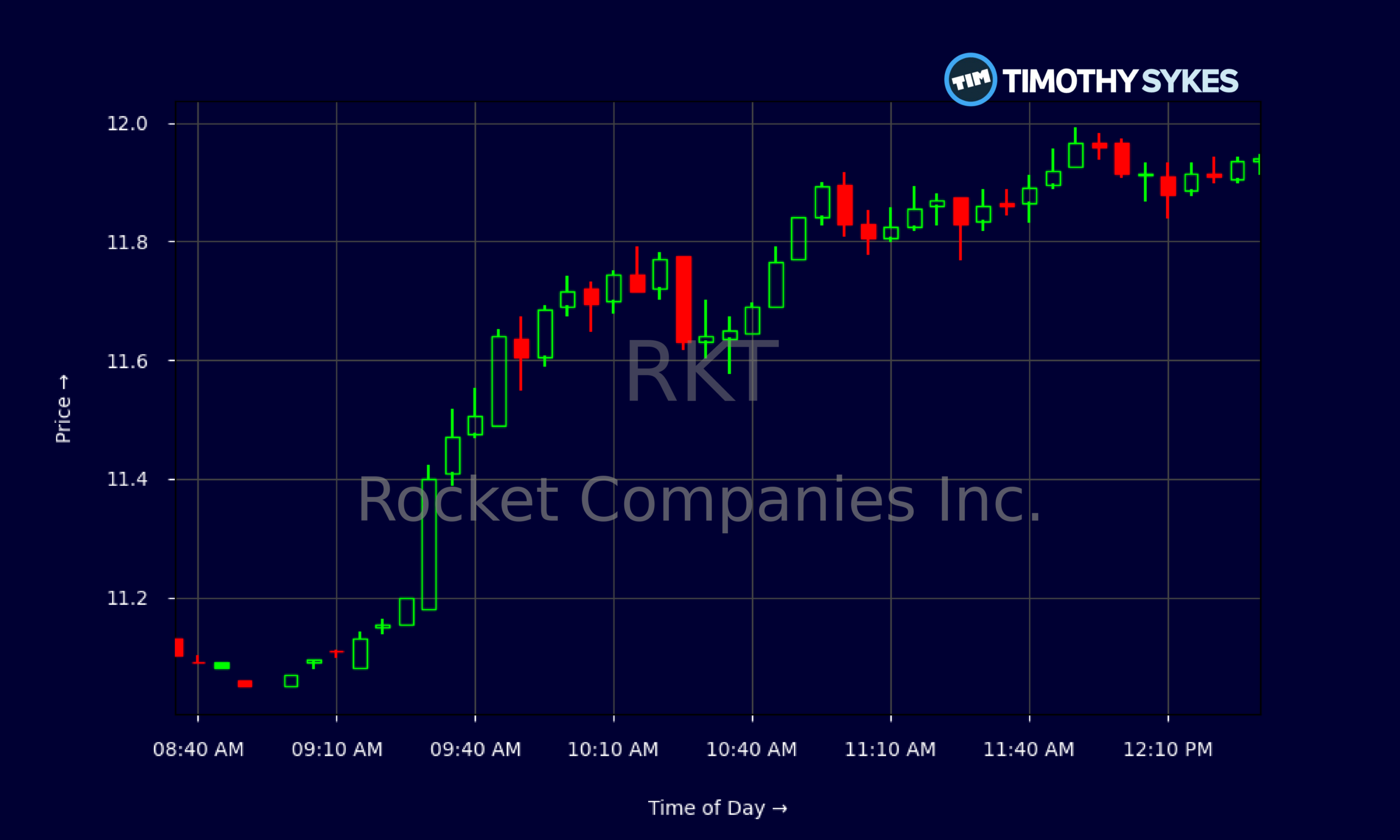
Intraday on 2026/10/22, RKT opened around $11.18 and steadily climbed, grinding toward the high $11.90s by midday. The 5‑minute tape shows a classic slow trend day higher: higher lows, controlled pullbacks, and no panic flush. For momentum traders, that’s a constructive sign, showing demand soaks up supply on every small dip.
More Breaking News
Fundamentals paint a mixed but tradable picture. Rocket Companies posted roughly $2.41B in quarterly revenue with about $230M in net income, translating to a thin profit margin a little above 5%. A lofty P/E above 50 and price‑to‑sales around 3.6 say RKT is priced for eventual growth, not deep value. Debt is meaningful, with total debt‑to‑equity above 1, but equity of about $23.5B and nearly $3.1B in cash give the company room to maneuver through a choppy mortgage cycle.
Why Traders Are Watching RKT Now
RKT is not trading in a vacuum. The biggest near‑term story is Rocket Mortgage becoming the first major U.S. lender to adopt VantageScore 4.0 as its preferred credit scoring model for agency‑eligible and VA loans. Internal testing showed more clients got approved and many landed better pricing, while RKT’s own scoring costs dropped. In a market where volumes are squeezed, that’s a real edge.
Importantly, Rocket Companies is not abandoning FICO. RKT will still lean on FICO for higher‑risk or non‑conforming products. That’s the kind of “innovate, but don’t blow up the risk book” move Wall Street usually respects. For traders, the takeaway is simple: if and when rates ease, RKT’s wider approval funnel could translate into higher‑than‑peer origination snapback.
On the street side, the message is “cautiously bullish.” Barclays cut its RKT target from $17 to $15, Morgan Stanley moved from $19 to $16, Keefe Bruyette slid from $19 to $17, and StoneX trimmed from $19 to $16. Yet all four stuck with positive stances — Overweight, Outperform, or Buy. That’s not what you see when a story is broken. That’s what you see when expectations get reset to the new rate reality.
Meanwhile, Redfin, now under the Rocket Companies umbrella, reports U.S. home prices still inching up about 0.25% month over month and roughly 3.7%–3.8% year over year, the fastest pace since mid‑2025. At the same time, sellers now outnumber buyers by roughly 63%, 21% of sellers are cutting asking prices, and concessions are everywhere. For RKT, that means fewer easy originations but a richer data set and more chances to capture the limited pool of serious buyers through its integrated platform.
Conclusion
For active traders, RKT sits right in the middle of the housing tug‑of‑war. On one side, 30‑year mortgage rates near 7% are hammering purchase and refi volumes; StoneX even pushed its Q3 revenue and EBITDA assumptions to the low end of Rocket Companies guidance. On the other, RKT is sharpening its tools — rolling out VantageScore 4.0, leveraging Redfin analytics, and building a full‑stack homeownership platform.
The chart reflects that push‑pull. RKT has bounced off the low‑$10s multiple times this month and is working back toward the $12 area. It’s not a parabolic runner, but it is respecting levels. For short‑term trading, that makes RKT a range‑and‑momentum name: buy support, sell strength, and stay glued to rate headlines and housing prints coming out of Redfin. In this kind of choppy, range‑bound environment, discipline matters as much as the setup. As millionaire penny stock trader and teacher Tim Sykes, says, “Consistency is key in trading; don’t let emotions dictate your trades.” That mindset pairs naturally with a structured plan around RKT’s support and resistance zones.
Analyst target cuts into the mid‑teens, paired with Overweight and Buy ratings, frame the stock as a moderate‑upside, macro‑sensitive play rather than a lottery ticket. The real wildcard is timing: when affordability normalizes — Redfin’s work suggests 2–10+ years depending on rates and income — RKT’s wider approval funnel and data engine could matter much more.
As Tim Sykes likes to say, “Patterns repeat, but only for traders who actually study them.” With Rocket Companies, the pattern right now is clear: tough macro, improving platform, and a stock grinding higher inside a defined range. Traders who track the data, respect support and resistance, and cut losses fast will be best positioned to react when RKT’s next big move finally hits.
This is stock news, not investment advice. Timothy Sykes News delivers real-time stock market news focused on key catalysts driving short-term price movements. Our content is tailored for active traders and investors seeking to capitalize on rapid price fluctuations, particularly in volatile sectors like penny stocks. Readers come to us for detailed coverage on earnings reports, mergers, FDA approvals, new contracts, and unusual trading volumes that can trigger significant short-term price action. Some users utilize our news to explain sudden stock movements, while others rely on it for diligent research into potential investment opportunities.
Dive deeper into the world of trading with Timothy Sykes, renowned for his expertise in penny stocks. Explore his top picks and discover the strategies that have propelled him to success with these articles:
- Penny Stocks Trading Guide
- Best Penny Stocks Under $1 to Buy Today
- Top 8 Penny Stocks to Watch on Robinhood
Once you’ve got some stocks on watch, elevate your trading game with StocksToTrade the ultimate platform for traders. With specialized tools for swing and day trading, StocksToTrade will guide you through the market’s twists and turns.
Dig into StocksToTrade’s watchlists here:





Leave a reply