

Netcapital Inc. stocks have been trading down by -10.11 percent, pressured by negative sentiment surrounding its latest financing developments.
What Traders Need To Know
- The SEC has charged Netcapital Inc., certain executives, and an advisory board member with allegedly running a fraudulent scheme to overstate revenue via sham, backdated, and sometimes forged consulting agreements, leading to a roughly 12.8% share price drop when the news became public.
- Several securities class actions have been filed alleging that from 2021/12/15 to 2026/09/03 Netcapital engaged in fraudulent revenue recognition via sham, backdated, and in some cases forged consulting agreements tied to a related party, with false Sarbanes-Oxley certifications and misleading disclosures about its business and prospects.
- The alleged scheme involved improperly recognizing about $14M of revenue from consulting agreements, inflating revenue by roughly 345% over a period stretching from late 2021 through early 2024.
- Netcapital’s auditor and a board/audit committee member resigned following the SEC allegations and serious accounting concerns, with each resignation coinciding with additional sharp stock price declines.
- Plaintiffs’ firms are actively soliciting shareholders who bought Netcapital stock during the alleged class period, with at least one suit inviting investors with losses to seek lead-plaintiff status by 2026/12/07.
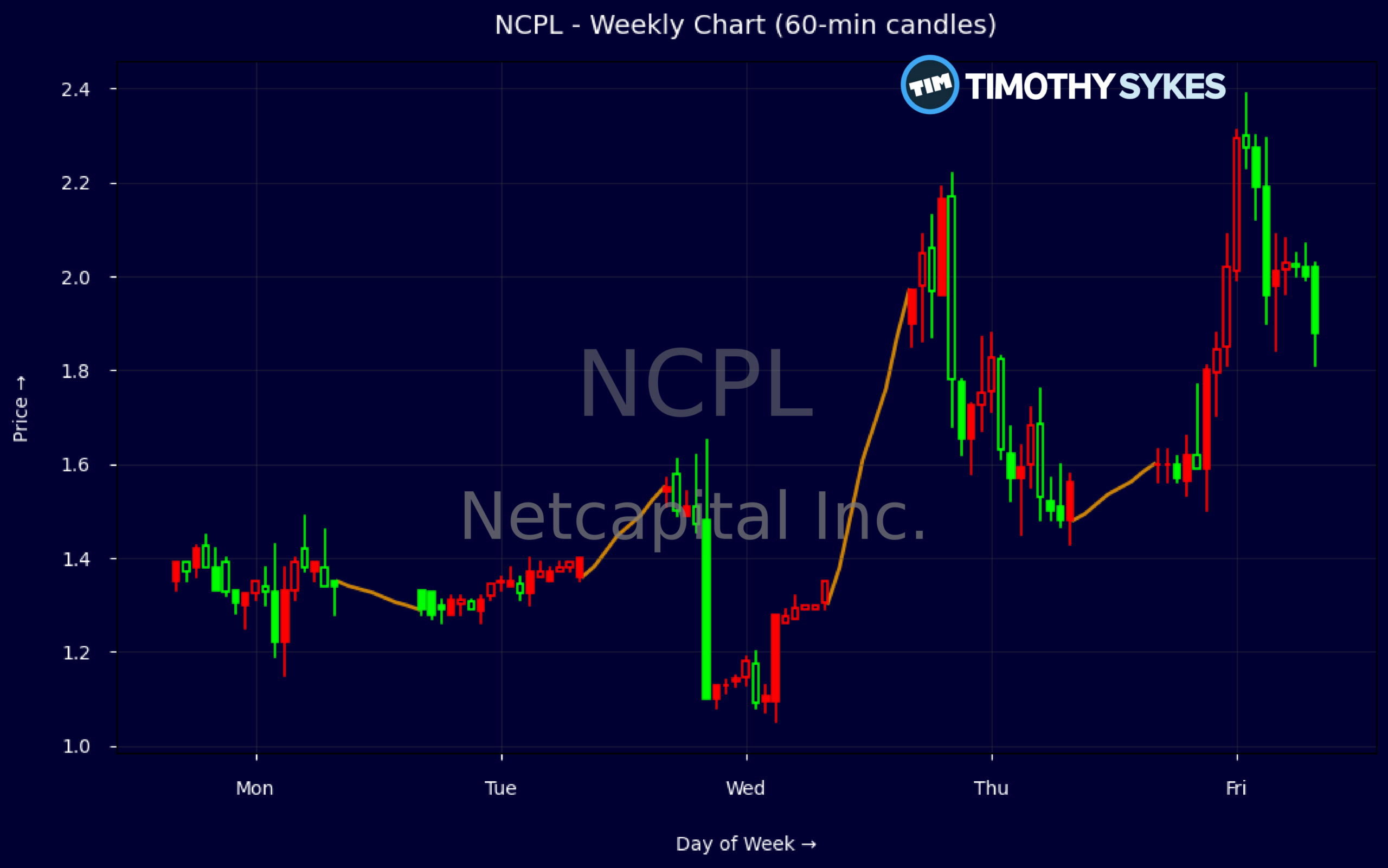
Weekly Update Oct 26 – Oct 30, 2026: On Saturday, October 31, 2026 Netcapital Inc. stock [NASDAQ: NCPL] is trending down by -10.11%! Discover the key drivers behind this movement as well as our expert analysis in the detailed breakdown below.
Finance industry expert:
Analyst sentiment – negative
Netcapital’s reported fundamentals are severely impaired. Revenues are tiny and shrinking (three‑year CAGR roughly –53%), while EBIT and EBITDA margins are catastrophically negative, reflecting an uneconomic model even before any SEC-driven restatements. Cash burn is acute: quarterly operating cash flow of –$0.87M against just $0.72M cash and a current ratio of 0.3 underscores material going‑concern risk. Book value appears overstated, dominated by intangibles, with ROE and ROIC both deeply negative and unsustainable.
Technically, NCPL trades as a high‑volatility, news‑driven microcap. The weekly tape shows an explosive spike from $1.33 to $1.90 followed by a fade to $1.60, consistent with short‑covering and speculative bounce rather than accumulation. Intraday 5‑minute candles (with surging volume on spikes and quick reversals) confirm a dominant downtrend interrupted by sharp bear rallies. For trading, $1.30 is the key pivot: below it, short‑biased trades are favored; above $1.90, short‑term momentum longs may scalp, with tight risk controls.
The SEC enforcement action, auditor resignation, director/audit‑committee resignation, and multiple overlapping securities‑fraud class actions place Netcapital at the extreme negative end of Finance and Capital Markets benchmarks, where governance, regulatory, and delisting risks dominate any valuation framework. Relative to peers, NCPL combines weaker fundamentals, higher legal overhang, and questionable historical financials. Base case is continued value destruction; I see resistance near $2.00, support failing toward $0.75. Verdict: avoid for investors; only highly tactical traders should engage.
More Breaking News
Quick Financial Overview
Netcapital Inc. (NCPL) is trading inside an extreme headline storm, and the tape reflects it. The short weekly sample shows price jumping from the mid-$1.30s into the high $1s, with a spike day where the stock opened near $1.97 and closed around $1.90 before slipping back toward $1.60. That type of push-and-fade pattern, against a backdrop of heavy negative news, is classic short-term squeeze behavior rather than steady accumulation.
Intraday, the 5‑minute snapshot shows NCPL whipping between $1.50 and $2.39 in a single bar, then settling near $1.59. A range that wide in one candle screams illiquidity and emotional trading. For short-term traders, that means slippage, air pockets, and the real risk of getting trapped on both sides. This is a name where you size tiny or you do not touch it.
On the fundamentals, the numbers are ugly. Revenue is under $1M (about $869,000) with a price‑to‑sales ratio around 12.1, yet profit margins are deeply negative, with EBIT margin near -3,744% and profit margin below -3,800%. The latest quarterly report shows roughly $94,000 in revenue against about $2.3M in expenses and net income around -$1.8M, with free cash flow near -$0.97M.
Balance sheet quality is mixed. Book value per share is about $2.75 versus a stock price around the mid-$1s, suggesting NCPL trades below stated equity, but that equity is dominated by intangibles near $19.2M. Working capital is negative by roughly $2.9M, and the current ratio sits at only 0.3, signaling tight liquidity. All of this sits under an SEC enforcement action that alleges roughly $14M of improperly recognized consulting revenue and about 345% revenue inflation, plus auditor and board resignations and multiple class actions.
Conclusion
This is stock news, not investment advice. Timothy Sykes News delivers real-time stock market news focused on key catalysts driving short-term price movements. Our content is tailored for active traders and investors seeking to capitalize on rapid price fluctuations, particularly in volatile sectors like penny stocks. Readers come to us for detailed coverage on earnings reports, mergers, FDA approvals, new contracts, and unusual trading volumes that can trigger significant short-term price action. Some users utilize our news to explain sudden stock movements, while others rely on it for diligent research into potential investment opportunities.
Dive deeper into the world of trading with Timothy Sykes, renowned for his expertise in penny stocks. Explore his top picks and discover the strategies that have propelled him to success with these articles:
- Penny Stocks Trading Guide
- Best Penny Stocks Under $1 to Buy Today
- Top 8 Penny Stocks to Watch on Robinhood
Once you’ve got some stocks on watch, elevate your trading game with StocksToTrade the ultimate platform for traders. With specialized tools for swing and day trading, StocksToTrade will guide you through the market’s twists and turns.
Dig into StocksToTrade’s watchlists here:





Leave a reply