

Lennar Corporation stocks have been trading up by 7.67 percent amid strong housing demand and upbeat homebuilding outlook.
Key Takeaways For LEN Traders
- Shares of LEN spiked about 6%–6.6% after SEC filings showed Berkshire Hathaway buying roughly $212M of stock over a few days.
- Berkshire has lifted its Lennar stake to around 28.4M Class A and 568,028 Class B shares, roughly 11% ownership and a top‑two holder spot.
- Recent fiscal Q3 for Lennar showed weaker orders, lower margins, and trimmed delivery guidance as high mortgage rates hit affordability.
- Cost pressure is easing, with Lennar reporting about a 6% year‑over‑year drop in construction costs, cushioning softer demand.
- The board of Lennar kept its quarterly cash dividend at $0.50 per share, payable 2026/10/22 to holders of record on 2026/10/07.
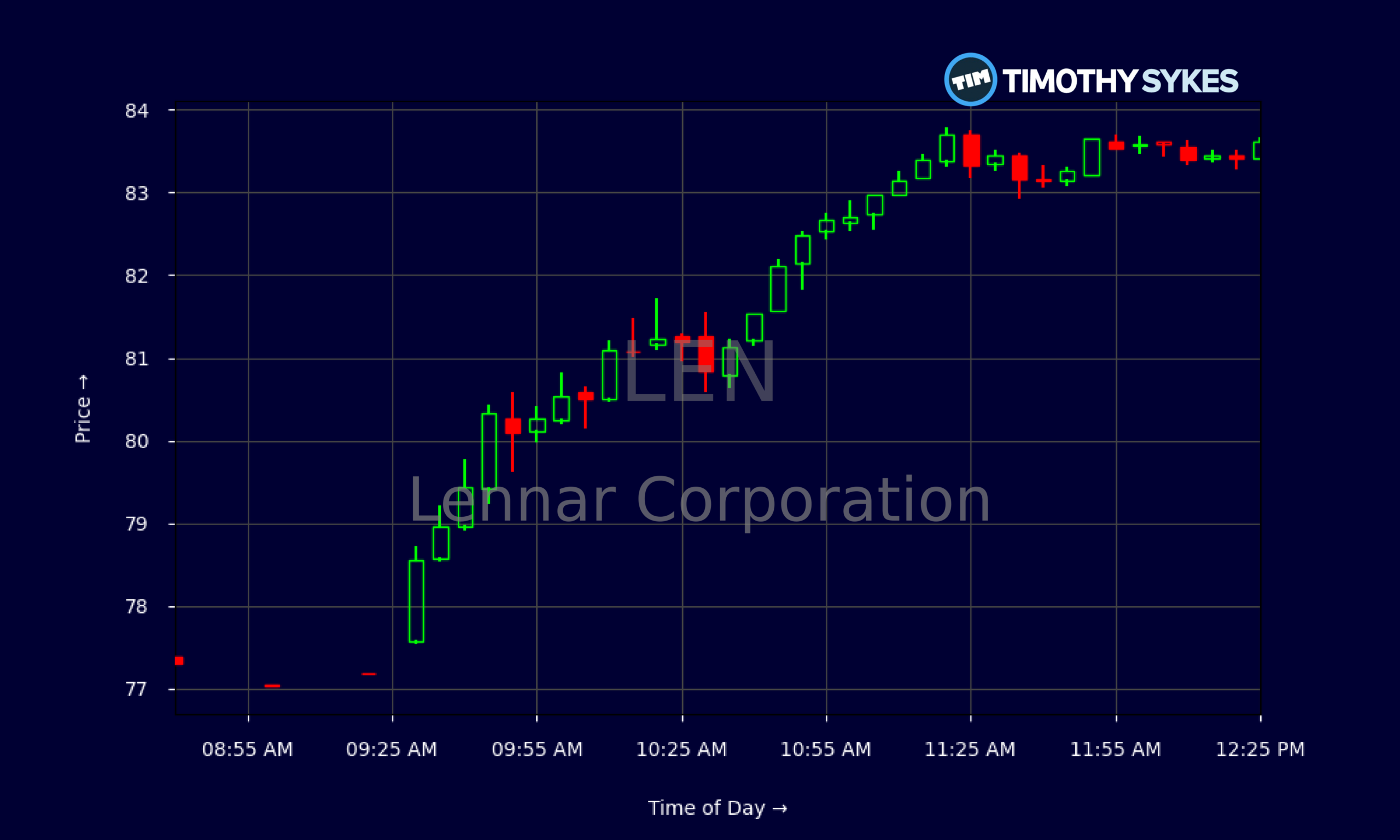
Live Update At 12:32:16 EDT: On Thursday, October 22, 2026 Lennar Corporation stock [NYSE: LEN] is trending up by 7.67%! Discover the key drivers behind this movement as well as our expert analysis in the detailed breakdown below.
Quick Financial Overview
LEN is trading like a stock caught between short‑term pain and long‑term confidence. On the daily chart, Lennar has bounced from the low‑ to mid‑$70s to close near $83.66, a strong push that lines up with the Berkshire Hathaway buying headlines. That move takes LEN back toward the upper end of its recent range after a sharp shakeout around $74–$75.
Intraday, the 5‑minute tape shows steady grinding action between $80 and $84, with dips getting bought and the stock holding gains instead of fading. That tells traders momentum players and larger buyers are active, not just one‑and‑done news chasers.
More Breaking News
Fundamentally, Lennar generated roughly $34.2B in revenue over the last year, trades at a price‑to‑sales ratio near 0.57, and a P/E around 14.5. With book value per share around $90.62 and LEN shares near the low‑$80s, the stock is priced below its stated equity base. For traders, that “discount to book” plus an enterprise value near $18.5B signals the market is still cautious, yet not writing Lennar off. Add in a dividend yield around 2.6%, and you have a homebuilder that’s profitable, returning cash, but clearly tied to the housing cycle.
Why Traders Are Watching LEN After Berkshire’s Move
LEN has turned into a real battleground ticker on the back of Berkshire Hathaway’s aggressive buying. The core catalyst: SEC filings showing Berkshire picking up about 2.67M Class A and 75,000 Class B Lennar shares over just three days, lighting a fire under the stock with a 6%‑plus intraday rally. That was followed by more disclosures that Berkshire kept adding around the high‑$70s and low‑$80s, eventually taking its Lennar stake to roughly 28.4M Class A and 568,028 Class B shares — about 11% of the company.
For traders, that kind of size is the opposite of a quick scalp. It looks like anchor capital planting a flag. Berkshire buying LEN between roughly $77 and $82 gives the chart a psychological “zone” the market will obsess over. Many short‑term traders will treat that band as a potential support area, watching how Lennar trades every time it dips back into those prices.
At the same time, the backdrop is not clean. Lennar’s latest fiscal Q3 showed a 9% drop in new orders, lower gross margins, and reduced delivery guidance as high mortgage rates squeeze affordability. UBS has warned that homebuilder earnings and outlooks stay pressured while rates and consumer confidence remain weak, even as it hints the group could be nearing a cyclical trough.
Yet Lennar has some offsets. The company reported about a 6% year‑over‑year decline in construction costs, easing margin pressure. LEN also reaffirmed its $0.50 quarterly dividend on both share classes, payable 2026/10/22, signaling confidence in cash generation. Mix in several Form 4 filings showing active changes in Lennar ownership — with Berkshire’s buying front and center — and you get a stock where tape-reading and news‑tracking really matter.
Conclusion
For active traders, LEN now sits at the intersection of macro headwinds and heavyweight conviction. On one side, Lennar is dealing with real pressure: softer orders, thinner gross margins, and trimmed guidance as high mortgage rates slow buyers. There is also an investigation tied to dealings with former affiliate Millrose, which adds a layer of headline and reputational risk that disciplined traders should not ignore.
On the other side, you have structural housing undersupply, easing construction costs, and a regular $0.50 dividend that Lennar’s board just reaffirmed. Most important for sentiment, Berkshire Hathaway has pushed its Lennar ownership to around 11%, even as fundamentals wobble. That is a clear signal that at least one deep‑pocketed player believes the current downcycle is survivable and that LEN has long‑term value.
For short‑term trading, the key levels are now obvious: the $77–$82 band where Berkshire accumulated, and the recent push into the mid‑$80s. Watch how Lennar behaves near those zones — volume, wicks, failed breakouts, and panic dips will all matter. As Tim Sykes likes to remind his students, “The market doesn’t care about your opinion — it cares about price action and risk management.” That mindset pairs well with his broader trading guidance. As millionaire penny stock trader and teacher Tim Sykes, says, “Be patient, don’t force trades, and let the perfect setups come to you.”. LEN is giving traders both a story and a setup, but the execution still comes down to cutting losses fast and respecting the trend.
This is stock news, not investment advice. Timothy Sykes News delivers real-time stock market news focused on key catalysts driving short-term price movements. Our content is tailored for active traders and investors seeking to capitalize on rapid price fluctuations, particularly in volatile sectors like penny stocks. Readers come to us for detailed coverage on earnings reports, mergers, FDA approvals, new contracts, and unusual trading volumes that can trigger significant short-term price action. Some users utilize our news to explain sudden stock movements, while others rely on it for diligent research into potential investment opportunities.
Dive deeper into the world of trading with Timothy Sykes, renowned for his expertise in penny stocks. Explore his top picks and discover the strategies that have propelled him to success with these articles:
- Penny Stocks Trading Guide
- Best Penny Stocks Under $1 to Buy Today
- Top 8 Penny Stocks to Watch on Robinhood
Once you’ve got some stocks on watch, elevate your trading game with StocksToTrade the ultimate platform for traders. With specialized tools for swing and day trading, StocksToTrade will guide you through the market’s twists and turns.
Dig into StocksToTrade’s watchlists here:





Leave a reply