

FMC Corporation stocks have been trading down by -7.16 percent amid heightened concerns over weakening agricultural chemicals demand.
Key Takeaways Traders Need To Know
- FMC slashed its Q3 2026 revenue guidance from $840–$900 million to just $65–$125 million and flipped expected Adjusted EBITDA from a projected $120–$140 million profit to a $510–$565 million loss, citing weak demand, excess distributor inventories, rapid price declines and generic competition.
- The guidance cut and disclosure of large price-cut and channel-restructuring charges triggered an immediate 31%–46% collapse in FMC’s share price, with one report noting the stock dropped about 39%.
- Law firms including Levi & Korsinsky and Block & Leviton have launched securities-fraud investigations into FMC, focusing on whether the company misled investors about unsold higher-priced products at distributors and failed to flag these issues earlier.
- FMC is undertaking large pricing and commercial actions totaling about $625–$675 million to clear elevated channel inventory in response to weak demand and rising generic competition.
- Analysts have turned more cautious on FMC, with Seaport Research and Jefferies downgrading the stock and RBC, Citi, and BMO all cutting their price targets while maintaining neutral or market-perform style ratings.
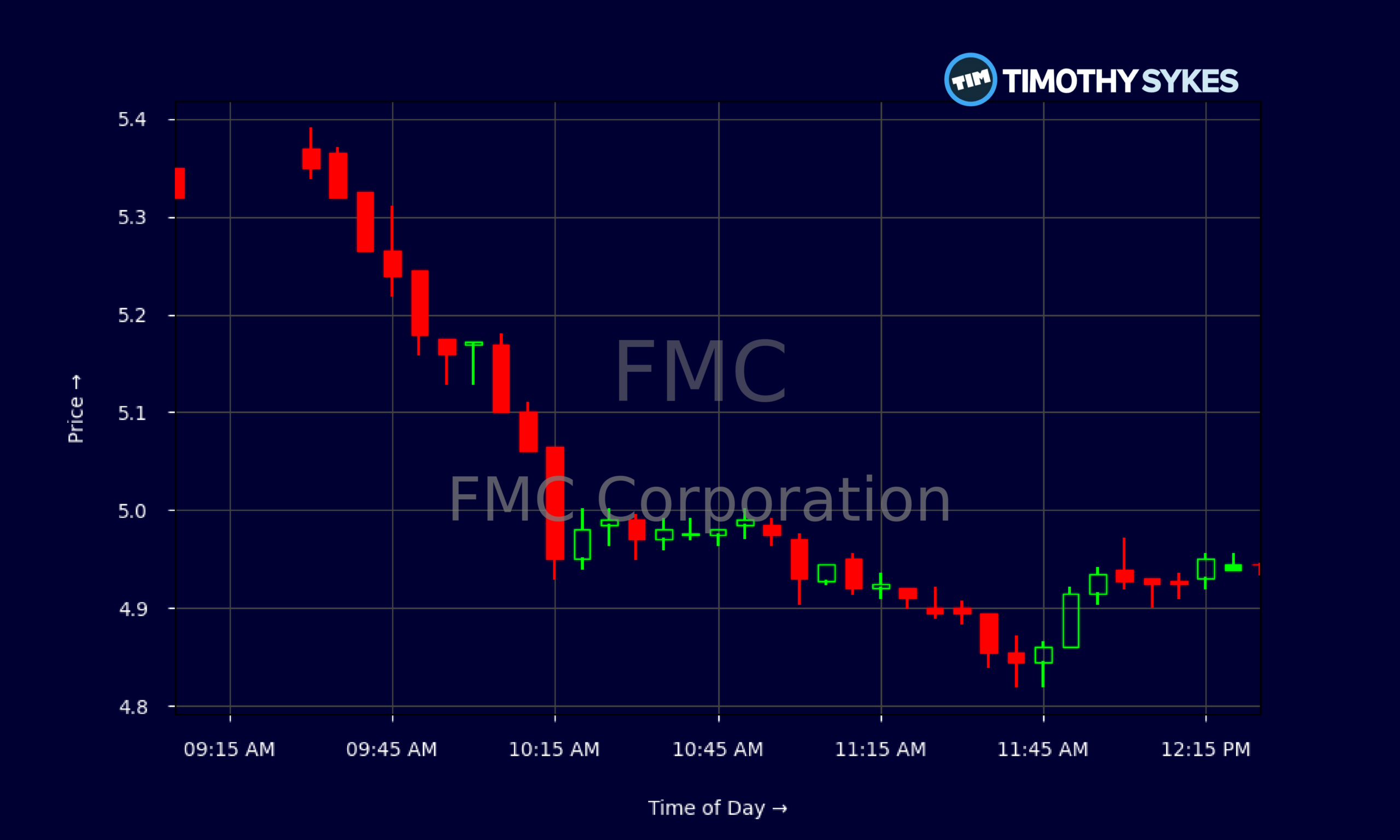
Live Update At 12:32:37 EDT: On Wednesday, October 21, 2026 FMC Corporation stock [NYSE: FMC] is trending down by -7.16%! Discover the key drivers behind this movement as well as our expert analysis in the detailed breakdown below.
Quick Financial Overview
FMC is trading like a broken story. The stock has slid from around $9 in early October to roughly $4.93 on 2026/10/21, a drop of close to 45% in a couple of weeks. The daily chart shows the big gap down on the guidance shock, then a slow bleed as traders fade every bounce.
Intraday, FMC’s 5‑minute tape is heavy. The stock opened near $5.35 and spent the day grinding lower toward $4.92, with every push into the $5 area sold. That kind of action tells you shorts and trapped longs are still battling, but the sellers remain in control.
Fundamentals back up the chart damage. FMC’s revenue is about $3.47B, but margins have collapsed. EBIT margin sits near -66.7%, and net profit margin is deeply negative. Return on equity near -91% and a levered balance sheet with total debt-to-equity around 2.62 show why the market is punishing FMC.
More Breaking News
Yet FMC trades around 0.4x sales and under book value (price-to-book about 0.79). For traders, that screams “value trap or deep turnaround.” Until guidance stabilizes, FMC Corporation is priced as a high‑risk cleanup job, not a steady compounder.
Why Traders Are Watching FMC’s Meltdown
FMC Corporation just delivered one of the ugliest guidance resets you’ll see in a large-cap name. Management cut Q3 2026 revenue expectations from $840–$900M down to only $65–$125M. At the same time, projected Adjusted EBITDA swung from a planned $120–$140M profit to a huge $510–$565M loss. For traders, that’s not a tweak; that’s the floor dropping out.
FMC blamed weak demand, bloated distributor inventories, rapid price declines, and generic competition. To clear the mess, FMC is taking $625–$675M of pricing and commercial actions, essentially slashing prices on product already sitting in channels. That kind of move nukes near‑term earnings but is meant to reset the system.
The market’s verdict was brutal. FMC stock cratered 31%–46% on the news, with several reports citing about a 39% one‑day plunge on heavy volume. When a name like FMC Corporation gaps down that hard, it becomes a magnet for active traders looking for panic bounces, dead‑cat rallies, and short‑side follow‑through.
But the story doesn’t stop at fundamentals. Law firms Levi & Korsinsky and Block & Leviton have launched securities‑fraud and shareholder‑rights investigations into FMC. They’re asking whether FMC misled the market about unsold higher‑priced products sitting at distributors and why these issues weren’t flagged earlier. That legal overhang adds a new risk layer for anyone trading FMC beyond a quick scalp.
On top of that, the Street is backing away. Seaport Research downgraded FMC from Buy to Neutral. Jefferies cut FMC to Hold and slashed its target from $14 to $5. RBC, Citi, and BMO all chopped their price targets and stuck FMC in the neutral bucket. When former bulls turn cautious all at once, momentum traders take notice: sentiment is damaged, and expectations are now reset far lower.
Conclusion
For active traders, FMC is now a classic “fallen angel” chart wrapped around a messy fundamental reset. The numbers are extreme: revenue guidance cut by roughly 90%, a swing to more than half a billion dollars in expected Adjusted EBITDA losses, and $625–$675M in channel‑clearing charges. FMC Corporation is effectively admitting the old pricing model and channel strategy stopped working in the face of weak demand and generics.
Layer on top the wave of legal scrutiny. Multiple firms, including Levi & Korsinsky and Block & Leviton, are probing whether FMC’s prior disclosures around high‑priced distributor inventory were accurate. That creates headline risk. Any new filing or lawsuit can spark sudden gaps, which is exactly the kind of volatility short‑term traders in FMC try to exploit — but it also raises the odds of surprise downside.
The balance sheet and ratio picture show why the stock re‑rated so aggressively. High leverage, negative returns on capital, and collapsing margins force the market to demand a steep discount. Yes, FMC now trades at low multiples, but cheap can stay cheap while the cleanup phase plays out and while analysts keep cutting targets.
For now, FMC Corporation is a tactical trading vehicle, not a “set and forget” name. In the words often repeated by Tim Sykes, “Trade like a sniper, not a machine gun.” As millionaire penny stock trader and teacher Tim Sykes says, “Be patient, don’t force trades, and let the perfect setups come to you.”. In a broken story like FMC, that means short, planned trades, cutting losses fast, and letting the chart — not hope — tell you when the trend finally shifts. This analysis is for educational and research purposes only and is not trading advice.
This is stock news, not investment advice. Timothy Sykes News delivers real-time stock market news focused on key catalysts driving short-term price movements. Our content is tailored for active traders and investors seeking to capitalize on rapid price fluctuations, particularly in volatile sectors like penny stocks. Readers come to us for detailed coverage on earnings reports, mergers, FDA approvals, new contracts, and unusual trading volumes that can trigger significant short-term price action. Some users utilize our news to explain sudden stock movements, while others rely on it for diligent research into potential investment opportunities.
Dive deeper into the world of trading with Timothy Sykes, renowned for his expertise in penny stocks. Explore his top picks and discover the strategies that have propelled him to success with these articles:
- Penny Stocks Trading Guide
- Best Penny Stocks Under $1 to Buy Today
- Top 8 Penny Stocks to Watch on Robinhood
Once you’ve got some stocks on watch, elevate your trading game with StocksToTrade the ultimate platform for traders. With specialized tools for swing and day trading, StocksToTrade will guide you through the market’s twists and turns.
Dig into StocksToTrade’s watchlists here:





Leave a reply