

Klaviyo Inc. Series A stocks have been trading up by 10.22 percent following upbeat sentiment around its growth prospects
Key Takeaways For KVYO Traders
- Goldman Sachs cut Klaviyo’s rating from Buy to Neutral with a $20 price target, well below the Street’s average target of $26.24.
- Shares of KVYO dropped about 6.5%, trading near $16.91 after the downgrade, on lighter-than-normal volume.
- Klaviyo plans to report Q3 2026 earnings after the close on 2026/11/04, followed by a webcast and replay on its IR site.
- A new Ibotta board appointment highlighted Tony Weisman’s role on Klaviyo’s board but added no fresh KVYO financial or operational details.
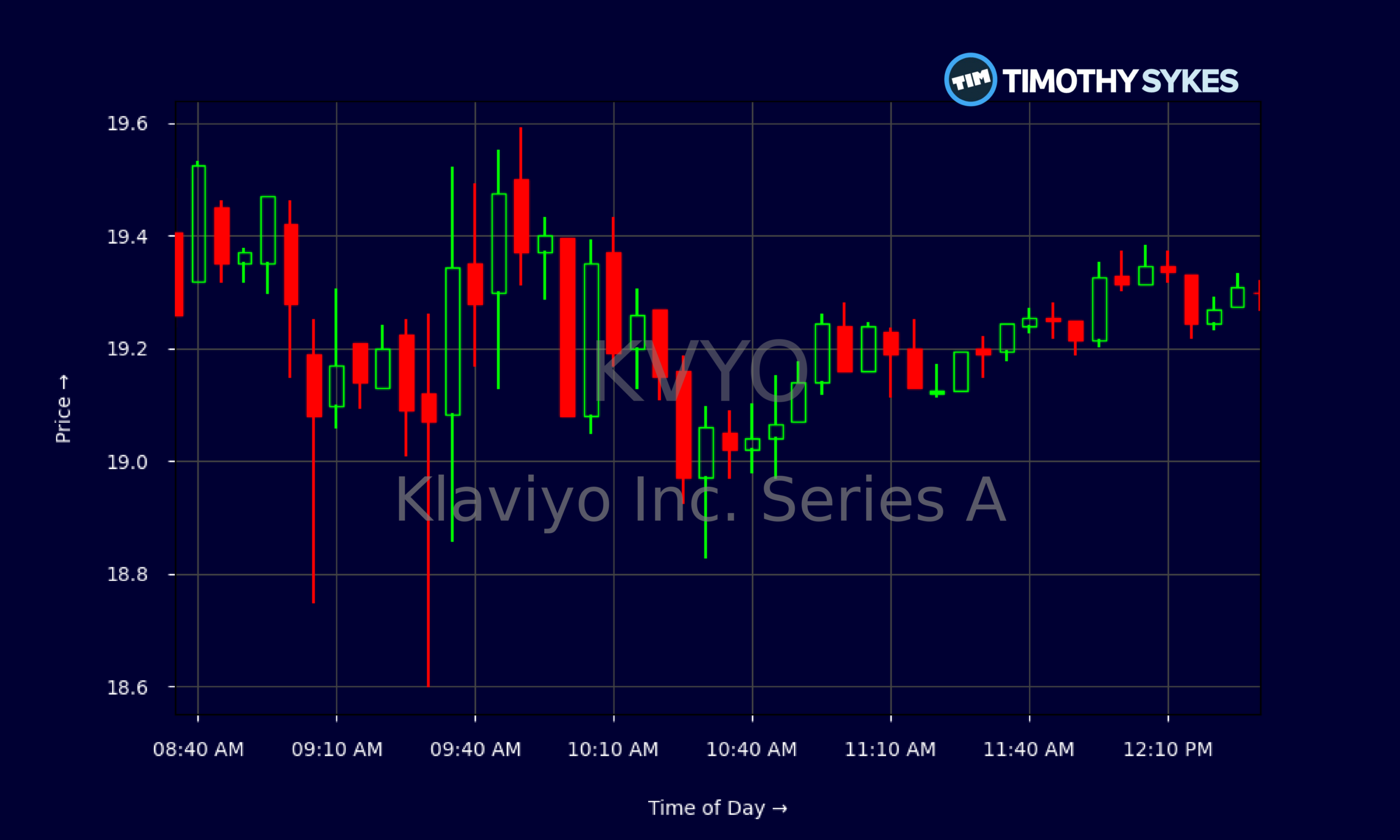
Live Update At 12:33:24 EDT: On Tuesday, October 20, 2026 Klaviyo Inc. Series A stock [NYSE: KVYO] is trending up by 10.22%! Discover the key drivers behind this movement as well as our expert analysis in the detailed breakdown below.
Quick Financial Overview
Klaviyo (KVYO) is acting like a classic high-growth software name under pressure. Revenue over the last year sits around $1.23B, with a rich gross margin near 73.8%. That tells traders KVYO’s core marketing automation platform throws off a lot of high-margin dollars.
Profitability is still thin. The latest quarter shows total revenue of about $370.6M but an operating loss near $14.96M and net loss of roughly $8.85M. On a per-share basis, KVYO posted a diluted EPS of about -$0.03. So you have strong top-line, but the bottom line is barely below break-even.
Yet the market is still pricing Klaviyo like a premium growth story. KVYO trades at roughly 3.55 times sales, with a sky-high stated P/E ratio driven by tiny reported earnings. Cash is a bright spot: around $832.6M on the balance sheet, current ratio about 3.1, and long-term debt near $90.6M. That combination gives KVYO a solid runway to keep spending on growth.
More Breaking News
For traders, this all screams “execution story.” Any earnings stumble or guidance cut can hit a valuation this fat very hard, very fast.
Why Traders Are Watching KVYO After The Downgrade
KVYO just ran into a wall in the form of Goldman Sachs. The bank cut Klaviyo from Buy to Neutral and slapped a $20 price target on the stock. That’s still above recent prices, but crucially below the Street’s average target near $26.24. When a top-tier bank steps away from the bull camp, momentum traders pay attention.
The market did not ignore it. After the downgrade, KVYO dropped about 6.5%, trading around $16.91. That slide came on lighter-than-average volume, which matters. Heavy volume would scream broad conviction selling. Instead, KVYO saw more of a controlled air pocket — enough pressure to flush weak hands, not enough to signal total abandonment. Short-term, though, it puts a lid on the chart.
Look at the recent daily action. Over the last few weeks, KVYO has bounced from the mid‑$15s to just above $19, with plenty of wicks in both directions. That tells traders the name is in a tug-of-war zone. The intraday 5‑minute chart shows the same story: KVYO pinned in a tight band around $19 with small swings, more like consolidation than panic.
The next clear catalyst is already on the calendar. Klaviyo will report Q3 2026 earnings after the close on 2026/11/04, followed by a webcast. That event gives KVYO management a shot to counter Goldman’s caution or unintentionally confirm it. If Klaviyo prints solid revenue growth, shows improving operating leverage, and keeps cash flow positive, traders may lean back toward the higher $26.24 consensus target. If guidance or margins disappoint, the $20 Goldman line may start looking generous.
The Tony Weisman cross‑board news and a stray KVYO ticker mention elsewhere are just noise compared with this downgrade‑plus‑earnings setup. For active traders, KVYO is now a textbook sentiment battleground.
Conclusion
Klaviyo (KVYO) sits at an important crossroads. On one hand, the business has real strengths: more than $1.23B in revenue, fat 73.8% gross margins, and over $832M in cash to support growth. The balance sheet is clean, with low leverage and solid working capital. KVYO is not a broken company.
On the other hand, the stock is priced like a high‑expectation story. A rich price-to-sales ratio, thin profits, and a history of losses leave little room for execution errors. That is exactly why Goldman Sachs stepping down from Buy to Neutral, with a $20 target below the broader $26.24 consensus, matters so much. The 6.5% drop to roughly $16.91 shows how fast sentiment can reset.
Heading into the 2026/11/04 Q3 earnings release, KVYO traders are not just betting on numbers. They are betting on whether management can tell a convincing path-to-scale story that justifies premium multiples. If the call impresses, there is room for a snap‑back toward that consensus target. If not, any bounce toward $20 may turn into a selling zone.
Tim Sykes often reminds traders, “The market doesn’t care about your opinion, only the price action.” As millionaire penny stock trader and teacher Tim Sykes, says, “Small gains add up over time; focus on building wealth gradually, not chasing jackpots.”. For KVYO, that means respecting the downgrade, watching the chart around $17–$20, and treating the next earnings report as the key catalyst — all while staying disciplined, cutting losses fast, and remembering this is for education and research, not trade recommendations.
This is stock news, not investment advice. Timothy Sykes News delivers real-time stock market news focused on key catalysts driving short-term price movements. Our content is tailored for active traders and investors seeking to capitalize on rapid price fluctuations, particularly in volatile sectors like penny stocks. Readers come to us for detailed coverage on earnings reports, mergers, FDA approvals, new contracts, and unusual trading volumes that can trigger significant short-term price action. Some users utilize our news to explain sudden stock movements, while others rely on it for diligent research into potential investment opportunities.
Dive deeper into the world of trading with Timothy Sykes, renowned for his expertise in penny stocks. Explore his top picks and discover the strategies that have propelled him to success with these articles:
- Penny Stocks Trading Guide
- Best Penny Stocks Under $1 to Buy Today
- Top 8 Penny Stocks to Watch on Robinhood
Once you’ve got some stocks on watch, elevate your trading game with StocksToTrade the ultimate platform for traders. With specialized tools for swing and day trading, StocksToTrade will guide you through the market’s twists and turns.
Dig into StocksToTrade’s watchlists here:





Leave a reply