

Amid concerns over rising energy costs squeezing mining margins, IREN Limited stocks have been trading down by -14.51 percent.
Key Takeaways
- IREN’s stock dropped 23% in a week amid a broader AI tech selloff linked to CoreWeave’s credit issues and a sharp rotation out of higher-risk growth names.
- Shares of IREN fell 2.6% after Elon Musk warned that over 200 ‘neocloud’ companies are likely to fail, spooking smaller AI data-center names.
- CoreWeave, Nebius, and IREN slid 2–3% premarket as Musk said debt markets are shutting to AI data centers without strong non-AI revenue.
- IREN declined 2.9% premarket after a 2.4% drop the prior Friday, with the stock actively trending on Wallstreetbets during the slide.
- Neocloud and GPU data-center operators, including IREN, still saw pockets of share gains even as Musk and Morgan Stanley flagged tightening funding and capacity-deployment risks.
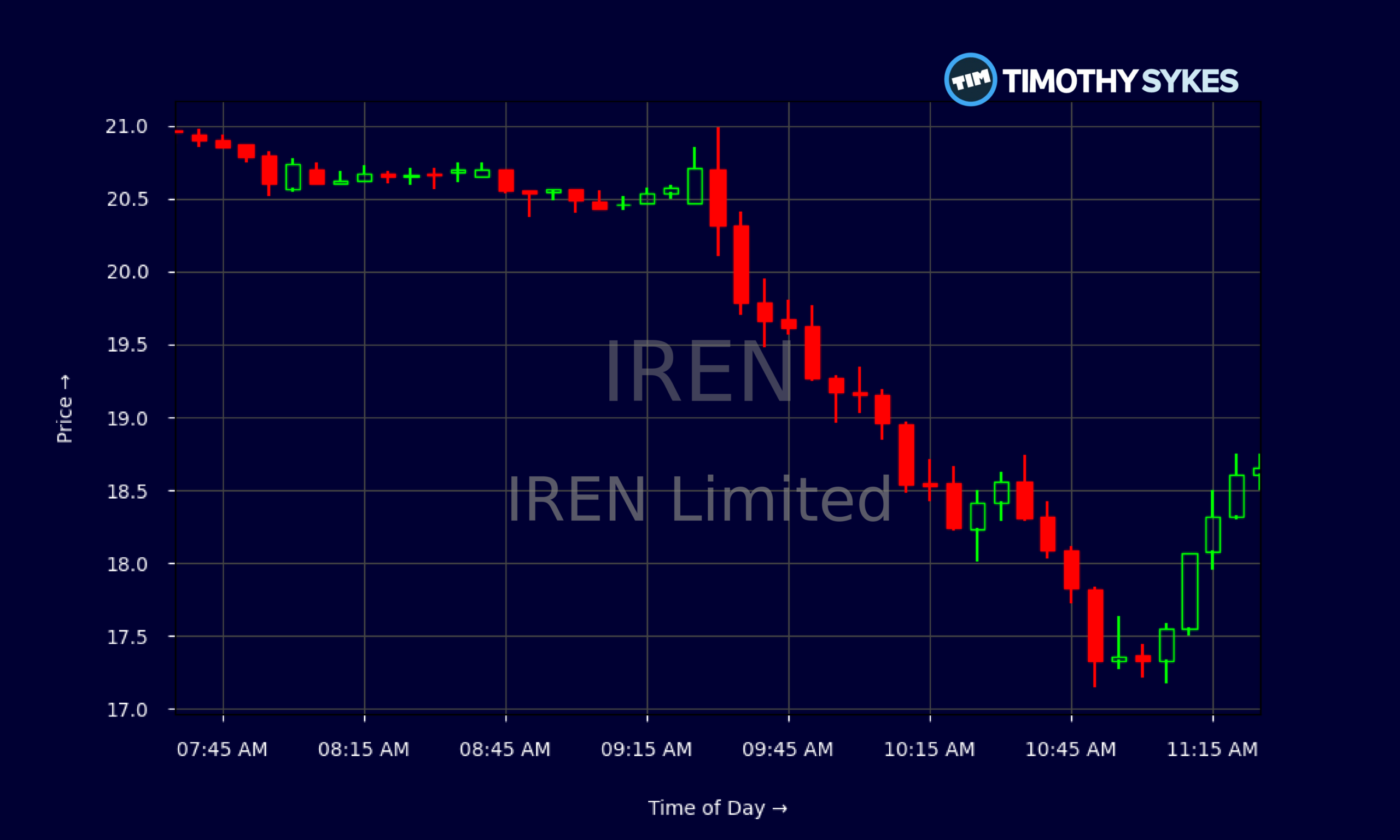
Live Update At 11:32:22 EST: On Thursday, November 05, 2026 IREN Limited stock [NASDAQ: IREN] is trending down by -14.51%! Discover the key drivers behind this movement as well as our expert analysis in the detailed breakdown below.
Quick Financial Overview
IREN has been trading like a rollercoaster, and the numbers back that up. Over the last few weeks, IREN ran from the mid-$30s down to the high teens, with the most recent close around $18.61 after an intraday low near $17.16. That’s a steep draw from the $34–36 area shown in late prior sessions, and it tells traders this AI data-center name is firmly in high-volatility territory.
On the fundamentals, IREN is a classic high-growth, cash-hungry story. The company posted roughly $707.0M in revenue but still booked a net loss of about $684.0M, with profit margins deep in the red and EBIT margin near -91.9%. That means IREN is scaling fast but not yet operating profitably.
More Breaking News
At the same time, IREN’s balance sheet shows around $5.90B in cash and equivalents and a current ratio of 3.6, which buys time. Total debt, however, is significant, with long-term debt near $7.42B and total debt-to-equity at 1.87. For traders, that mix—big growth, big losses, big leverage—usually means explosive moves both ways when sentiment shifts.
Why Traders Are Watching IREN’s Neocloud Volatility
IREN is right in the crosshairs of one of the market’s loudest debates: how many AI data-center and “neocloud” names will actually survive. Over the past week, IREN dropped about 23% as part of a wider AI and tech washout sparked by CoreWeave’s credit worries and a broad risk-off rotation away from speculative growth. That tells you IREN is trading as a high-beta AI infrastructure proxy more than a steady business story.
The pressure kicked higher when Elon Musk publicly said more than 200 neocloud companies are likely to fail. After those comments, shares of IREN slid another 2.6%, with CoreWeave and other smaller GPU data-center operators getting hit as well. Traders read that as a direct shot at highly leveraged, single-theme AI data-center plays, especially those without diversified non-AI revenue.
Premarket action echoed the same fear. CoreWeave, Nebius, and IREN all dropped 2–3% after Musk warned that debt markets have “almost entirely shut off” for AI data centers lacking strong non-AI income streams. For IREN, which carries notable long-term debt, that debt-market narrative matters. It raises the bar for future funding rounds and puts a spotlight on cash flow.
Yet it’s not one-way traffic. Neocloud and GPU data-center names, including IREN, have still seen bursts of upside as traders lean into the long-term AI demand story. Morgan Stanley has flagged financing and capacity-deployment uncertainty around CoreWeave, but momentum traders continue to hunt bounces in IREN whenever the sector squeezes. Add in IREN trending on Wallstreetbets after back-to-back daily drops of 2.4% and 2.9%, and you have a stock primed for sharp intraday swings, news-driven spikes, and fast reversals—exactly the setup short-term traders look for.
Conclusion
For active traders, IREN is a case study in how narrative, leverage, and sector hype can overpower traditional fundamentals in the short term. The chart shows a clear breakdown from the $30s into the high teens, with intraday trading swinging from a $20.70 open to sub-$18 before stabilizing near $18.61. That kind of range tells you emotion, not spreadsheets, is running the tape right now.
Under the hood, IREN still posts strong topline growth but heavy losses, negative returns on capital, and meaningful long-term debt. The company also holds a sizable cash cushion, which keeps the story alive but does not erase the market’s focus on funding risk as debt markets tighten around AI data-center operators. Musk’s repeated warnings and Morgan Stanley’s concerns around CoreWeave simply pour more gasoline on that fire.
For traders, the key with IREN is to respect the volatility and treat it like the momentum vehicle it is. That means using clear levels, avoiding chasing, and cutting losers fast when headlines turn. As Tim Sykes likes to say, “The market doesn’t care about your opinion, only your discipline.” As millionaire penny stock trader and teacher Tim Sykes, says, “Be patient, don’t force trades, and let the perfect setups come to you.”. IREN’s wild swings in this neocloud shakeout are a live reminder that disciplined trading rules matter more than any AI narrative. This analysis is for educational and research purposes only and is not investment advice.
This is stock news, not investment advice. Timothy Sykes News delivers real-time stock market news focused on key catalysts driving short-term price movements. Our content is tailored for active traders and investors seeking to capitalize on rapid price fluctuations, particularly in volatile sectors like penny stocks. Readers come to us for detailed coverage on earnings reports, mergers, FDA approvals, new contracts, and unusual trading volumes that can trigger significant short-term price action. Some users utilize our news to explain sudden stock movements, while others rely on it for diligent research into potential investment opportunities.
Dive deeper into the world of trading with Timothy Sykes, renowned for his expertise in penny stocks. Explore his top picks and discover the strategies that have propelled him to success with these articles:
- Penny Stocks Trading Guide
- Best Penny Stocks Under $1 to Buy Today
- Top 8 Penny Stocks to Watch on Robinhood
Once you’ve got some stocks on watch, elevate your trading game with StocksToTrade the ultimate platform for traders. With specialized tools for swing and day trading, StocksToTrade will guide you through the market’s twists and turns.
Dig into StocksToTrade’s watchlists here:





Leave a reply