

Tapestry Inc. stocks have been trading up by 8.13 percent after strong earnings and upbeat luxury demand outlook.
Key Takeaways Traders Need To Know
- Wall Street has cut Tapestry price targets but largely kept bullish ratings, signaling confidence in TPR’s core story despite recent volatility.
- Raymond James points to strong Coach momentum, higher price points, and margin expansion while keeping an Outperform rating on TPR.
- Wells Fargo reiterates Overweight and says it would be a buyer of TPR ahead of upcoming Q1 earnings, calling the bear case exaggerated.
- UBS still rates Tapestry Inc. a Buy, expecting a modest Q1 EPS beat and slight guidance raise, even as Coach trends cool in the US and China.
- Tapestry will release FY27 Q1 results on 2026/11/05, with a same‑day conference call that traders are treating as the next major catalyst for TPR.
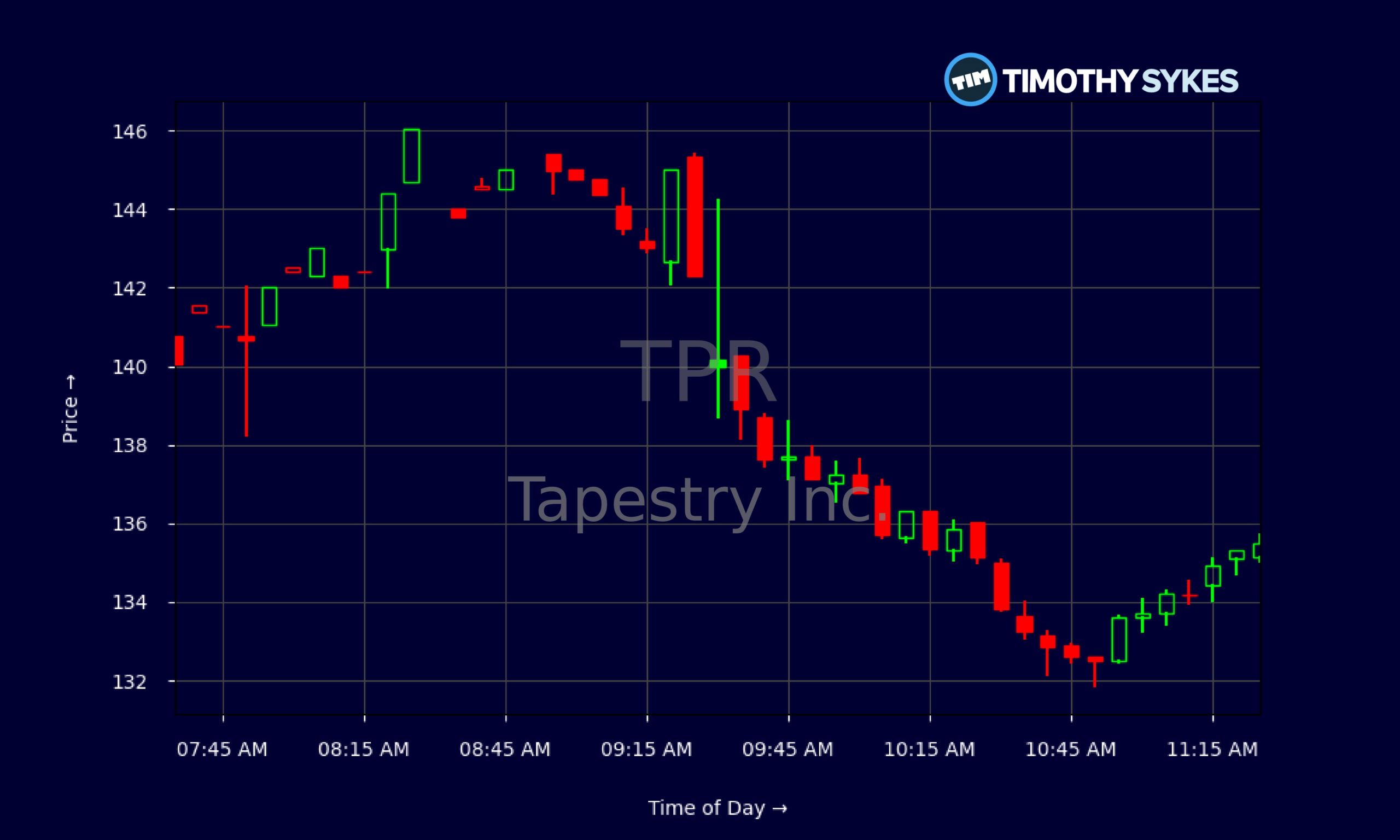
Live Update At 11:32:20 EST: On Thursday, November 05, 2026 Tapestry Inc. stock [NYSE: TPR] is trending up by 8.13%! Discover the key drivers behind this movement as well as our expert analysis in the detailed breakdown below.
Quick Financial Overview
TPR has been grinding higher into the 2026/11/05 earnings event. On the daily chart, Tapestry Inc. climbed from roughly $110–$120 in mid‑October to a spike high of $144.23, before fading to around $135.44. That kind of 20%+ swing in a few weeks tells traders there is strong momentum — but also plenty of volatility to manage.
Intraday, TPR’s 5‑minute tape shows a classic blow‑off open: a push to the day’s high near the open, quick rejection, then a steady bleed and choppy consolidation between roughly $132 and $136. For active trading, that means clear levels to trade against, but also fast reversals if you chase.
More Breaking News
Fundamentally, Tapestry Inc. isn’t trading like a broken story. TPR prints gross margins near 77.8% and an EBIT margin above 14%, solid for a branded consumer name. Return on equity is eye‑popping, helped by leverage, while revenue sits around $8.00B with mid‑single‑digit growth over three and five years. A roughly 16x P/E and about 2.9x price‑to‑sales put TPR in a reasonable valuation zone for a profitable, cash‑generative fashion group. For traders, that backdrop often supports dip‑buying when the chart lines up.
Why Traders Are Watching TPR Into Earnings
The real story around Tapestry Inc. right now is not just the chart — it’s how aggressively Wall Street still leans bullish on TPR even after cutting numbers. Multiple notes describe TPR as Overweight or Buy, with mean price targets in the $166–$171 range versus a recent print near $115–$135. That’s a wide gap, and traders notice when consensus targets still sit $30–$50 above price.
Raymond James took its Tapestry target down to $140 from $165, but the firm kept an Outperform and highlighted strong momentum at the Coach brand, higher average unit retail, international growth, and lower promotions. In plain English: TPR is selling more expensive bags, discounting less, and growing overseas. They also call management’s FY27 guidance — mid‑single‑digit revenue growth, margin expansion, and double‑digit EPS growth — credible, with upside from foreign exchange and conservative assumptions. That combination supports a medium‑term bull case, even with a trimmed target.
Wells Fargo echoed that tone. It cut its Tapestry Inc. target from $160 to $150 but reiterated an Overweight rating and said it would be a buyer of TPR ahead of earnings. The bank argues the bear case is exaggerated and that the recent selloff gives downside cushion. For short‑term traders, that type of language often feeds pre‑earnings squeeze setups, especially when sentiment has already turned cautious.
UBS brings some balance. It lowered its Tapestry target to $200 from $232, still a Buy, and expects TPR to modestly beat FY27 Q1 EPS and slightly raise full‑year guidance. But UBS also flags slowing Coach sales in the US and China, warning that those trends may limit an immediate re‑rating after the print. That’s exactly the kind of nuance momentum traders need: positive numbers, but not a green light to assume a breakout will stick without confirmation.
Layer on the scheduled FY27 Q1 results and conference call on 2026/11/05, and TPR becomes a classic “event stock” on many watchlists.
Conclusion
Heading into the 2026/11/05 earnings release, Tapestry Inc. sits at an interesting crossroads. The chart shows strong recent upside and real intraday range, giving TPR plenty of room for active trading around headlines. At the same time, the fundamentals — high margins, solid cash flow, and reasonable valuation — keep many firms bullish even as they trim price targets.
Across Raymond James, Wells Fargo, UBS, Baird, and Jefferies, the message is consistent: targets are lower, but ratings stay positive, and average Street expectations on TPR still suggest meaningful upside from recent levels. That tells traders the market’s fear has probably outrun the underlying earnings story, at least for now.
The wildcard is execution. If Tapestry Inc. delivers the modest EPS beat and guidance bump UBS anticipates, while calming worries about Coach in the US and China, TPR could finally start to close the gap toward those higher consensus targets. If management underwhelms, the stock’s recent run sets up room for a sharp reset.
As Tim Sykes likes to remind traders, “Patterns repeat, but only for those who study them relentlessly.” As millionaire penny stock trader and teacher Tim Sykes, says, “You must adapt to the market; the market will not adapt to you.”. For TPR, that means knowing the earnings date, tracking the key levels on the chart, and having a clear trading plan before the next headline hits. This coverage is for educational and research purposes only, but the setup around Tapestry Inc. is one that serious traders will not ignore.
This is stock news, not investment advice. Timothy Sykes News delivers real-time stock market news focused on key catalysts driving short-term price movements. Our content is tailored for active traders and investors seeking to capitalize on rapid price fluctuations, particularly in volatile sectors like penny stocks. Readers come to us for detailed coverage on earnings reports, mergers, FDA approvals, new contracts, and unusual trading volumes that can trigger significant short-term price action. Some users utilize our news to explain sudden stock movements, while others rely on it for diligent research into potential investment opportunities.
Dive deeper into the world of trading with Timothy Sykes, renowned for his expertise in penny stocks. Explore his top picks and discover the strategies that have propelled him to success with these articles:
- Penny Stocks Trading Guide
- Best Penny Stocks Under $1 to Buy Today
- Top 8 Penny Stocks to Watch on Robinhood
Once you’ve got some stocks on watch, elevate your trading game with StocksToTrade the ultimate platform for traders. With specialized tools for swing and day trading, StocksToTrade will guide you through the market’s twists and turns.
Dig into StocksToTrade’s watchlists here:





Leave a reply